Apparel Search Consumer Guides
Travel Packing Guide
The craft half of travel dressing: cubes, folds and rolls, the shoes-first packing order, carry-on math, and lists for a weekend, a week and two weeks.
Choosing what to take is only half of travel dressing. The other half is a craft nobody teaches: how the clothes actually go into the bag — what gets rolled and what gets folded, what goes in first and what rides on top, and how a week's wardrobe fits a case that also has to fit an overhead bin. This guide covers that craft in full. It is the companion to our capsule wardrobe guide and its travel capsule wardrobe page: those decide which pieces earn the trip, using the capsule method. This one takes the chosen pieces and packs them well.
The method below is built around a carry-on, because the carry-on is the discipline that makes packing honest — but every technique here works unchanged in a larger case. Read it as a system with four parts: the math of the bag, the toolkit of cubes, folds and rolls, an order for loading the case, and a plan for wrinkles and laundry that begins before you zip up.
Search Apparel Search
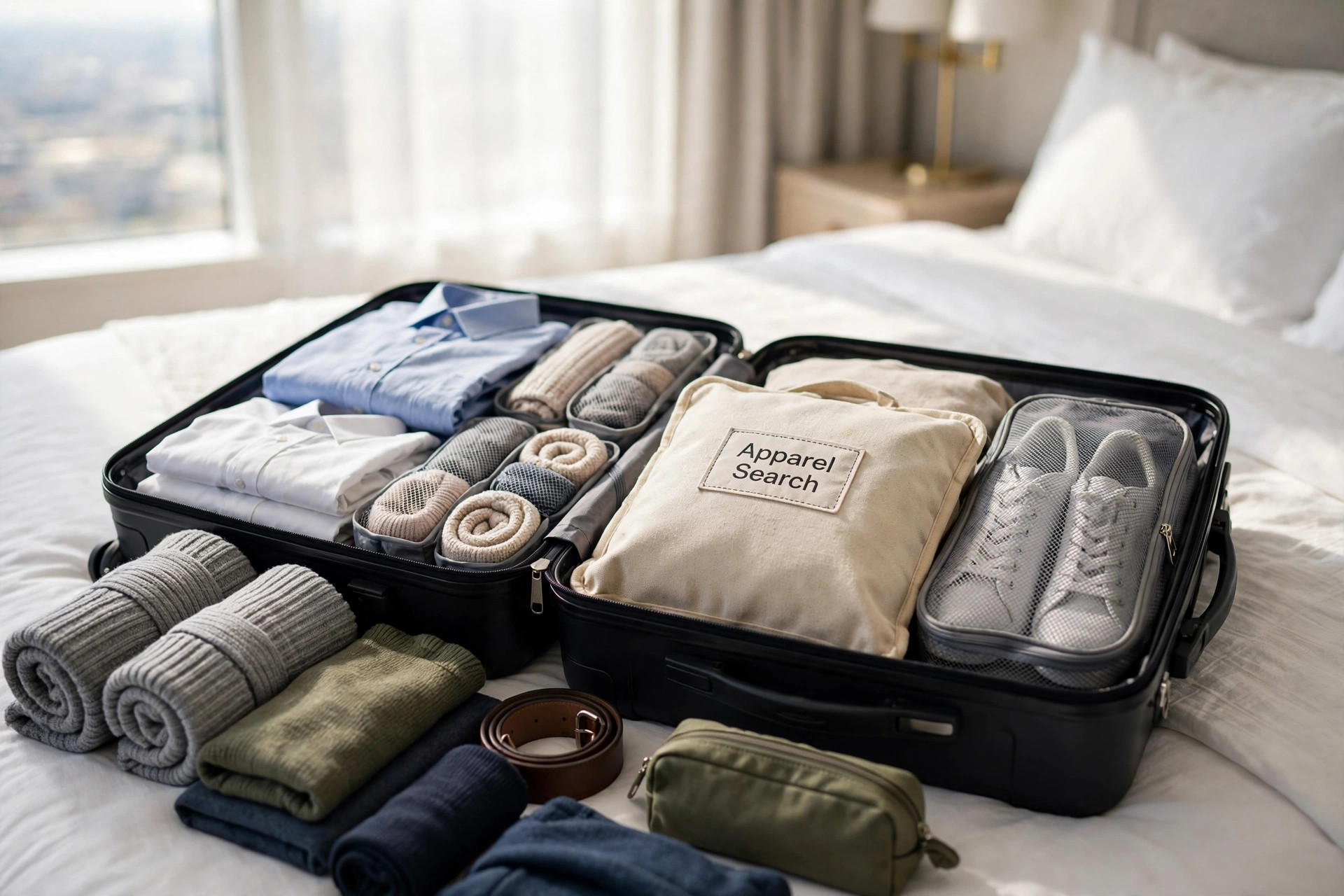
The Guides in This Section
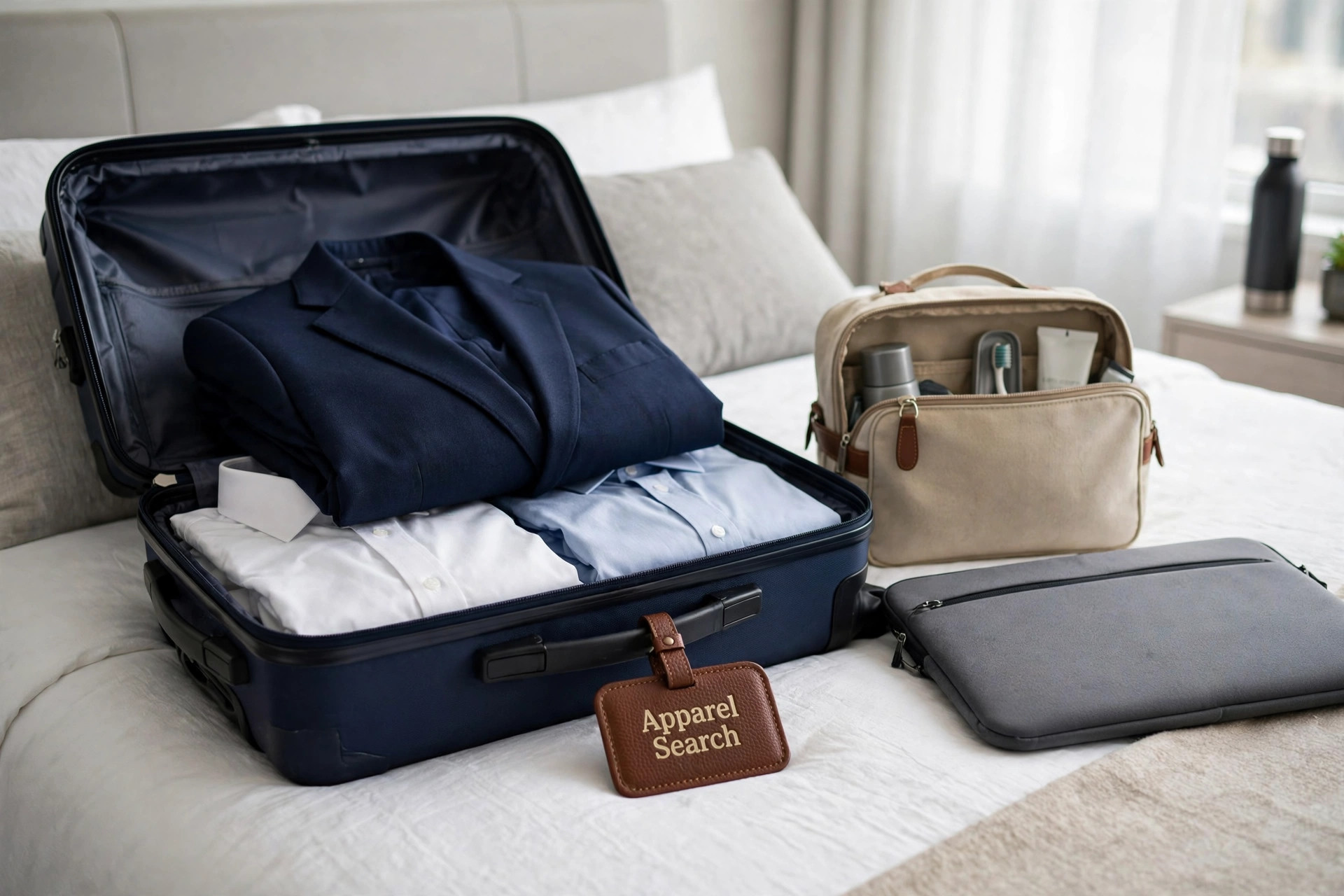 Business Travel WardrobeThe carry-on work system: one suit and separates that multiply into a week of meetings, wrinkle-resistant choices, the personal item as a second wardrobe, and arriving ready to walk into a room.
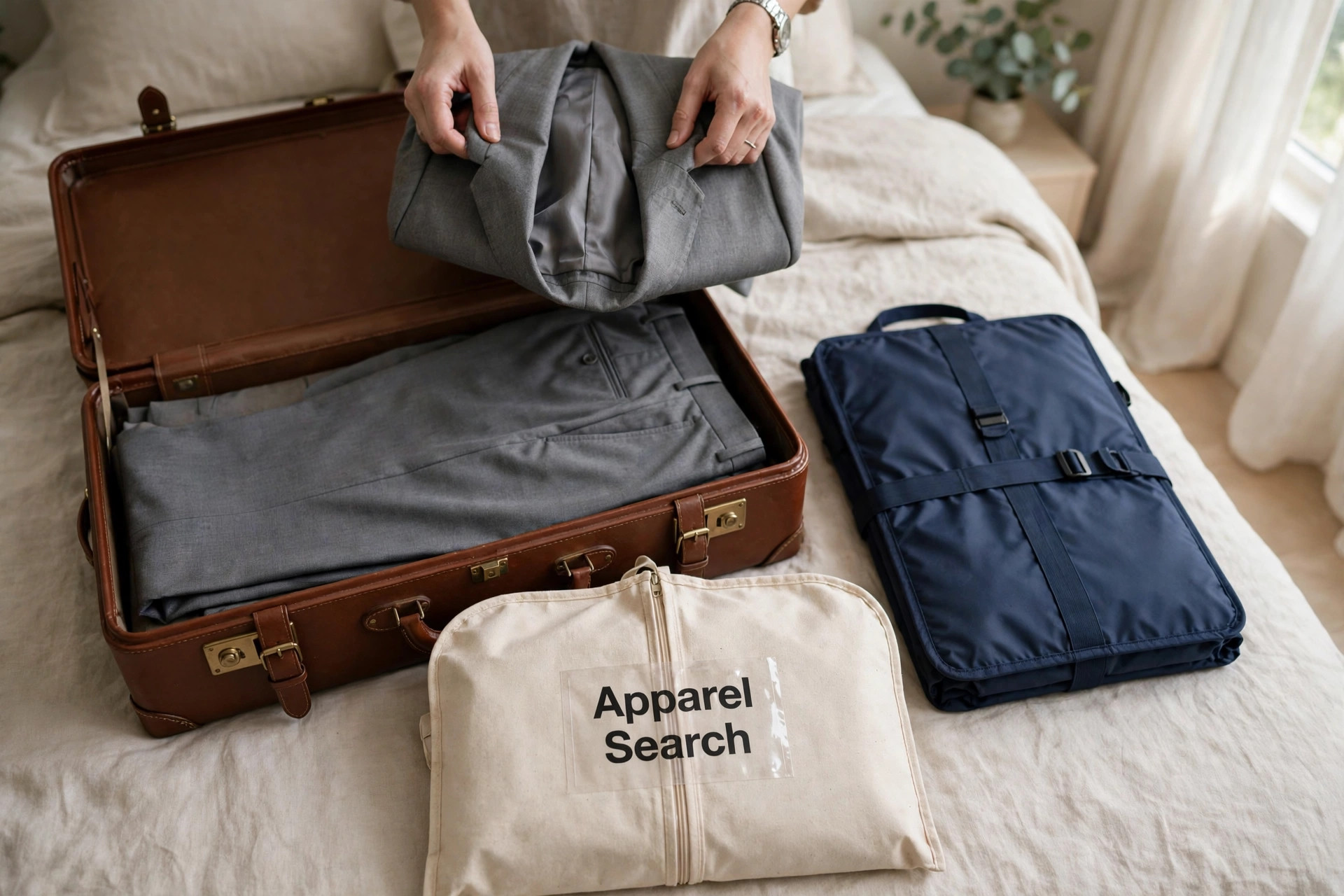 How to Pack a SuitThe folding methods step by step — the inside-out shoulder fold, bundle wrapping and the garment folder — where the suit rides in the case, and how to revive it on arrival.
Carry-On Math: Size, Weight and the Personal Item
Start with the uncomfortable truth: there is no standard carry-on. Most airlines size the cabin bag at roughly 55 x 40 x 20 cm (about 22 x 14 x 9 inches), but each carrier sets its own sizer, and weight rules scatter wider still — some airlines impose no separate cabin weight limit, many cap it somewhere around 7 to 10 kg, and the lowest fares on some carriers include only a small bag that fits under the seat. The numbers on your ticket, for your airline and fare class, are the only ones that bind. Check them before you pack, not at the gate.
Within whatever allowance you have, think of the space as two bags, not one. The cabin case is the wardrobe. The personal item — the bag that goes under the seat — is the insurance policy and the overflow: a change of clothes in case the main bag is gate-checked or delayed, medication and valuables that never leave your side, the charger and the documents, and anything you want during the flight. Travelers who pack the personal item as an afterthought are carrying half their allowance empty.
Weight, when it is limited, is mostly a shoe and fabric problem. Shoes are the densest thing in any case, which is why they are capped and worn strategically in every framework below. Heavy denim and cotton weigh more per outfit than wool blends and knits; on a strict weight limit, the wardrobe gets lighter by fabric choice before it gets smaller by piece count.
The Toolkit: Cubes, Rolls, Folds and Bundles
- Packing cubes sort a case into compartments you can lift out — one for tops, one for bottoms, one for underwear and sleepwear. Their real gift is organization rather than compression: you unpack by cube, repack in minutes, and never excavate the whole bag for one shirt. Compression cubes squeeze further and genuinely save volume on knits and soft goods, at the price of more creasing along the squeezed edges.
- Rolling suits soft, forgiving garments: T-shirts, knitwear, underwear, sleepwear, casual trousers. Rolled pieces compress well and snake into the gaps around everything else. The honest limit: rolling a woven shirt or a dress creates soft wrinkles instead of sharp creases — better, but not none — and tailoring should never be rolled at all.
- Folding is the default for wovens and anything with structure. Fold on the garment's own lines, smooth as you go, and stack like with like so the pile behaves as one block. A sheet of tissue or a dry-cleaning bag between folded layers reduces the friction that sets creases — an old tailor's trick that still earns its place.
- Bundle wrapping wraps garments around a central core — socks and underwear make a good one — each piece pulled gently taut over the last. Because nothing is folded on a hard edge, bundles resist sharp creases better than any stack, and the method shines for a mixed wardrobe of shirts and dresses. Its cost is access: the bundle comes apart as a unit, so it suits trips where you unpack once and stay put.
None of these wins outright, and the experienced packer uses all four in one case: cubes to organize, rolls to fill, folds for the wovens, and bundle thinking for the pieces that wrinkle if you look at them.
Shop Packing Cubes & Travel Gear on Amazon
Ready to shop? Product links are kept in one place on the Apparel Search shopping guide:
Shop Travel Gear on AmazonThis link opens the Apparel Search shopping guide for Amazon, where the product links are kept in one place.
The Packing Order
- Shoes first, at the wheel end. Shoes are the heaviest items in the case; loaded at the end nearest the wheels, they keep a rolling case stable instead of top-heavy. Stuff them with socks, belts or chargers, bag them soles-out, and cap the count — wear the bulkiest pair.
- The rolled foundation. Rolled soft goods — knitwear, tees, underwear, sleepwear — form the base layer and fill the valleys between the case's hardware and ribs, making a flat floor for everything above.
- The folded stack. Folded wovens go in next, as one squared block. Trousers can line the case lengthwise first, with their ends left hanging out to fold back over the finished stack — the oldest wrinkle-avoidance trick in packing, since the trousers end up folded around everything rather than creased in the middle.
- Wrinkle-prone pieces on top. The garments that crease easiest — the dress, the good shirt, the suit — ride last and highest, under the least pressure and the first to be lifted out. Our suit page gives tailoring its own full method.
- Fill the edges honestly. Small soft items — socks, scarves, gloves, a rolled belt — belong in the corners and gaps, protecting the stack from shifting. A case that cannot shift cannot churn, and churn is what turns a tidy bag into a wrinkled one.
- Load the personal item as the annex. One full change of clothes, the wash kit in its clear bag where security requires it, medication, chargers, documents and the journey's entertainment — packed so the bag makes sense even if it becomes your only bag for a night.
Wrinkle Management
Some wrinkling is decided at the wardrobe, not the suitcase: knits and jersey shrug off the bag, high-twist wools shed creases overnight on a hanger, and stiff cottons and linens keep every fold you give them — pack linen accepting the creases as part of its look, because they are. Inside the case, the rules from the toolkit apply: smooth each piece as it goes in, fold on natural lines, separate layers with tissue or a cleaner bag where friction threatens, and never pack a garment still warm and damp from the iron.
The second half of wrinkle management happens at the destination, and it takes ten minutes: unpack on arrival, hang everything, and let gravity and air start work immediately. A steamy bathroom — the suit or dress hung while the shower runs hot — relaxes most travel creases without touching the garment, and a proper garment steamer pass, where the hotel or your own travel steamer provides one, finishes the rest. Clothes left zipped in the case until the morning they are needed keep every crease the journey pressed into them.
Trip-Length Frameworks
Frameworks, not commandments — each assumes a mix-and-match wardrobe in one palette, shoes capped at three pairs including the pair worn, and laundry available from the second week on. Adjust counts to your climate and your laundry plans, not the other way round.
The Weekend (2–3 days)
- Worn: the heaviest outfit — jeans or trousers, layered top, the bulkiest shoes.
- Packed: 2 tops, 1 bottom, 1 layer that dresses up or down, underwear and sleepwear for each night, 1 outfit-changer (a dress, or a shirt that turns day clothes into evening ones).
- The whole trip fits the cabin case with room to spare — the test of a weekend framework is what it leaves out.
One Week (5–7 days)
- 5 tops, 3 bottoms, 1–2 layers, 1 dress or alternate outfit, underwear for each day, sleepwear x2.
- The outfit math of the capsule: five tops across three bottoms is fifteen combinations — a week dressed twice over from eight garments.
- One planned sink wash mid-trip (quick-dry underwear and socks) keeps the bag from growing.
Two Weeks (10–14 days)
- Pack for one week, not two: 6–7 tops, 3–4 bottoms, 2 layers, and a genuine laundry plan — a hotel or laundromat wash at the midpoint, or a wardrobe of quick-dry pieces washed in rotation.
- Variety comes from accessories and layering, not from a second week of clothes.
- If the trip mixes business and leisure, the business system in our business travel wardrobe page carries the work half and the capsule carries the rest.
Laundry on the Road
Laundry is the decision that lets a small bag serve a long trip, and it comes in three grades. Sink washing handles underwear, socks and quick-dry tops: warm water, a little soap or travel detergent, a rinse, a roll in a towel to press the water out, and a hang overnight — merino and synthetic pieces are dry by morning; cotton mostly is not, which is a fabric argument made elsewhere on this page. Hotel laundry is the convenience grade: reliable and priced like it, sensible for a shirt before a big day, extravagant for a whole wardrobe. A laundry day — a laundromat or wash-and-fold service near the midpoint of a long trip — is the option experienced travelers actually plan around: an hour or a small fee, and the second week starts with a clean bag. Whichever grade you choose, decide it while packing: a wardrobe built from pieces that wash and dry in rotation travels half the weight of one that must arrive with everything.
Leave Room for the Trip Home
The most common packing failure happens at the end of the trip: a case packed to its limit on departure cannot absorb purchases, gifts or the simple expansion of clothes that never refold as small as they left. Leave a genuine margin — a collapsible tote in the bottom of the case weighs nothing and turns a crisis into a carry-on — or accept, in advance, that something gets worn in layers on the flight home.
Common Questions
Should I roll or fold my clothes when packing?
Both — by garment, not by dogma. Knits, T-shirts, underwear and casual trousers roll well: rolling compresses them, fills gaps and leaves few hard creases. Woven shirts, dresses and anything structured fold better, because a fold follows the garment's shape instead of fighting it. Tailoring should be folded with its structure respected — or worn. The reliable system is a hybrid: a folded base, rolled soft goods packed around it, and the most wrinkle-prone pieces on top.
How big and how heavy can a carry-on be?
There is no universal standard, and any page that gives you one number is guessing. Most airlines size the cabin bag at roughly 55 x 40 x 20 cm (about 22 x 14 x 9 inches), but the exact dimensions differ by carrier, and weight is where they differ most: some airlines set no separate cabin weight limit, many cap it somewhere around 7 to 10 kg, and the cheapest fares on some carriers include only a small under-seat item. Check your own airline and fare class before you pack — the bag that was fine last trip may not be fine on this ticket.
How do I keep clothes from wrinkling in a suitcase?
Wrinkles come from sharp folds, pressure and friction, so packing fights all three. Choose knits and wrinkle-resistant weaves where you can; fold along a garment's natural lines rather than across them; smooth each piece as it goes in so air and creases are not packed with it; keep the most wrinkle-prone items on top, under the least pressure; and unpack promptly on arrival. A hanging garment in a steamy bathroom, or a pass with a steamer, finishes what careful packing started.
Is checking a bag ever the better choice?
Yes, and carry-on-first is a default rather than a religion. A long trip, a formal event wardrobe, gear that cannot fly in the cabin, gifts and purchases coming home — all of these can make a checked bag the sensible tool. The craft on this page still applies inside the bigger bag: the same order, the same wrinkle management, and anything you would be stranded without — medication, chargers, one change of clothes — stays with you in the cabin regardless.
Choosing Is the Method; Packing Is the Craft
This guide assumes the wardrobe is already chosen well — few pieces, one palette, everything combining with everything. That choosing is the capsule method, and it lives in our capsule wardrobe guide: the build method, and the work, travel, seasonal and budget capsules. Its travel capsule wardrobe page is this guide's closest companion — the outfit math and a sample seven-day list, ready to be packed by the methods above.