Apparel Search Holiday Guides
4th of July Outfits
What to wear for Independence Day, from the morning parade to the last firework: red, white and blue done tastefully, fabrics that survive July heat, and one outfit plan for the whole long day.
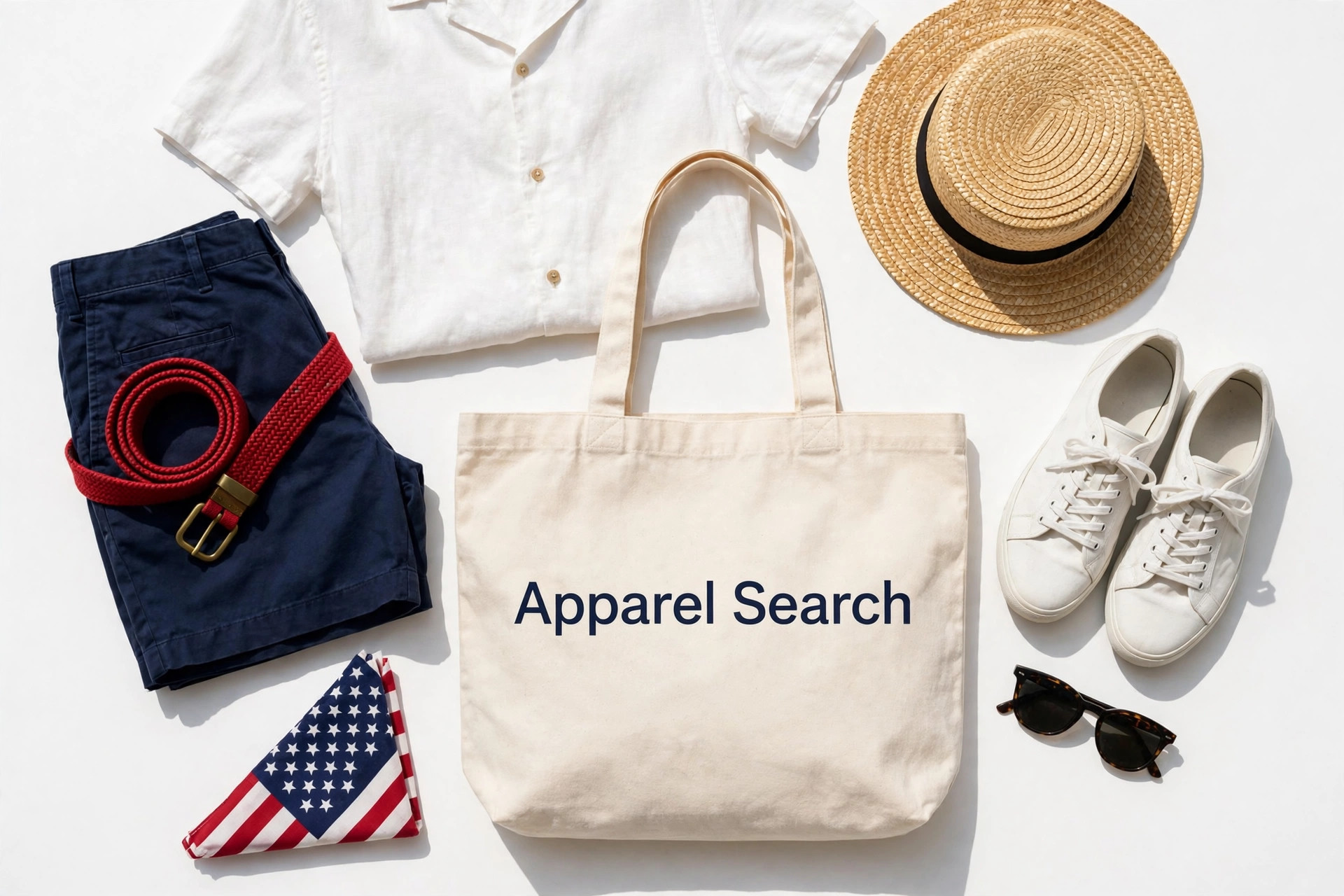
The 4th of July is really three events wearing one date. There is a morning parade on hot pavement, an afternoon cookout on someone's lawn, and an evening on a blanket waiting for dark — and the outfit that wins is the one planned for all three. This guide builds that outfit: how to wear the colors without wearing a costume, which fabrics hold up in July heat and humidity, and how to handle the details — grass, sauce, sun and the after-dark chill — that decide whether you are comfortable at the fireworks or just dressed for the photos.
Search Apparel Search
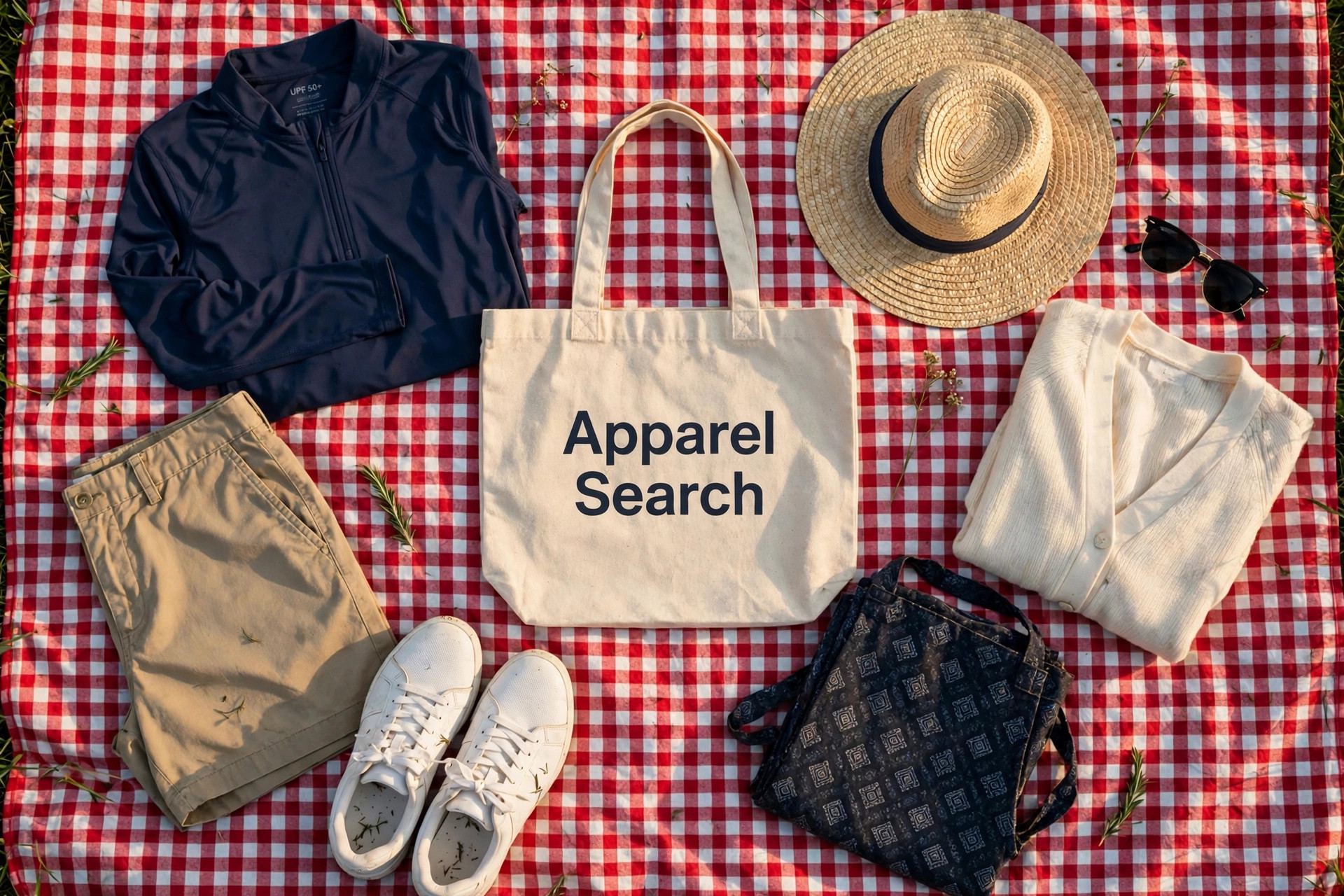 The Cookout Deep-DiveGrass-friendly footwear, the stain strategy, sun coverage and bug-hour layers — the full backyard playbook in our 4th of July cookout outfits guide.
01The Day in Three ActsParade morning, cookout afternoon, fireworks evening — one outfit, three settings.
02Red, White & Blue, TastefullyThe one-accent rule that keeps the colors festive instead of costume-like.
03Heat, Humidity & Hours OutdoorsBreathable fabrics, sun coverage and the long-day comfort checklist.
04Dressing the Whole FamilyCoordination without matching — and photo-friendly choices for everyone.
The 2027 Calendar
- Independence Day 2027 falls on Sunday, July 4. The holiday itself is a Sunday this year, which spreads the celebrations across the whole weekend.
- The federal holiday is observed on Monday, July 5, 2027. When July 4 falls on a Sunday, federal offices close and the official day off moves to the following Monday — so most people get a three-day weekend.
- Local events move around. Many towns schedule parades and fireworks for Saturday the 3rd or Monday the 5th rather than the Sunday itself. Check your town's schedule before you plan an outfit around a specific event — and expect cookout invitations on any of the three days.
The Day in Three Acts
Parade morning
Parades mean standing on asphalt in full late-morning sun, often for an hour or more. Wear the most structured version of your outfit here: a collared shirt or a neat sundress, real shoes rather than flip-flops, and a hat. White and pale colors earn their keep in the morning — they reflect heat and look sharp in the bright light — and this is the moment for your one patriotic accent, whether that is a red belt, a navy bandana or a striped scarf. If your town's parade involves water balloons, squirt guns or a fire-truck spray (more towns than you would think), treat the morning outfit as potentially damp and choose fabrics that dry gracefully.
Cookout afternoon
The afternoon is the main event and the hardest dressing test of the day: lawn underfoot, sun overhead, a plate in one hand and a drink in the other. This is where the outfit has to work rather than pose. Flat shoes that will not aerate the lawn, breathable fabrics, and colors or prints chosen with barbecue sauce in mind. Our 4th of July cookout outfits guide is devoted entirely to this act — footwear, stain strategy, sun coverage and the pool-party overlap included.
Fireworks evening
After sunset the temperature drops further than most people expect, the dew settles on the grass, and the mosquitoes clock in. The evening layer you bring — a light sweater, a denim jacket, a long-sleeve shirt to pull over — is the difference between watching the finale comfortably and enduring it. Closed shoes quietly replace sandals after dark, both for the dew and for walking back across a dark field. If you will be on or near the water for a boat parade or lakeside show, add one more degree of warmth than you think you need: water after dark is colder than land.
Red, White & Blue, Tastefully
The whole secret of holiday dressing is proportion. An outfit built from two of the three colors in ordinary, well-fitting summer clothes already reads as festive; the third color works best as a single accent. Navy shorts and a white linen shirt with a red belt. A red sundress with white sneakers. Chambray and white with a striped scarf. What tips an outfit into costume is wearing all three colors at full strength in every piece — flag tee, flag shorts, flag hat — which is fun for a parade float and a lot for a guest at lunch.
- One patriotic element per outfit. A flag-print scarf, a star-spangled bandana, a red-white-and-blue ribbon — pick one and let it be the exclamation point.
- Let navy do the heavy lifting. Navy is the most wearable of the three colors and the easiest to dress up or down; white keeps it summery and red wakes it up.
- Stripes beat prints for grown-ups. A navy-and-white stripe with one red accessory nods to the flag's geometry without copying it, and the pieces stay useful all summer.
- Keep the actual flag out of the outfit. More on this in the note below — prints inspired by the flag are fine; a real flag worn as clothing is not the way to honor it.
Heat, Humidity & Hours Outdoors
Early July is peak summer across most of the United States, and a 4th of July outfit may be worn for ten hours outdoors. Fabric choice matters more than style choice. Linen and linen blends, cotton seersucker and eyelet, and modern moisture-wicking knits all breathe; polyester satin and heavy denim do not. A loose fit in a natural fabric will beat a tailored fit in a synthetic one by mid-afternoon. For the science of dressing by thermometer, see our guide to dressing for the climate, and for genuinely humid regions, what to wear in humid weather.
Sun coverage is clothing's job too. A brimmed hat shades the face and neck in a way sunscreen alone does not, and a lightweight UPF shirt covers shoulders through the long midday stretch — our sun-protective clothing buying guide explains the ratings and what to look for. Pale colors feel cooler but show every splash; mid-tones and small prints are the cookout compromise, a point the cookout guide develops in full.
Dressing the Whole Family
Group photos are a 4th of July tradition, and the families who like their pictures coordinate rather than match. The formula: one shared color family (navy and white, say) with each person choosing their own second color and their own style of garment. Identical flag tees date a photograph instantly; a loose palette looks intentional in the album for decades. Put children in the most practical version of the palette — play clothes in navy, red or white that can handle grass stains and a spilled lemonade, with a spare shirt in the bag — and save any special outfit for the morning parade rather than the afternoon lawn. Hats for everyone are both the sun-smart choice and the easiest coordinating device there is: same family of hat, each person's own style.
A Point of Respect
A Note on the Flag Itself
Every year the holiday raises the same wardrobe question, and it deserves a straight answer. The United States Flag Code (4 U.S.C. § 176(d)) states that the flag “should never be used as wearing apparel, bedding, or drapery.” The Code is advisory rather than a criminal law for civilians, but it expresses a real and widely held sentiment: an actual flag — one made to be flown — should not be cut up, sewn into shorts or worn as a cape.
That guidance is about the flag itself, not about its colors or patterns. Stars-and-stripes prints produced as clothing fabric, flag-motif scarves and red-white-and-blue designs of every kind are a separate matter and a long American tradition. The simple, respectful line: wear the prints freely, fly the real flag properly, and never turn a flown flag into a garment. If you are celebrating with veterans or at a memorial event, the prints-without-the-flag approach is also the one least likely to give offense.
Shopping for the Fourth
Summer shirts, shorts, sun hats and red-white-and-blue accents are widely stocked for the holiday season.
Shop Summer & Patriotic Clothing on Amazon
This link opens the Apparel Search shopping guide for Amazon, where the product links are kept in one place.
Common Questions
What should I wear to a 4th of July cookout?
Dress for grass, heat and food: flat, closed shoes that will not sink into a lawn, breathable natural fabrics, a color or print that forgives a splash of sauce, and a hat for the sun window in the middle of the day. Bring one light layer for the evening, when temperatures drop and the mosquitoes arrive. Our cookout guide covers the full playbook.
Is it OK to wear flag-print clothing on the 4th of July?
Stars-and-stripes prints made as clothing fabric are a long-standing holiday tradition and are not the same thing as the flag itself. The U.S. Flag Code advises that an actual flag should never be used as wearing apparel, so the respectful line is simple: wear flag-inspired prints freely, but never cut up or wear a real flag as a garment.
When is the 4th of July in 2027, and when is the holiday observed?
Independence Day 2027 falls on Sunday, July 4. Because the date lands on a Sunday, the federal holiday is observed on Monday, July 5, 2027, giving most people a three-day weekend; many towns also move parades and fireworks to Saturday the 3rd or Monday the 5th, so check your local schedule before planning outfits around a specific event.
How do I wear red, white and blue without looking like a costume?
Use one patriotic element per outfit, not three. Build the base from two of the colors in ordinary summer clothes — navy shorts and a white shirt, a red sundress — and let a single accent (a belt, a bandana, a pair of earrings) carry the third. The result reads as dressed for the holiday rather than dressed as the holiday.