Apparel Search Consumer Guides
Cultural & Festival Outfit Guide
Dressing well for the world's great celebration days — what to wear, what the customs ask of your clothes, and how to be the guest every host is glad to see.
Almost every culture keeps a set of days when the ordinary wardrobe is put away and the good clothes come out — and those days come with dress codes of their own, whether or not anyone prints them on an invitation. Apparel Search already explains the Western invitation ladder in our dress codes guide and the December season in our holiday fashion shopping guide. This section covers the other great dressing-up days of the year: the cultural and religious festivals, from Eid mornings and Diwali nights to Lunar New Year family rounds — for the people who celebrate them, and for the guests lucky enough to be invited. Three festivals get a full guide each below; the principles on this page apply to all of them.
Search Apparel Search
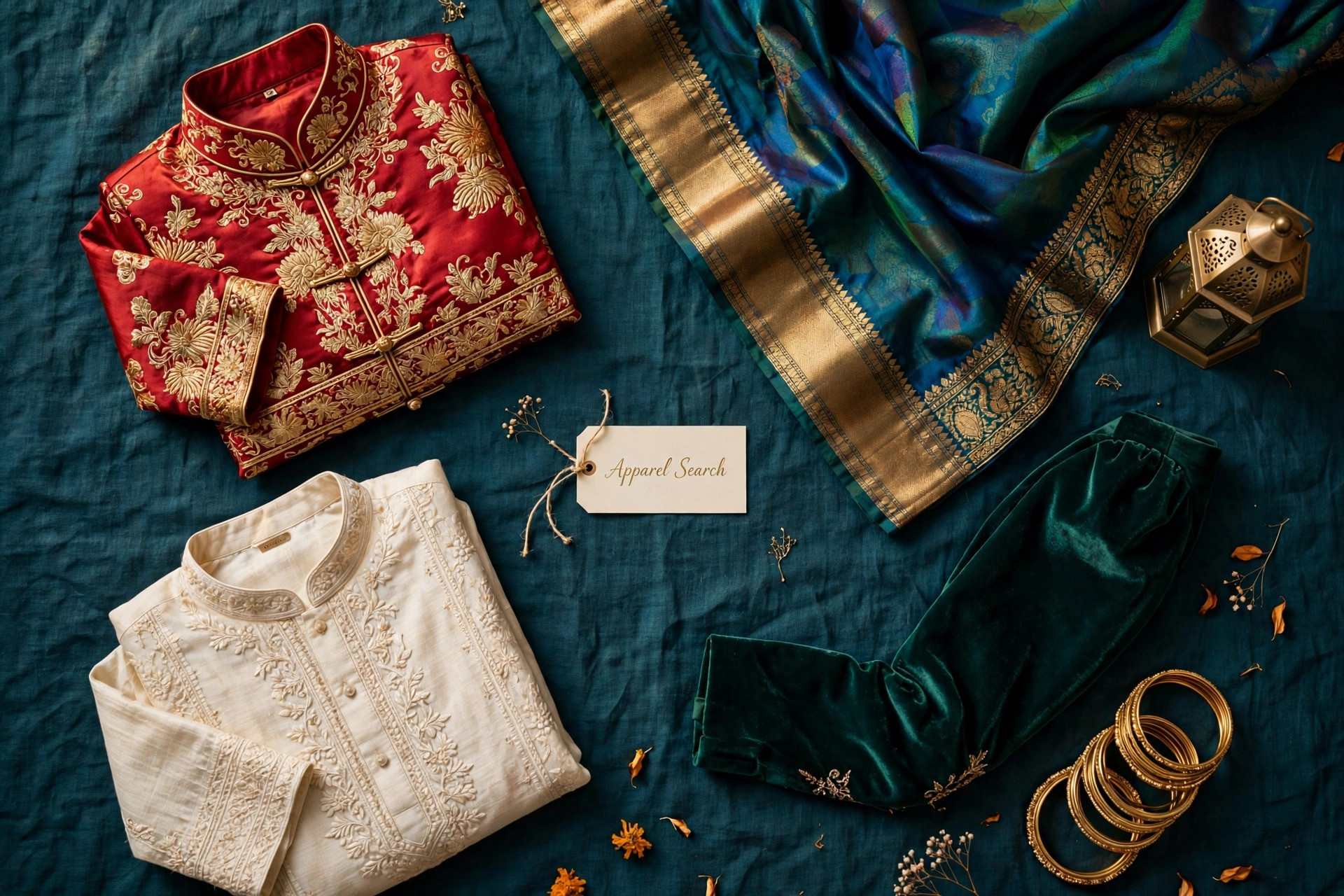
The Guides in This Section
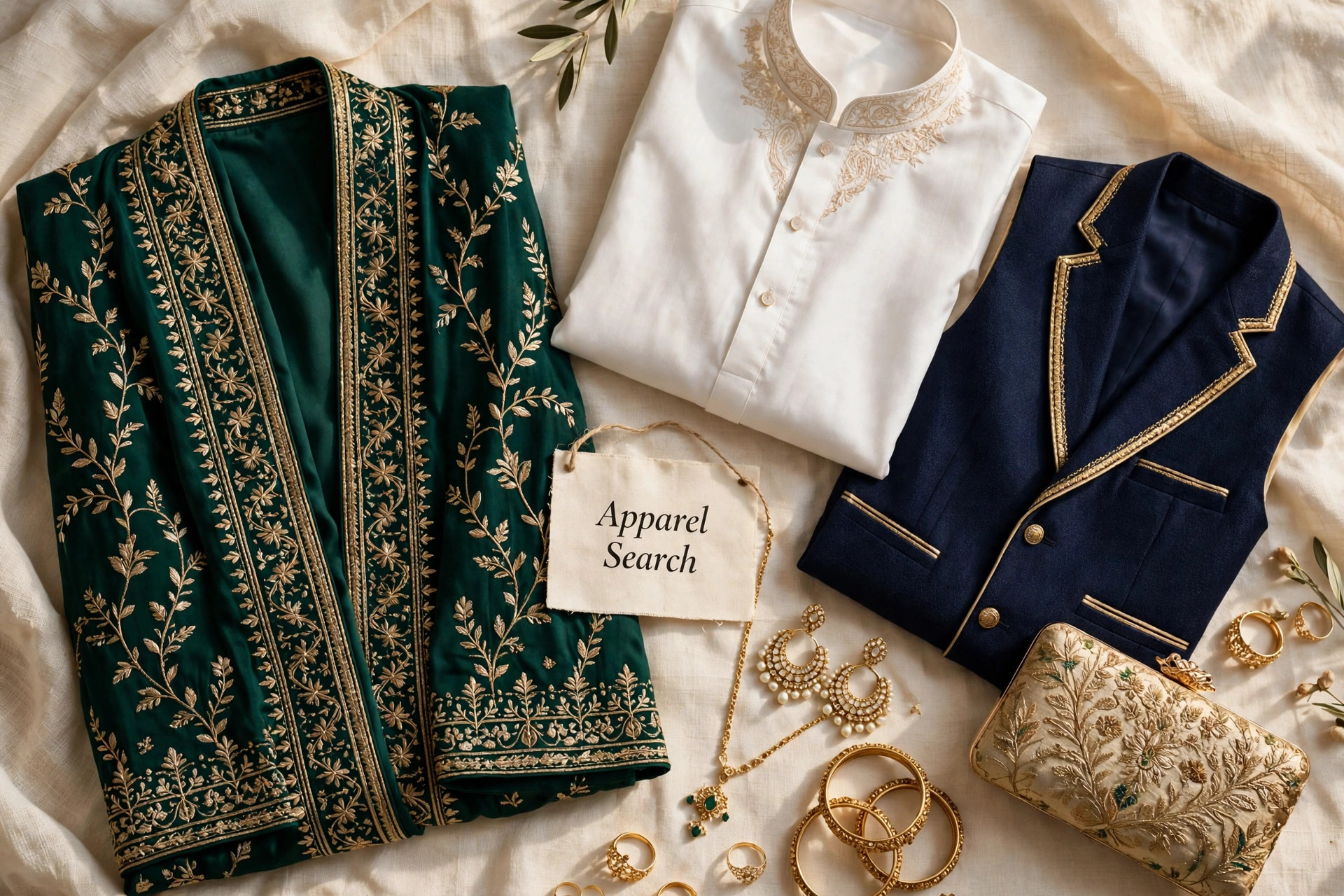 Eid Outfit GuideEid al-Fitr and Eid al-Adha: the new-clothes tradition, festive modest dressing for women and men, and what guests wear to an Eid gathering.
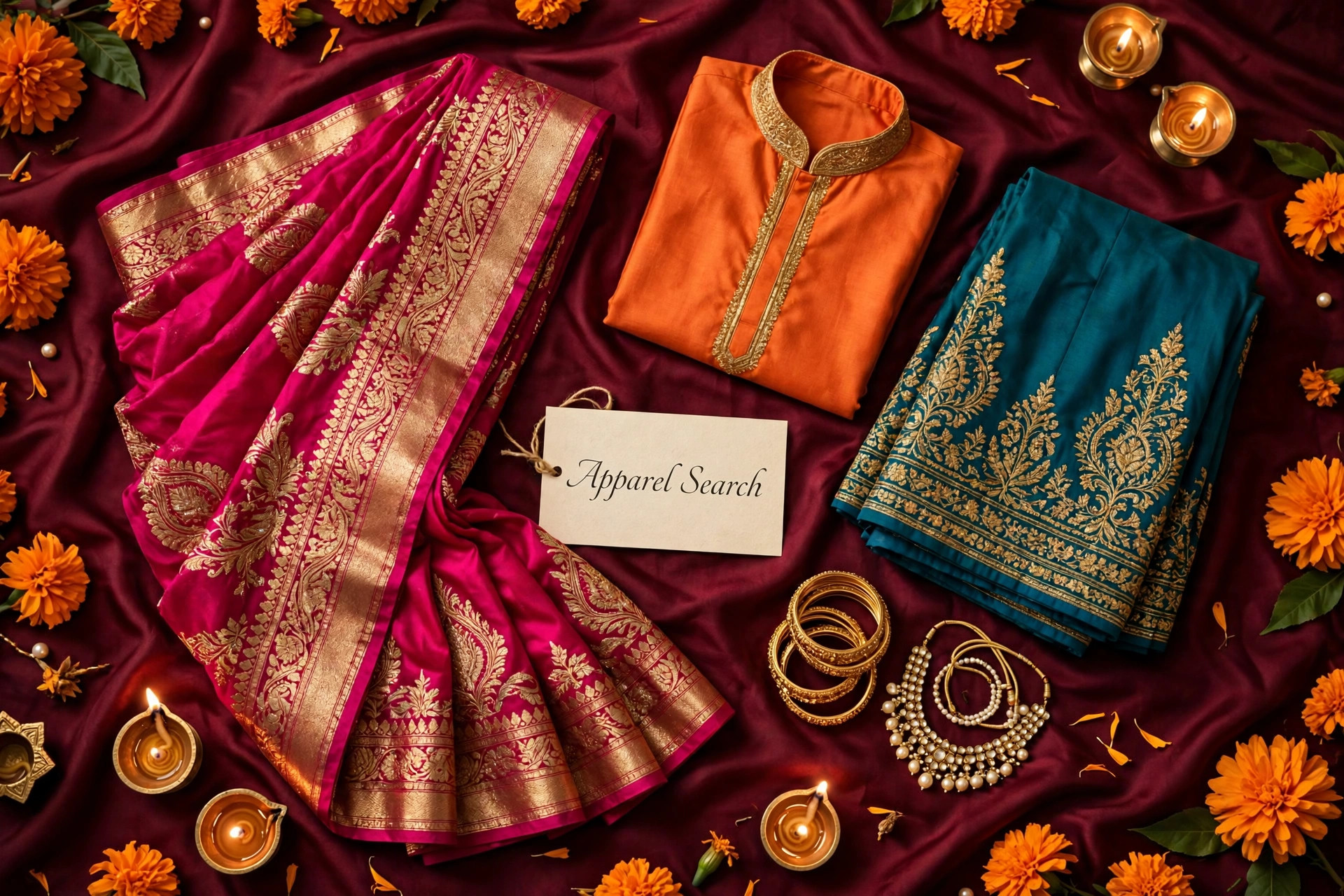 Diwali Outfit GuideThe festival of lights: saris, lehengas and kurta sets in jewel tones and gold, the five days of the festival, and gold jewellery as part of the outfit.
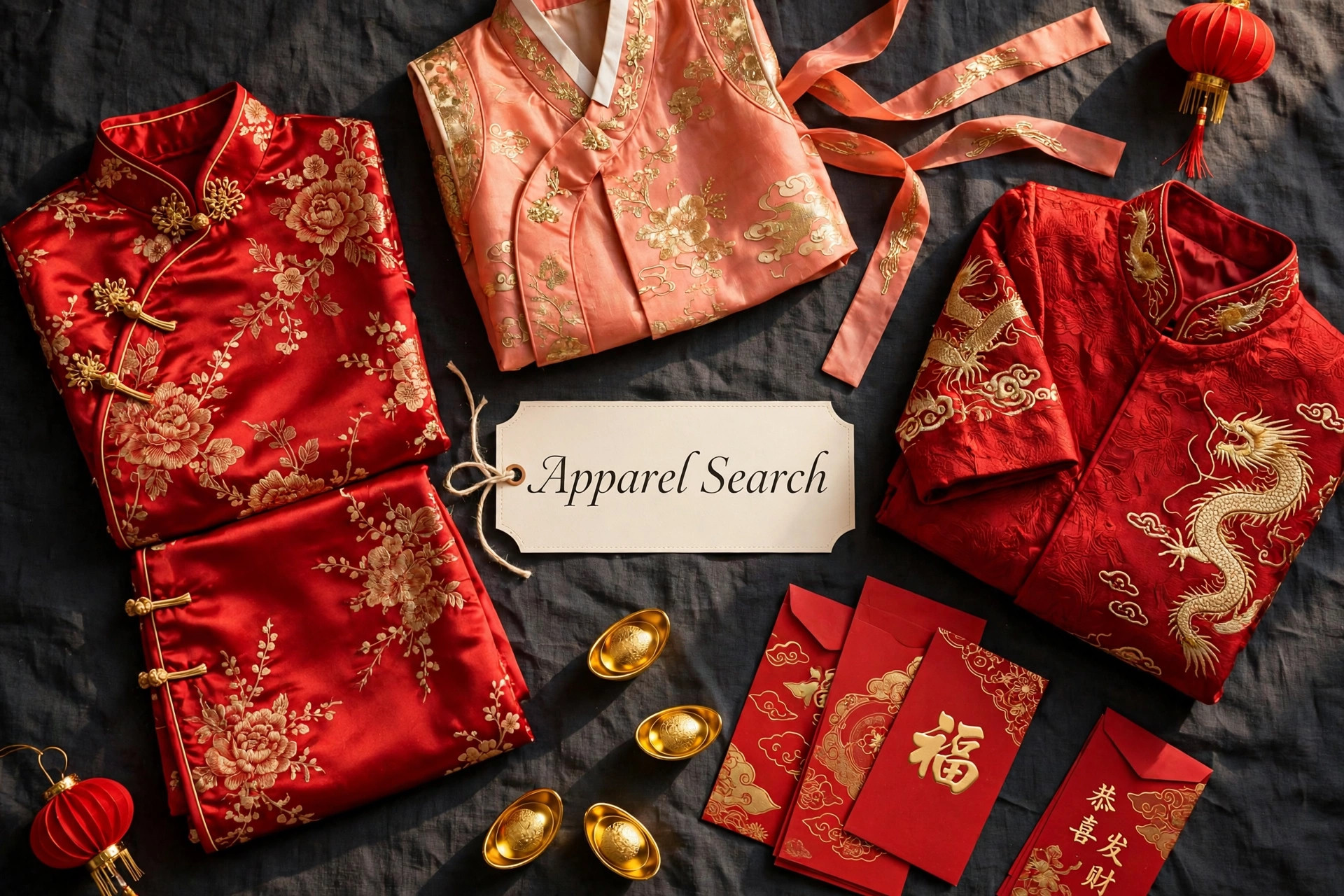 Lunar New Year Outfit GuideRed and gold, new clothes for a new year, and the great garments of the season — qipao, hanbok and áo dài — plus what to avoid.
Start With the Occasion, Not the Outfit
A festival outfit succeeds or fails before you open the wardrobe, because the right clothes depend on four facts: which festival, whose celebration, where it happens, and your place in it. A Diwali evening at a family home, an Eid morning that begins at the mosque, and a Lunar New Year reunion dinner in a restaurant are three different dress problems. Getting the facts straight takes five minutes:
- Find out what the day involves. Is there a visit to a place of worship? A meal at someone's home? Floor seating, a procession, photographs? Each element touches what you should wear.
- Ask the host. One question — "what do people usually wear?" — settles formality, coverage and colour in a sentence, and hosts are invariably pleased to be asked rather than guessed at.
- Check the venue customs. Homes and places of worship often mean shoes off at the door; some venues ask visitors to cover their heads or shoulders. Plan for the strictest room you will enter.
- Choose clothes that can adapt. A layer you can add, shoes that slip on and off, a scarf in the bag: adaptable outfits absorb every surprise a celebration can produce.
The Customs That Touch Your Clothes
Coverage. Expectations vary widely — by festival, by venue and by family. Celebrations that include a place of worship generally call for covered shoulders and legs, and our modest fashion guides show how to build coverage into an outfit without dulling it. A home celebration may ask for none of that. The host's answer, not a general rule, is the authority.
Shoes. At a great many of these celebrations you will take your shoes off — at the door of a home, and in mosques and temples. Wear shoes that slip off without a wrestling match, and socks or hosiery you are content to be seen in.
Head coverings. Some places of worship ask every visitor to cover their head; others ask it in particular areas or not at all. A lightweight scarf carried in a bag covers every case and doubles as a shoulder layer.
Sitting, eating and joining in. Festival days involve food, photographs and often floor cushions. Outfits that let you sit comfortably, eat generously and stay for hours are doing their job; the most elegant outfit at the party is the one its wearer can relax in.
Colour Symbolism Is Real — and Local
Colours carry meaning at festivals, but the meanings belong to cultures, not to colours. Red is luck, joy and protection in Chinese tradition and gloriously festive in South Asia; gold speaks of prosperity and light at Diwali and wealth at Lunar New Year. White, meanwhile, is a mourning colour in some traditions and the colour of purity and celebration in others — sometimes in neighbouring families. Our page on colour theory for dressing covers how colour works in an outfit; for what a colour says at a given festival, the festival guides below and your host are the sources that count.
Guest or Participant?
Participants dress from inside a tradition — the guides below go garment by garment. Guests have a simpler brief: your own best festive clothes, chosen with the customs above in mind. One question comes up constantly, and it deserves a straight answer: may a guest wear the host culture's traditional garment? Very often yes — hosts frequently suggest it, lend it or take the guest shopping for it, and a real garment worn properly is read as joining in. Choose it with the host's guidance, wear it correctly and in good condition, and it becomes part of the celebration. Our garment guides — the sari and saree guide, the cheongsam and qipao guide, the kaftan guide — explain how each is actually worn.
The Dress Code Nobody Prints
Every festival in this section runs on the same unwritten code: dress like the day matters. New or best clothes, bright colours, a little more effort than the everyday — that instinct appears at Eid, Diwali and Lunar New Year alike, in different garments and the same spirit. When in doubt, err on the side of dressing up.
Common Questions
What should a guest wear to a cultural or religious festival?
Festive, neat clothes that can adapt: something you could add a layer to for coverage, in shoes that slip off easily if you are visiting a home or a place of worship. Bright, celebratory colours are a safer default than black at most of these occasions. The single most reliable step is to ask your host one question — what do people usually wear? — and follow the answer.
Is it appropriate to wear the traditional garment of a culture that is not my own?
Very often, yes — hosts frequently suggest it themselves, and at many celebrations a guest in a sari, a kaftan or a qipao is read as joining in, not dressing up as someone else. The respectful version is a real garment, worn properly and in good condition, ideally chosen with guidance from your host or the shop. If nobody has suggested it and you are unsure, festive dress of your own is always correct.
Should I bring a scarf or head covering to a festival?
If any part of the day takes place in a place of worship, a lightweight scarf in your bag is the flexible answer: some venues ask all visitors to cover their heads, others ask only in certain areas, and a scarf also serves as a shoulder layer if the dress code of the room turns out to be more covered than your outfit. It costs nothing to carry and solves the question on the spot.
Are there colours I should avoid at festivals?
There is no universal chart, because colour symbolism is local. Red means luck and celebration in Chinese tradition and is festive across South Asia too, while white is a mourning colour in some traditions and a colour of purity and celebration in others. The working rule: choose bright, festive colours, skip head-to-toe black or white unless your host's own family wears them, and ask when you are genuinely unsure.
Related Guides
Modest Fashion: Coverage With Style
Many festival dress codes ask for coverage — the modest fashion section shows how to build it into outfits for every occasion.