Apparel Search Consumer Guides
Bar & Bat Mitzvah Outfits
A synagogue service in the morning and a party after it — what guests wear to both, what the celebrant and family wear, and how the coverage rules change from one congregation to the next.
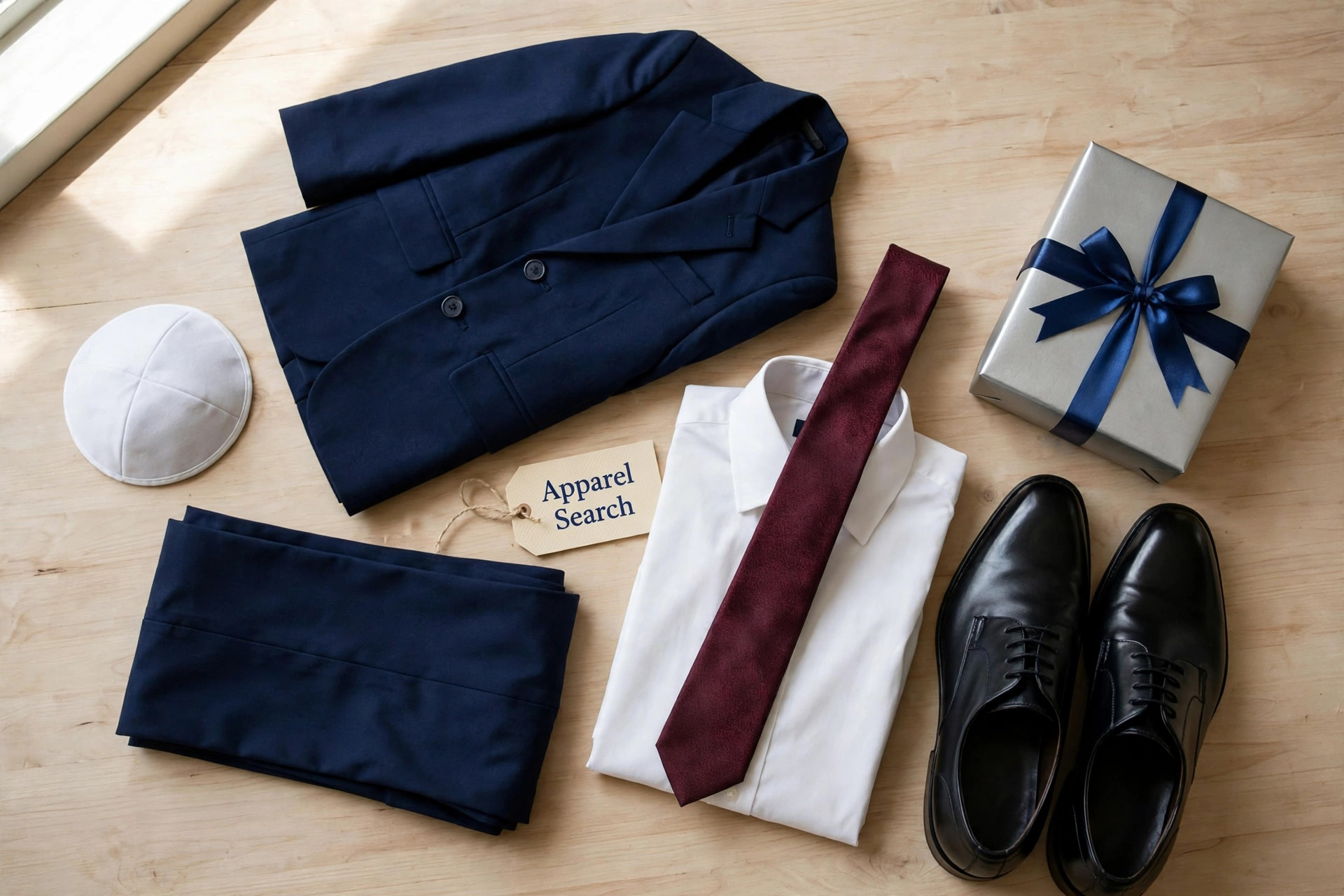
A bar or bat mitzvah is the celebration at which a Jewish teenager — thirteen, in most communities — takes on the religious responsibilities of an adult and marks the moment by taking part in a synagogue service, with a party held around it. For the family at the centre of the day it is one of the biggest occasions of a childhood. For everyone dressing for it, family and guests alike, it sets a particular puzzle: it is two occasions inside one invitation, and they do not ask for the same clothes.
This guide works through both halves — the service and the party — for guests, for the celebrant, and for the parents, siblings and grandparents around them. One part of the family gets a page of its own: the bat mitzvah outfit guide covers the girl’s celebration garment by garment. One warning runs through everything below: the details of dress vary from congregation to congregation, and where this guide gives a range, the range is the answer — your hosts’ own congregation sits somewhere specific inside it.
Search Apparel Search
The Guides in This Section
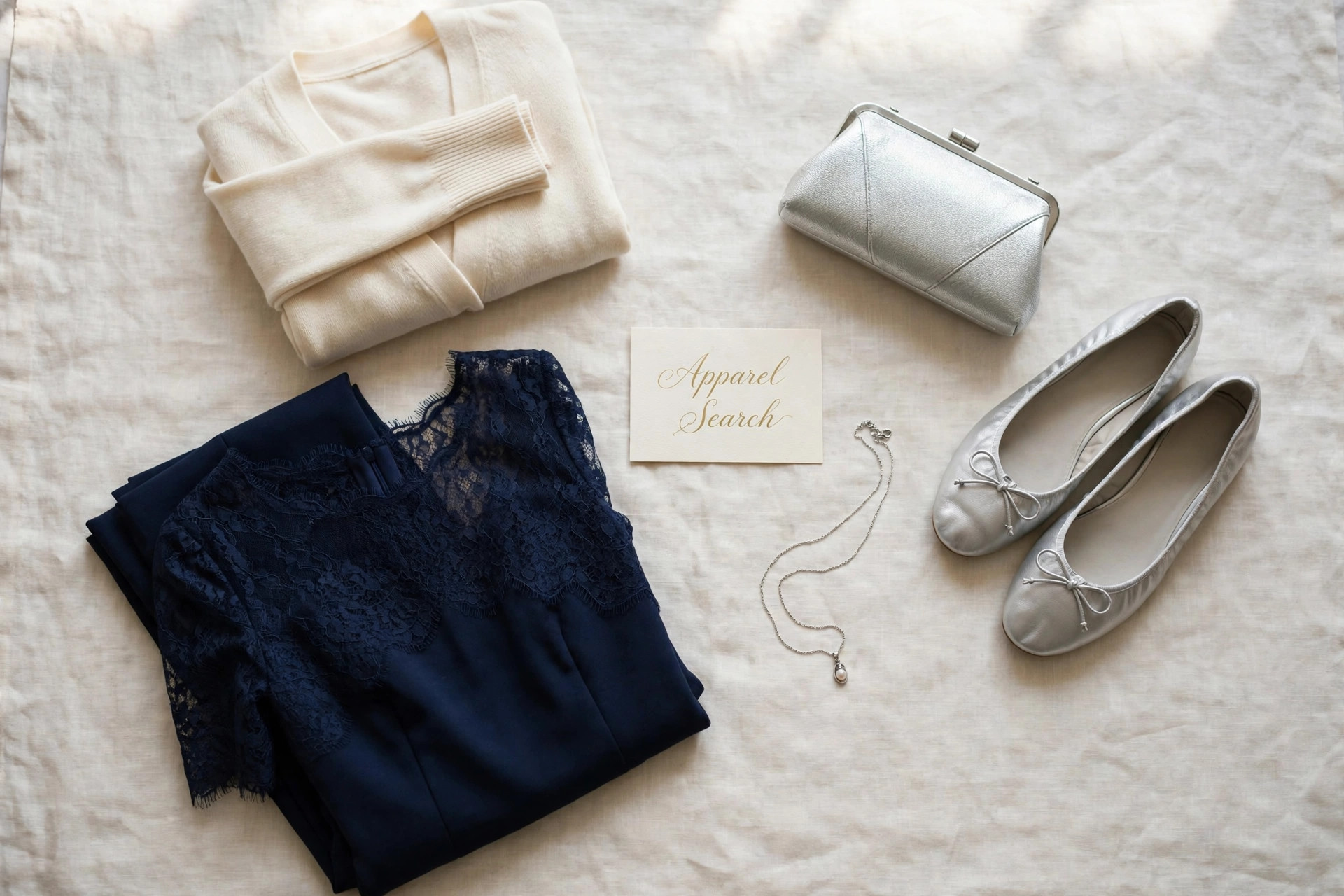 Bat Mitzvah Outfit Guide
The Shape of the Day
Most bar and bat mitzvahs are built from up to three parts, and the invitation is the map of which ones you are dressing for.
- The service. Usually on Saturday morning, sometimes on a Friday evening or another day, in the synagogue. This is the formal heart of the day — a full service, lasting a couple of hours or more, at which the teenager plays a leading part. Dressing here is dressing for a place of worship: covered, polished and comfortable enough to sit and stand through a long morning.
- The kiddush or luncheon. Food follows the service, often immediately — a buffet in the synagogue hall or a lunch nearby. The same clothes, in a lighter mood; nobody changes for this part.
- The party. Later that day, that evening, or occasionally on another day entirely: a reception with a meal, music and dancing, at anything from a restaurant room to a hotel ballroom. This is where the day’s dress code steps up — or, at a daytime party, sideways into smart celebration dress.
Not every family holds all three parts, and some hold the party on a scale that rivals a wedding while others keep the whole day to the service and lunch. Everything below is written so you can dress part by part.
Coverage Varies by Congregation — There Is No Single Rule
Synagogue dress norms sit on a range, and a guest’s first job is to place their hosts on it. In Orthodox congregations, women wear skirts or dresses that cover the knee, sleeves to the elbow or below, and higher necklines; men wear a suit or jacket, and head coverings are worn by men throughout. Conservative congregations usually sit a step less formal, with covered shoulders and longer hemlines as the comfortable default and suits or blazers for men. Reform congregations span the widest range, from full suits to smart festive dress. The guest’s safe default at any service: covered shoulders, a hemline at or below the knee, polished shoes — and for men, the kippah you will usually be offered at the door, worn during the service as a guest’s courtesy. When you genuinely do not know, ask the hosts; it is one of the most common questions they field, and it is always welcome. Our modest fashion guide covers building coverage into an outfit without dulling it.
Guests at the Service
Women dress as for a formal morning occasion: a dress, a skirt suit or dressy separates, with shoulders covered — by the garment itself or by the wrap, bolero or jacket that travels with it — and a hemline at or below the knee as the default. Sleeves solve the shoulder question permanently; a layer solves it flexibly. Choose shoes you can stand in for the parts of the service where the congregation stands, and fabrics that survive two hours of sitting without creasing into a map.
Men wear a suit in navy, charcoal or grey with a shirt and tie in most congregations; a blazer with dress trousers is the accepted step down where the congregation is less formal. Shoes polished, in the ordinary way of a formal morning. Boys attending as guests wear the same idea in their size — for many, this circuit of classmates’ celebrations is where a first suit earns its keep.
Guests at the Party
The party’s dress code is set by its venue and its hour, the same two clues as any reception. An evening party in a hotel or function venue means cocktail dress and dark suits, and some run dressier still. A lunchtime or afternoon party means smart party clothes a clear step below that. Two practicalities decide more outfits than fashion does. The first is dancing: the party floor is busy and the celebrant’s friends own it, so shoes you can actually dance in beat shoes you can only pose in. The second is the change question. Where the day has a real gap between the service and the party, many guests go home and change, and a full party outfit is easy. Where the parts run together, wear the adaptable outfit — service coverage that comes off — and let the party version be the same clothes minus the layer, plus the better jewellery.
The Celebrant
For a bar mitzvah, the celebrant’s outfit is the most traditional on this page: a suit — navy first, then charcoal or black — a white or pale dress shirt, a tie, polished dress shoes and a kippah. Many boys also wear a tallit, the fringed prayer shawl, over the suit during parts of the service, following their family’s custom. The fashion content of the outfit is deliberately small; the fit content is everything. A thirteen-year-old is a moving target — growing in height and across the shoulders month by month — so experienced families buy with alteration room, choose a classic cut that will still look right at the next family occasion, and hold the final fitting close to the date. Our guides to boys’ suits and how a suit should fit cover the measuring and the alterations in detail. The one non-negotiable: shoes broken in before the day, not during it.
And the Bat Mitzvah?
Her outfit sets the day’s most interesting dressing problem — a dress that must be covered and formal at ten in the morning and ready to dance at eight at night, solved either by one adaptable dress or by two. It gets the full treatment, garment by garment, in our bat mitzvah outfit guide, which also covers her friends’ first formal dresses and her mother’s and grandmothers’ outfits.
Parents, Siblings and Grandparents
The parents are hosts as well as family, and they dress a step above their guests: a father in his best suit; a mother in a dress or dressy separates chosen for a very long day — she must satisfy the service’s coverage rules in the morning and host a party in the same clothes at night, which makes her the day’s most committed wearer of the adaptable outfit. Family photographs run through the whole day, so the family’s clothes are usually coordinated in level — everyone at the same formality — rather than matched in colour.
Siblings dress to the family’s level, a step above ordinary guests, because they are in the photographs too; for younger siblings, comfort inside formal clothes is the deciding factor, since a small child’s day is as long as anyone’s. Grandparents are the day’s honoured guests, and their dressing adds two practical notes to the general rules: synagogues can run cool even in summer, so a layer that is part of the outfit earns its place, and the day involves more standing — greetings, photographs, the reception line of family — than its programme suggests. Our guide to special occasion dressing over 50 covers that comfort-and-polish balance in full.
Shopping for the Day
Children’s formalwear is a department of its own because of occasions exactly like this one, and the retailers who stock it keep the service-and-party combinations together — suits in teen sizes, dresses with their matching boleros, dress shirts in sizes general stores skip. Our directory of bar and bat mitzvah clothing stores lists them, alongside the wider children’s formalwear stores. Start six to eight weeks ahead: suits and formal dresses at this in-between size almost always need alterations, and the calendar of a growing teenager argues for a final fitting a fortnight out. Suits, dresses and shoes for guests are stocked just as widely online — our Amazon shopping guide collects the marketplace options in one place.
Common Questions
What should a guest wear to a bar or bat mitzvah?
Two outfits in one day, or one adaptable outfit that covers both. For the service, dress as you would for any place of worship: covered shoulders and a knee-covering hemline for women, a suit or a blazer with dress trousers and a tie for men, polished shoes all round. For the party, dress to the venue and the hour — cocktail-level for an evening reception, smart party dress for an afternoon one. The bridge outfit that most guests rely on is a good dress or suit worn with a jacket or wrap for the service, which comes off when the party starts.
Are the service and the party the same dress code?
No — and that is the day’s central dressing fact. The service is a religious service in a synagogue, and it sets the conservative end of the day: coverage and polish matter more than fashion. The party that follows is a celebration reception, and it can run anywhere from a relaxed luncheon to an evening party at near-black-tie level. Most invitations cover both events; read which parts you are invited to, and dress for the more formal reading of each part separately.
How covered do I need to be at the service?
It depends on the congregation, and there is no single rule. Orthodox congregations are the most covered — women in skirts or dresses past the knee with sleeves and higher necklines, men in jackets. Conservative congregations usually expect covered shoulders and longer hemlines. Reform congregations span the widest range, from suits to smart festive dress. A guest who chooses covered shoulders, a hemline at or below the knee and polished shoes will be appropriately dressed almost anywhere; men are usually offered a kippah (skullcap) at the door, and wearing it during the service is the respectful norm. When in doubt, ask your hosts — the question is always welcome.
What does the bar mitzvah boy wear?
A suit — most often navy, charcoal or black — with a dress shirt, a tie and polished dress shoes, plus a kippah. Many boys also wear a tallit (prayer shawl) over the suit during parts of the service, following their family’s custom. The practical points matter more than the fashion points: a thirteen-year-old grows fast, so families buy with alteration room and hold a final fitting close to the date, and the shoes need breaking in before a day that involves a great deal of standing.