Apparel Search Consumer Guides
Bat Mitzvah Outfit Guide
One girl, one big day, and usually two dressing problems — the covered, formal service and the party that follows it. The dresses, the layers and the shoes that solve both.
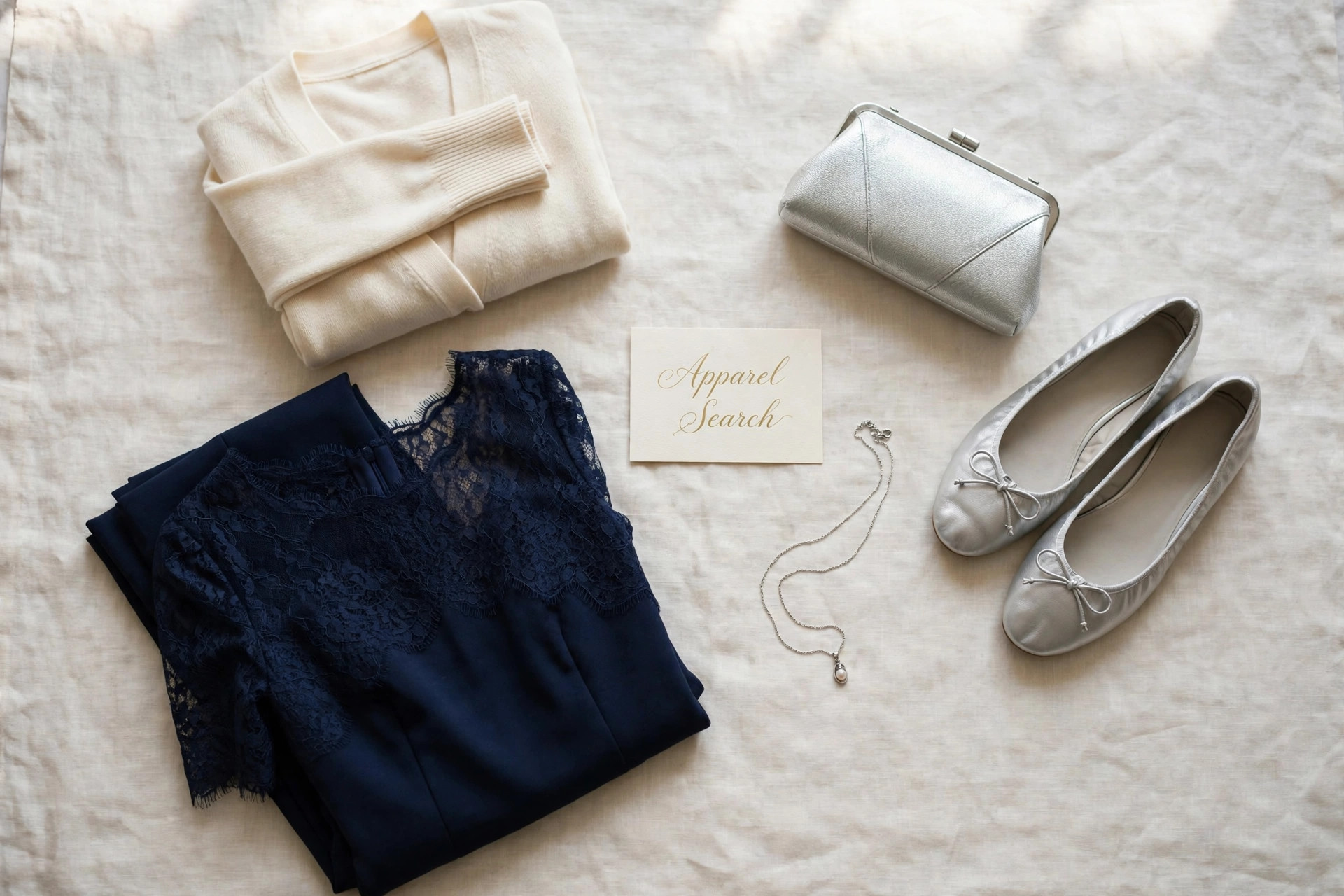
The general bar and bat mitzvah outfit guide covers the day for everyone — guests, the celebrant, the family. This page is about one person in particular and the women and girls around her, because the bat mitzvah sets a dressing problem all of its own: a girl of about thirteen is the centre of a day that begins with a formal religious service in the morning and ends, very often, with the biggest party of her life so far. Her clothes have to be right in both rooms.
Everything here is garments: the dress or dresses, the layer that makes a party dress into a service dress, the shoes for standing and the shoes for dancing, and the parallel problems of her friends, her sisters, her mother and her grandmothers. The congregation-by-congregation range of coverage norms is set out on the main guide; this page applies it to actual clothes.
The Two-Outfit Question
Almost every bat mitzvah family works through the same decision, and there are two respectable answers.
One dress, adapted. A single dress chosen to work alone at the party, worn to the service with a bolero, a cropped jacket, a fine cardigan or a wrap over it. This is the most common solution because it is the most practical: one purchase, one fitting, one look in the photographs all day, and a transformation that takes ten seconds in the corridor between the service and the party. The dress and its layer are bought together, as one outfit with two states.
Two dresses. A formal, covered service dress for the morning and a separate party dress for the evening. Families choose this when the day has a real gap in it — home, rest, a complete change — or when the party is a large evening event and the party dress is meant to be a statement the service dress never tried to be. It costs more and needs two fittings, but each dress only has to do one job, and each usually does it better.
Either way, decide the service version first. The service has rules; the party mostly has a mood. A dress that satisfies the morning can always be released into the evening, while the reverse journey is the one that fails.
The Service Dress, Garment by Garment
Length. Knee-length or longer is the standard service choice — long enough for the congregation’s norms wherever they sit on the range, and practical for a morning spent sitting, standing and walking in front of a room.
Neckline and sleeves. More traditional congregations look for sleeves and a higher neckline; elsewhere the range widens. Lace bodices and illusion necklines earn their popularity here precisely because they read as covered while staying light. A sleeveless dress is not disqualified — it simply travels with its bolero, and the pair is judged as one garment.
Fabric and colour. Structured crepe, satin with a soft finish and lace overlays are the working fabrics: they hold their shape through hours of wear and photograph without glare. Colour is hers — navy and the jewel tones are perennial, pastels own the spring, and white and ivory are genuinely common on the celebrant herself, by family custom and preference; there is no wedding-style rule against them at a bat mitzvah. Our occasion dress guide covers dress construction and fabrics in general, and the modest dresses guide is the deep bench of covered styles that still read as party dresses.
Shoes, service pair. Closed, stable and already worn in. She will stand for long stretches of the service, much of it as the centre of attention, and a shoe that hurts is visible in every photograph of the morning.
The Party Dress
If there is a second dress, it is designed by one test: movement. A party hem has to clear the floor in motion, a bodice has to stay exactly where it was put through hours of dancing, and nothing about the dress should need adjusting, hitching or holding. Sparkle, colour and drama are all welcome here — this is the dress the day’s other dress was being sensible to make room for. If there is only one dress, the party version is created by subtraction and addition: the bolero comes off, the jewellery goes up a level, and the shoes change. Which brings up the day’s most repeated practical trick: a spare pair of flats, waiting under the table, that turns a photographed entrance into a danced-all-night exit. Our special occasion shoes guide covers the heel-versus-flat arithmetic in full.
Her Friends: The Young Guests
A bat mitzvah rarely has one young guest; it has a class. For her friends, this circuit of celebrations is often a first season of formal dressing, and the garments that work are the service-dress formula in a guest’s key: a dress with the coverage the congregation asks for — with its own cardigan or bolero if needed — in a length that survives both sitting through a service and a party afterwards. Two budget realities shape the shopping. The first is growth: at twelve and thirteen, a dress bought in September may not close in March, so families buy close to the date. The second is repetition: in a class where a celebration lands most weekends of the school year, one well-chosen dress, re-accessorised — different shoes, a different layer, hair up or down — carries the whole season without ever reading as the same outfit twice. The children’s formal clothes guide covers fit and value across this whole size range.
Mothers, Grandmothers and Sisters
The celebrant’s mother is the day’s second most photographed person, and her outfit solves the same equation one level up: a dress that meets the service’s coverage with its layer on — a tailored jacket or an elegant wrap — and hosts the party with it off. She is on her feet from the first photograph to the last dance, receiving guests in both rooms, so her shoes are chosen by the same standing-and-dancing test as her daughter’s.
Grandmothers are honoured guests, and their dressing adds comfort to the formula: warmth for a synagogue that may run cool, sleeves that need no managing, and shoes for a long day of standing, greeting and being photographed. Our guide to special occasion dressing over 50 works through that balance of polish and ease. Sisters dress to the family’s level rather than to the celebrant’s spotlight — coordinated in formality, not matched to her dress, and in a younger sister’s case chosen for comfort inside formal clothes, because her day is exactly as long as everyone else’s.
Timeline: Buying and Alterations
Start six to eight weeks before the date. Dresses in this size range almost always need alteration — a hem, a strap, a waist taken in — and the wearer is growing while the alterations happen, so the order of operations is fixed: buy the dress, hold the final fitting to about two weeks out, and buy the shoes last so they match the finished hem. Keep the bolero or wrap physically with the dress from the day it comes home; the layer that lives in a different closet is the layer forgotten on the morning. The retailers who stock this category keep the combinations together — suits and shirts for the bar mitzvah side, dresses with their matching layers for hers — and our directory of bar and bat mitzvah clothing stores is the place to find them. For building coverage into any dress in the wardrobe, the modest layering guide is the technique page.
Common Questions
Does a bat mitzvah girl need two outfits?
No. The most common solution is one dress worn two ways: covered for the service with a bolero, cropped jacket, cardigan or wrap, and without the layer for the party. Two separate dresses — a formal service dress and a party dress — make sense when the day has a genuine gap between the service and an evening party, or when the family simply wants the party look to be its own event. Decide by the shape of the day, not by what other families did.
How covered should the service dress be?
It follows her own congregation’s norms, which the family will know: more traditional congregations call for sleeves, a higher neckline and a hemline at or below the knee, while less traditional ones allow a wider range. The working method is to choose the dress she loves, then check it against the congregation’s expectations and close any gap with the layer — a bolero or wrap turns most party dresses into service dresses. If the celebration is at a congregation the family does not usually attend, asking the hosts is the reliable move.
Can a bat mitzvah girl wear white?
Yes. There is no wedding-style rule reserving white for anyone else at a bat mitzvah, and many celebrants choose white or ivory dresses by preference or family custom — it photographs as the centre of the day, which she is. Guests sometimes avoid head-to-toe white as a courtesy so the celebrant stands out in photographs, but that is a kindness, not a rule, and it applies to guests rather than to her.
What shoes should she wear?
Two different answers for the day’s two halves. For the service, closed shoes she can stand in for long stretches without thinking about them — the service is lengthy and much of it is spent on her feet. For the party, shoes pass a single test: can she dance in them for hours? Low block heels and dressy flats pass easily; high thin heels often fail by the second song, which is why the classic bat mitzvah move is a spare pair of flats waiting under the table.
Related Guides
More to Explore
The Full Picture
Guests, the celebrant and the family, for bar and bat mitzvahs alike — the day end to end is in our Bar & Bat Mitzvah Outfit Guide.