Children's Formal Clothes Guide
Children's formal clothes are the dressed-up wardrobe a child wears when an occasion sets a standard: weddings, formal dinners, dances, religious celebrations such as a bar mitzvah, milestone parties like a sweet 16 or a debutante cotillion, and holiday parties - the events formal wear serves. Formal wear is the general term for clothing suitable for formal events, and for children the category means suits and blazers, dress shirts and ties, formal dresses, dress shoes and the accessories that finish them. This guide explains what to look for, how formality levels work, how to fit an outfit a child may wear only a handful of times, and how to get more than one event out of it.
Shop Children's Formal Clothes Now
Shop Children's Formal Clothes on Amazon Shop Children's Formal Clothes on eBayThe Amazon and eBay links on this page are affiliate links. If you make a purchase through them, Apparel Search may earn a commission.
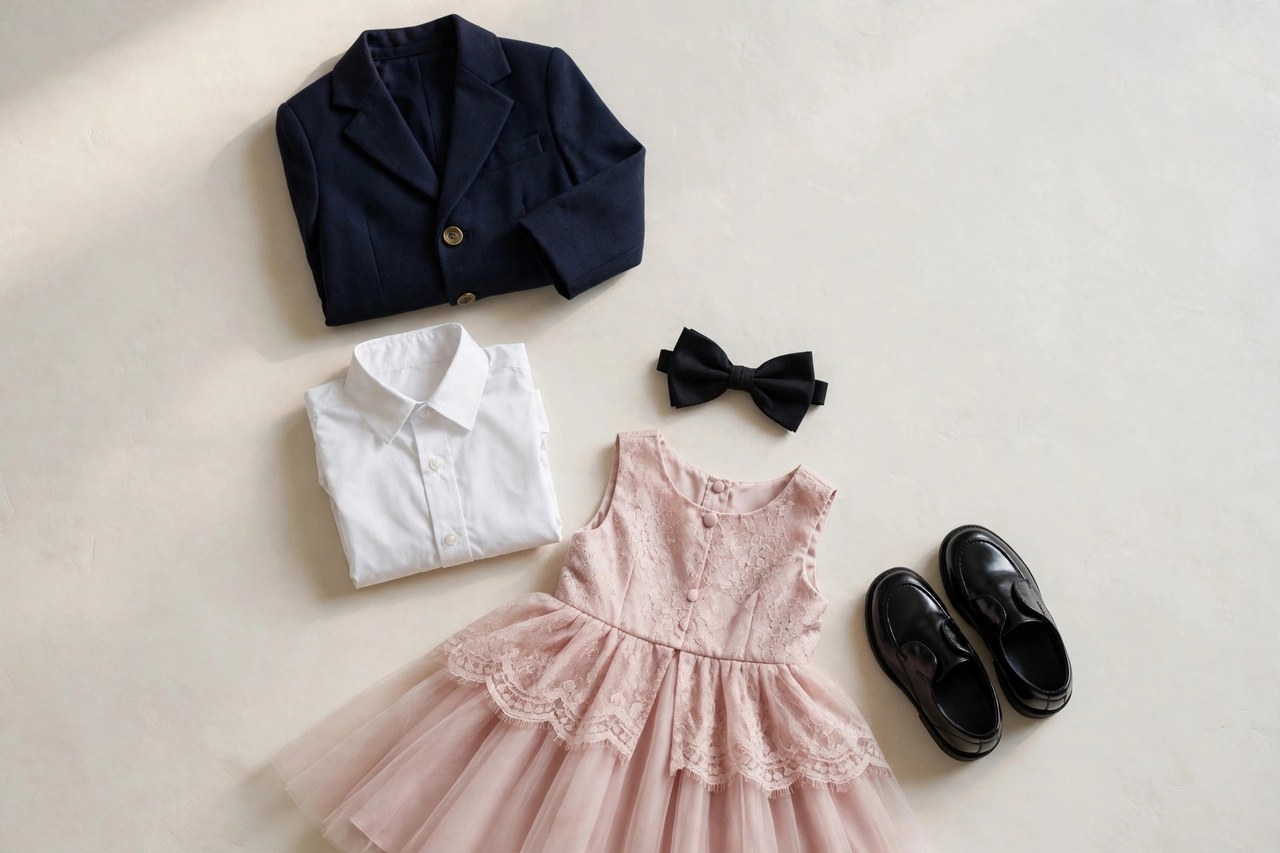
Children's formal clothes are the dressed-up wardrobe a child wears when an occasion sets a standard: weddings, formal dinners, dances, religious celebrations such as a bar mitzvah, milestone parties like a sweet 16 or a debutante cotillion, and holiday parties - the events formal wear serves. Formal wear is the general term for clothing suitable for formal events, and for children the category means suits and blazers, dress shirts and ties, formal dresses, dress shoes and the accessories that finish them. This guide explains what to look for, how formality levels work, how to fit an outfit a child may wear only a handful of times, and how to get more than one event out of it.
One garment in this wardrobe has its own guide in this letter: the flower girl dress, the wedding-role dress planned with the wedding party. Everything else about occasion dressing lives here - the guest outfits, the boys' suits, the holiday dresses, the shoes - planned from the invitation outward. The rule that governs the whole category is simple: the event sets the level, and the outfit follows it. A child dressed far above or below the occasion's standard is uncomfortable in a way that has nothing to do with fit, so reading the event correctly is the first buying skill this guide teaches.
Garments and Formality Levels
At the formal end sit the matched pieces: a suit or blazer with dress trousers, a collared dress shirt, a tie or bow tie, and leather dress shoes for boys; a formal dress in satin, velvet or a similarly dressed fabric, with dress shoes and often a cardigan, shrug or wrap against cold venues, for girls. Below that sits smart dress - a blazer separates outfit, an unfitted party dress, neat trousers and a shirt without a tie - which serves most school concerts, family celebrations and holiday parties. Fabrics carry much of the signal: velvet, satin and dark, smooth wools read formal at a glance, while cotton twill, bright prints and knit fabrics read casual in the same shapes.
Build outfits from separable pieces wherever possible, because separates are how a rarely worn wardrobe earns its keep: a blazer that works with two different trousers, a dress shirt that serves under a sweater after the wedding, a formal dress whose sash or cardigan changes its character for a second event. Accessories do disproportionate work per penny in this category - a tie, bow tie, pocket square, hair accessory or belt transforms an outfit the child already owns into one that meets a new occasion, and they are the cheapest way to match a wedding's colours or a holiday's theme without buying a whole new set of clothes.
Fit and Comfort
Formal clothes fail children by comfort more than by appearance: stiff collars, scratchy linings, waistbands that dig when sitting, and dress shoes worn for the first time at the event itself are the usual culprits, and an uncomfortable child fidgets, complains and remembers the outfit rather than the occasion. Fit checks for this category are therefore duration checks - the child should sit, stand, eat a snack, climb stairs and spend twenty minutes in the full outfit at home, in the actual shoes, before the event. Shirts need a finger's room at the collar, trousers and skirts need a sitting waistband, and every lining that touches skin should be smooth.
Sizing carries the same future-date problem as the flower girl dress: formal outfits are bought ahead for fixed dates, on growing children. Buy as close to the event as practical, size from measurements rather than age, favour adjustable waistbands, alterable hems and a little seam allowance, and schedule a final try-on a fortnight out. Dress shoes deserve their own warning: never let the event be their first wearing. A few short indoor wears beforehand soften the stiffest pair, and a backup of comfortable smart shoes in the car has rescued more than one celebration from a blistered heel.
Value, Care and Storage
Cost per wear is the honest measure in this category, and three habits improve it: buying separates that recombine, choosing classic colours - navy, charcoal, black, deep jewel tones - that suit successive events and siblings, and treating accessories as the variable layer. Rental and hand-me-downs are well established for children's formal wear precisely because wear counts are low; a received outfit needs the same fit and comfort checks as a new one, plus a check of fastenings and seams that may have aged in storage. What does not improve value is buying a size up for next year - formal clothes that fit badly now photograph badly now, and next year's event may never come in that form.
After each event, deal with spills promptly - formal fabrics show food and drink, and stains left until the next occasion have usually set for good - then clean as the label directs and store hung in breathable covers, with shoes stuffed lightly and kept dry. Check the outfit a week before its next outing, not the night before, so alterations, replacements and missing buttons are fixable problems rather than emergencies. Planned from the invitation, fitted for duration, built from recombinable pieces and stored with a little care, a children's formal wardrobe covers years of weddings, dinners, dances and parties without a panic purchase among them.
Common Questions
What counts as formal clothes for children?
Clothing suitable for formal events - weddings, formal dinners, dances, religious celebrations such as a bar mitzvah, milestone parties and holiday gatherings. In practice: suits or blazers with dress shirts and ties, formal dresses in dressed fabrics such as satin or velvet, and leather dress shoes. The event sets the level; the outfit follows it, neither far above nor below the occasion's standard.
How do you stop formal clothes being uncomfortable?
Test for duration, not appearance. Have the child sit, stand, eat, climb stairs and spend twenty minutes in the full outfit - in the actual shoes - at home before the event. Check for a finger's room at the collar, a waistband that works sitting down, smooth linings, and shoes already worn in over a few short indoor sessions, never first worn at the event.
How can families get more wear from children's formal clothes?
Buy separates that recombine - a blazer over different trousers, a shirt that works under a sweater later - choose classic colours that suit successive events and siblings, and let accessories be the variable layer: a tie, sash or hair accessory in a new colour adapts an existing outfit to a new occasion for a fraction of a new outfit's cost.
More in Children's Clothes Guide F
The F letter hub and the guides closest to this one:
Looking for Children's Clothing Stores?
This guide helps you choose children's formal clothes. To browse where to buy, visit our children's clothing store directory, where you can find retailers that carry them.