The Product
A White Dress With a Set Specification
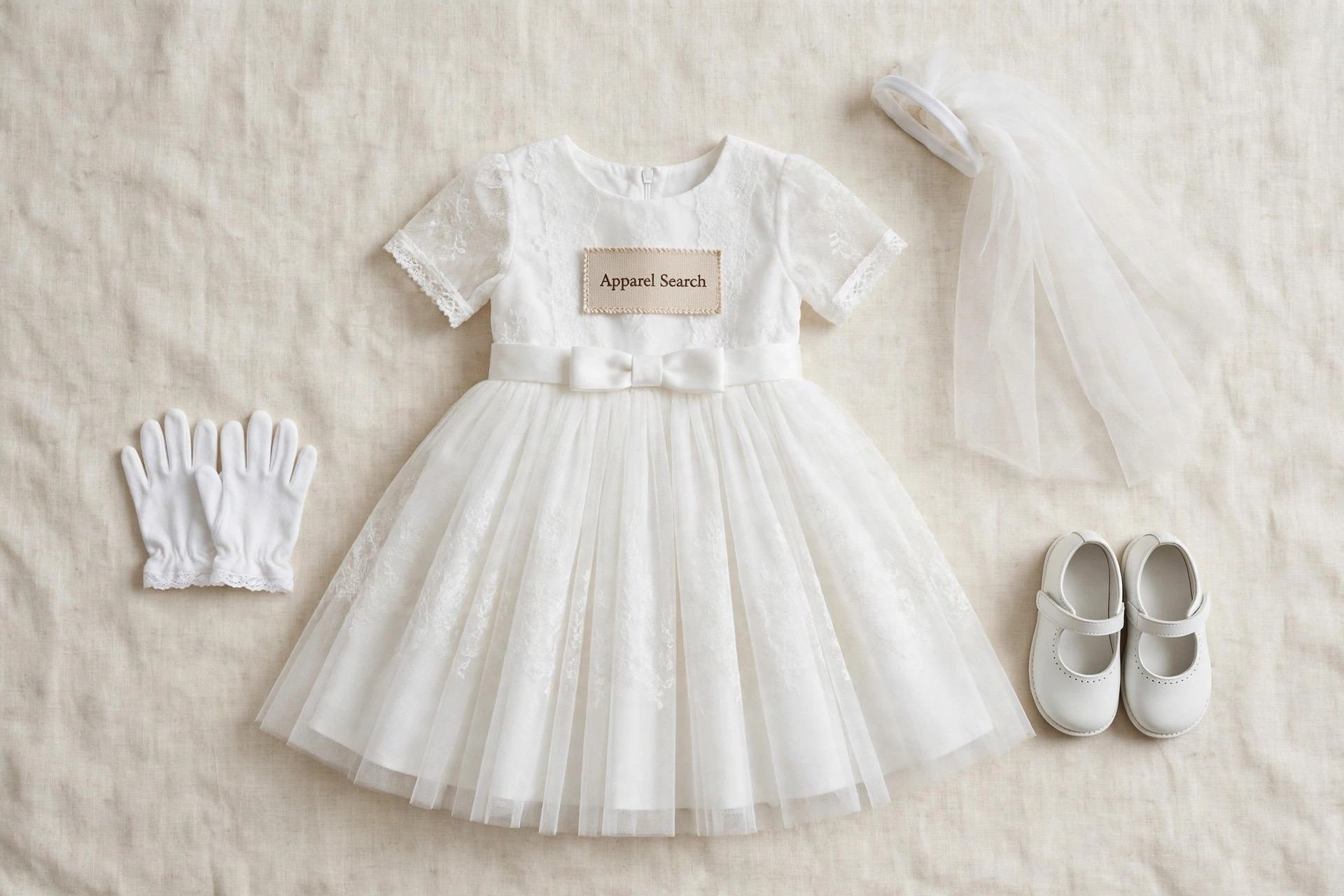
A first communion dress is one of the most specification-driven garments in children’s clothing. The colour is fixed — white or soft ivory — the neckline is modest, the waist is usually defined with a sash, and the skirt falls to tea length or the ankle. Within it, the product range is wide, from a plain satin A-line to a lace-bodiced, hand-finished dress at several times the price.
The dress sits in the wider category of the children’s formal clothes guide, and its stockists are in the retail communion dresses directory. Parishes set their own conventions, so start with the parish guidance sheet, then choose the product options that meet it.
Styles & Fabrics
Styles, Lengths and What the Fabrics Do
Silhouette and length. The standard cut is a fitted bodice with a gathered or pleated skirt. Tea length, ending between knee and ankle, is the most common length; full-length styles read more formal, and knee-length styles are stocked by fewer specialists. Most dresses close with a back zip under covered buttons, with a satin sash as the standard detail.
Fabrics. Satin and matte satin blends are the workhorse fabrics: smooth, structured and consistent in colour. Organza and tulle appear as overskirts that add volume without weight. Lace is used on bodices, sleeves and hems, from edging to full overlays at the top of the range. Check the lining whatever the fabric: a full soft lining is a feature worth having, because unlined budget versions are common in this category.
Before You Buy
Parish Requirements, Read as Product Options
Parish conventions vary, and every item on the usual guidance sheet corresponds to a product choice. Check the actual dress against the list before buying, rather than assuming every communion dress meets a particular parish’s rules.
The Parish-Requirements Checklist
- Sleeves: many parishes ask for a sleeve, not a sleeveless bodice: short, cap or three-quarter sleeves, or a matching bolero.
- Shoulders and neckline: a round or jewel neckline and covered shoulders are the standard specification; check illusion necklines before choosing one.
- Length: tea length or full length is the usual requirement; confirm any parish minimum.
- Colour: white is the convention, with ivory accepted in most parishes. Buy veil, gloves and shoes in one shade family.
- Veil or headpiece: a veil is traditional, but a wreath, band or tiara-style headpiece is a common listed alternative; some parishes specify one form, so confirm which.
- Gloves: short white gloves are optional in most parishes and required in a few; sold in dress sizes, they are inexpensive to add.
Accessories
Veils, Headpieces, Gloves and Shoes
Veils and headpieces are separate products in set forms: a tulle veil on a comb or headband, a floral wreath, a satin band, or a small tiara. Lengths run from shoulder to fingertip; the product points are the attachment — a comb or band stays in place better than a clip — and the shade match with the dress. Gloves are short, wrist-length, and usually stretch satin or cotton — see the retail formal gloves page. Shoes are white, closed-toe and flat or low-heeled — a Mary Jane is the standard product — with white socks or tights completing the set.
Sizing & Timing
Sizing by Age Band, and Alterations Timing
Communion dresses are sized by age band, but the bands are only a starting point: fit is decided by the chest, waist and bodice-to-hem length. Measure all three against the maker’s chart — a size 8 in one range is not a size 8 in another.
| Age band | Typical dress size | Measurements to check before ordering |
|---|---|---|
| 6–7 | 6, 6X | Chest and finished length; brand size gaps are widest in this band |
| 7–8 | 7, 8 | Chest, waist and length; the core band, stocked deepest |
| 8–9 | 8, 10 | Waist against the sash position; check for half sizes |
| 9–10 | 10, 12 | Chest and bodice length; some ranges change chart here |
| 10–12 | 12, 14, 16 | All three measurements, plus sleeve length on sleeved styles |
Timing. Order six to eight weeks ahead. Standard alterations — hemming, taking in or easing the waist — take one to two weeks each in spring, and a dress bought in the final fortnight leaves no slack for either. Buy the shoes in the same window so the hem can be set to the shoe.
Budget & Care
Budget Tiers, Care and Keeping the Dress
Budget tiers. Entry-level dresses are single-fabric satin or polyester styles with a simple sash, the least expensive way to meet the specification. The mid tier adds a lace bodice or overlay skirt and a fuller lining. The top tier is hand-finished lace, silk-blend fabrics and made-to-measure sizing. The accessory set — veil or headpiece, gloves, shoes and tights — is a separate cost line at every tier, so budget the dress at roughly two-thirds of total spend.
Care and keeping. Most communion dresses are labelled dry-clean or gentle hand-wash depending on fabric and trim; the care label on the specific dress governs. After the day, have it cleaned promptly, then store it with acid-free tissue in the folds, in a breathable bag or archive box, veil, gloves and sash alongside. Stored that way, the dress holds its colour and shape as a kept family garment and a wearable hand-me-down.
Questions
Common Questions
What are the standard features of a first communion dress?
A white or ivory dress with a modest round or jewel neckline, a defined waist — often with a satin sash — and a tea-length or full-length skirt. Sleeves are short, cap or three-quarter length, and many parishes ask for covered shoulders, which is why so many dresses are sold with a matching bolero or are made with a sleeve as standard.
When should a first communion dress be bought?
Six to eight weeks before the date is the comfortable window. Communion stock is seasonal and the popular sizes sell through early in the year, and the window leaves time for a fitting, a hem or waist adjustment, and ordering a veil or headpiece in a matching shade of white.
How should a communion dress be kept afterward?
Have the dress cleaned promptly according to its care label, then store it flat or hung in a breathable garment bag with acid-free tissue in the bodice and skirt folds. Keep the veil, gloves and sash with it, away from direct light, so the whites do not yellow unevenly in storage.
More to Explore
Search Apparel Search