Children's Dresses Guide
A dress is a garment consisting of a skirt with an attached bodice - still the cleanest definition available. This guide is about that garment for girls: everyday dresses, school dresses, party and occasion dresses, and the fabrics, lengths and constructions that divide them. Where the dress-up guide in this letter is about pretend outfits for play, this guide is about dresses as real clothing - chosen for a real day, fitted to a real child, and washed afterward. This guide explains what to look for, how the sizing actually works, which fabrics and constructions earn their price, and how to care for the garment so it keeps doing its job all season.
Shop Children's Dresses Now
Shop Children's Dresses on Amazon Shop Children's Dresses on eBayThe Amazon and eBay links on this page are affiliate links. If you make a purchase through them, Apparel Search may earn a commission.
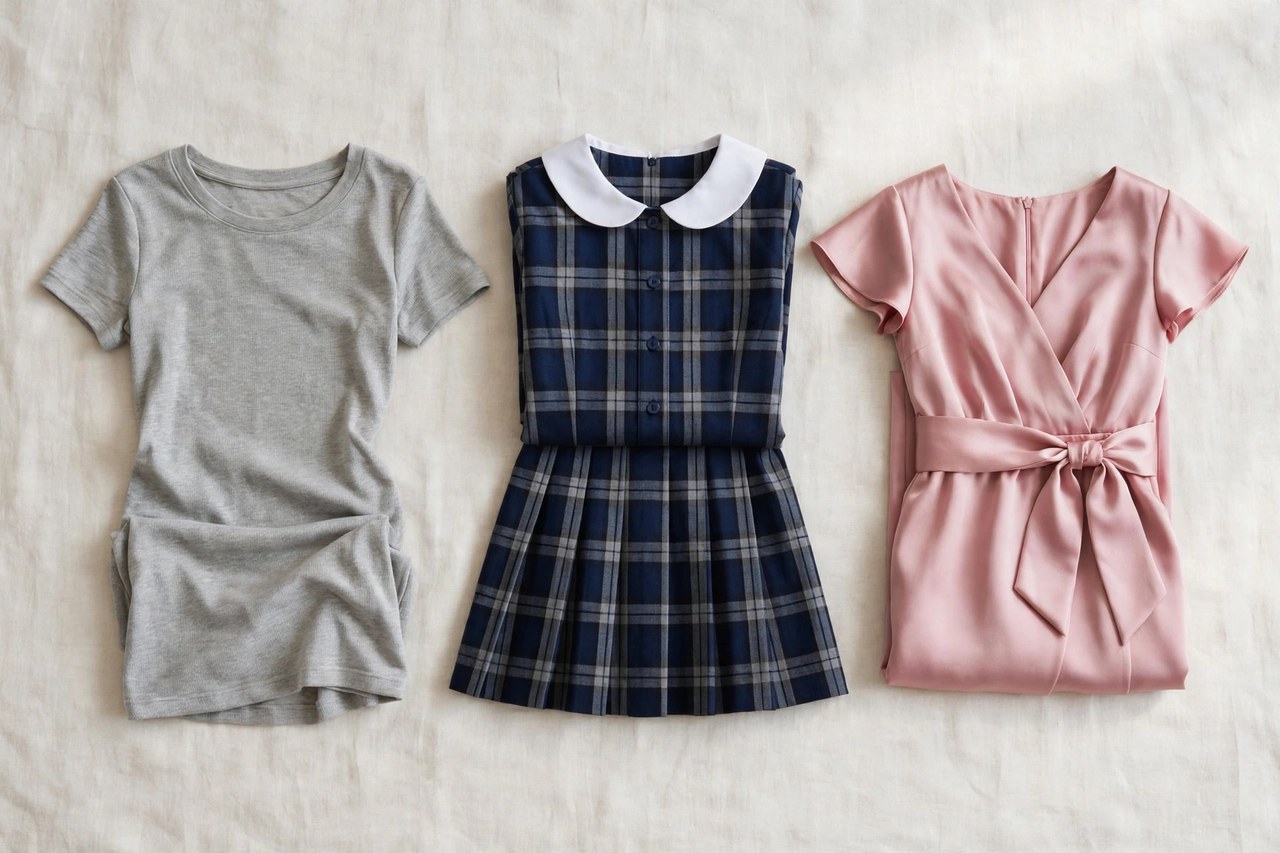
A dress is a garment consisting of a skirt with an attached bodice - still the cleanest definition available. This guide is about that garment for girls: everyday dresses, school dresses, party and occasion dresses, and the fabrics, lengths and constructions that divide them. Where the dress-up guide in this letter is about pretend outfits for play, this guide is about dresses as real clothing - chosen for a real day, fitted to a real child, and washed afterward. This guide explains what to look for, how the sizing actually works, which fabrics and constructions earn their price, and how to care for the garment so it keeps doing its job all season.
In Western culture, dresses are more often worn by women and girls, and the children's version of the garment spans the widest range in the wardrobe: the same one-piece idea serves as a playground t-shirt dress in jersey, a uniform pinafore over a blouse, a layered winter dress with tights, and the sash-and-full-skirt occasion dress kept for photographs and parties. Buying well means knowing which of those jobs a given dress is actually built for.
Styles and Construction
Styles divide first by bodice and skirt. A-line dresses flare gently from the shoulder or waist and suit everyday and school wear; empire-line dresses gather under the chest and leave the skirt free, comfortable and forgiving in fit; fit-and-flare and party dresses define the waist - often with a sash - and give the skirt its fullness; pinafores and jumper dresses are sleeveless dresses designed to layer over blouses and tops; and shirt dresses button through like a long shirt. Sleeveless, short-sleeve and long-sleeve versions make the same style serve different seasons, especially with tights and a cardigan doing the winter work.
Construction is judged at three moments, as with all occasion clothing: how it looks, how it feels at the third hour, and how it washes. A bodice should be lined or smoothly finished inside, with no scratchy seam or rough applique against the skin; fastenings - back zips with a guard at the top, buttons with a spare sewn into the seam - should be workable by an adult quickly and, for older girls, by the wearer herself. Skirt fullness should allow sitting, stairs, eating and dancing without strain. The hemlines of dresses may vary depending on the whims of fashion and the modesty or personal taste of the wearer - and in regard to girls' dresses, parents should help monitor the length to make sure it is an appropriate length for the occasion and the child's age, a check best done with the child sitting and reaching, not just standing in front of a mirror.
Fit and Sizing
Fit a dress by chest, waist and length together: the bodice should follow the body without pulling across the chest or gaping at the armholes, any defined waist should sit at the natural waist, and the hem should land where the style intends - above the knee, at the knee or below it - with the child seated as well as standing. Shoulder seams belong on the shoulders, and a dress that will be layered over tights and a thermal top in winter should be tried with those layers before the tags come off. Growth room in a dress lives in the hem and, on sash styles, in the tie - not in a bodice a size too large, which gaps and twists all day.
Fabrics set the season and the care load. Cotton jersey and cotton poplin make the washable everyday and school dresses; corduroy and heavier cotton blends carry autumn and winter; linen blends suit summer occasions and crush accordingly; polyester satin, tulle overlays and other party fabrics deliver the occasion look and ask for gentler handling in return. Read the fiber label the way you would for any garment, and weigh the inside finish as heavily as the outside: a dress is worn against the skin at bodice and shoulder all day, and its lining - or its absence - is felt in every hour of that day.
Wearing and Care
And if you find that perfect dress for the ball, you may also want to learn about glass slippers. Occasion dresses earn a proper recovery after the event: air the dress, treat food and grass marks before they set, check the fastenings while the day is fresh, and replace a lost button from the spare before it is forgotten. Wash or clean exactly as the label directs - party fabrics punish improvisation, and tulle, sequins and glued trims belong in a mesh bag on gentle, or in a basin by hand.
Everyday dresses ask only for ordinary discipline with ordinary rewards: wash inside out, cool or warm; dry low or on the line; fold or hang by the loops so shoulders keep their shape. Store an outgrown-but-sound dress clean and labeled with its size - dresses hand down exceptionally well because their forgiving styles fit a range of children, and a party dress worn once has most of its life still in it. Bought for a named job, fitted sitting and standing, and kept clean between children, the dress is the wardrobe's hardest-working single garment: one piece, whole outfit.
Common Questions
What defines a dress as a garment?
A dress is a skirt with an attached bodice - one garment that covers the torso and continues into the skirt, rather than a separate top and bottom. Styles differ in where the join sits and how the skirt falls: empire lines gather under the chest, A-lines flare gently, fit-and-flare styles define the waist, and pinafores are sleeveless dresses made to layer over a blouse or top.
How long should a girl's dress be?
Where the style intends - above the knee, at it or below it - checked with the child sitting, reaching and climbing a step, not just standing still. Hemlines vary with fashion, the occasion and personal taste, and parents should help monitor that the length is appropriate for the child's age and the event. A hem that works standing but not sitting will be tugged at all day.
How do you care for a girl's party dress?
Air it after the event, treat food and grass marks before they set, and check fastenings while the day is fresh - replacing a lost button from the spare sewn in the seam. Wash or clean exactly as the label directs, with tulle, sequins and glued trims in a mesh bag on gentle or hand-washed. Store it clean: a party dress worn once has most of its life left for the next occasion or the next child.
More in Children's Clothes Guide D
The D letter hub and the guides closest to this one:
More to Explore on Apparel Search
Looking for Children's Clothing Stores?
This guide helps you choose children's dresses. To browse where to buy, visit our children's clothing store directory, where you can find retailers that carry them.