Children's Dress Up Guide
Children's dress-up clothes are play garments: the costumes, capes, hats, play dresses, uniforms and accessories a child puts on to pretend. The appeal is plain - kids like to dress up like adults sometimes, and on occasion we all like to pretend we are more grown up - and that is the whole design brief. Dress-up clothes are bought for imagination: for the hour a child spends being a shopkeeper, a superhero, a doctor, a dancer, a bride, a knight or a parent, in garments that have to transform quickly, survive hard play, and come off again without a struggle or a tear. This guide explains what to look for, how play sizing actually works, which fabrics and constructions earn their price, and how to care for the collection so it keeps doing its job season after season.
Shop Children's Dress Up Now
Shop Children's Dress Up on Amazon Shop Children's Dress Up on eBayThe Amazon and eBay links on this page are affiliate links. If you make a purchase through them, Apparel Search may earn a commission.
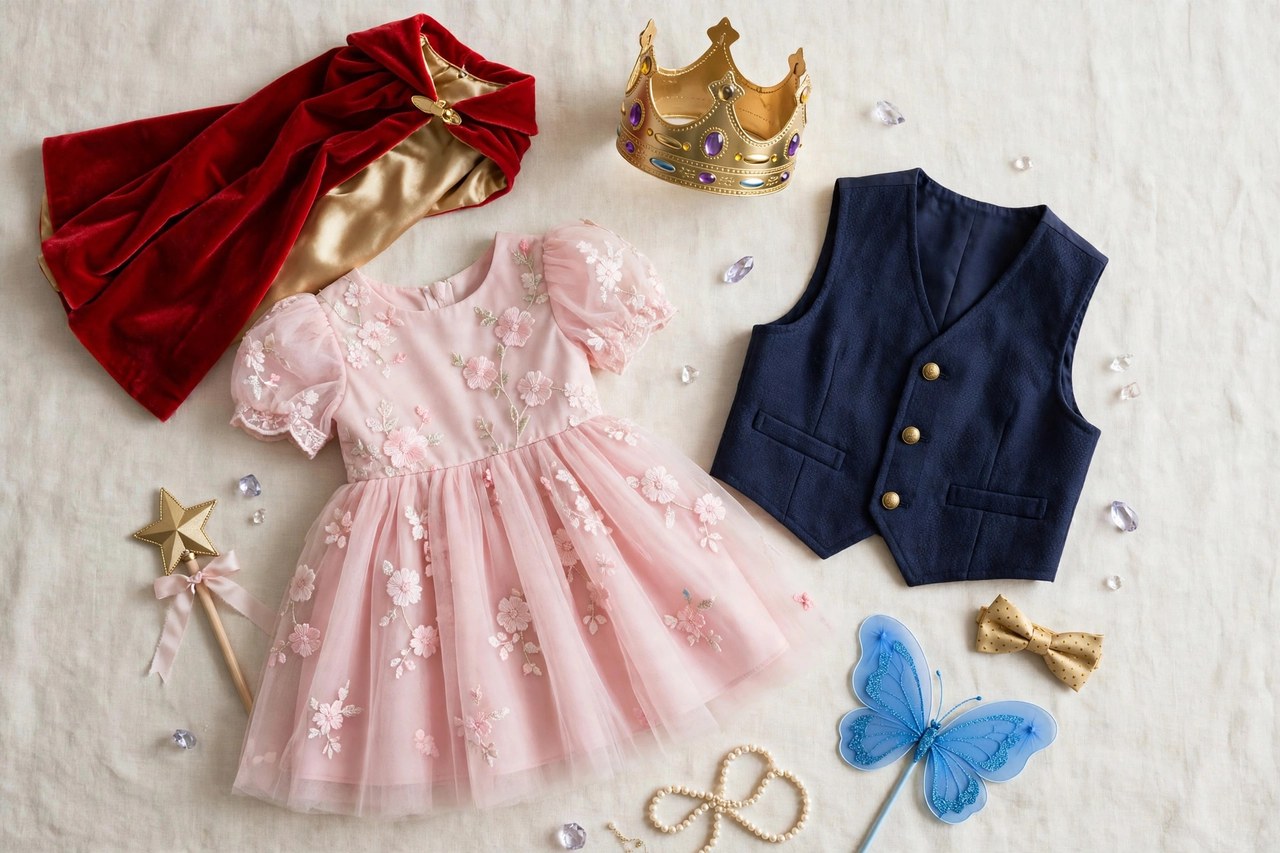
Children's dress-up clothes are play garments: the costumes, capes, hats, play dresses, uniforms and accessories a child puts on to pretend. The appeal is plain - kids like to dress up like adults sometimes, and on occasion we all like to pretend we are more grown up - and that is the whole design brief. Dress-up clothes are bought for imagination: for the hour a child spends being a shopkeeper, a superhero, a doctor, a dancer, a bride, a knight or a parent, in garments that have to transform quickly, survive hard play, and come off again without a struggle or a tear. This guide explains what to look for, how play sizing actually works, which fabrics and constructions earn their price, and how to care for the collection so it keeps doing its job season after season.
Dress-up clothing overlaps the costume category - see children's costumes - but the two are bought differently. A costume is usually one character, bought for one event such as Halloween or the school play. A dress-up collection is a wardrobe: a box or rail of mix-and-match pieces - capes, hats, skirts, waistcoats, uniforms, crowns, bags and shoes - that combine into dozens of characters, and it earns its place by being played with for years, often by several children in turn.
Styles and Construction
Build the collection around versatile bases: a plain cape, a tutu or full skirt, a waistcoat, a simple play dress, and neutral trousers or a tunic can be combined toward almost any character, while hats and accessories - crowns, helmets, stethoscopes, tool belts, wands, bags - do the specific transforming cheaply and storably. Profession sets (doctor, builder, cook, post carrier) and household sets (aprons, play uniforms) serve the dress-up-like-adults play described above, and they are usually the hardest-working pieces in the box because the roles are renewed daily.
Construction is judged by play standards, which are stricter than they look. Closures must be workable by the child alone: wide hook-and-loop tabs, large snaps and elastic waists, never a row of small back buttons that needs an adult at both ends of the game. Seams at shoulders and waists take the strain and should be firmly stitched; fabrics should tolerate floor play, garden play and repeated dressing and undressing - sturdy cotton, felt and polyester play fabrics outlast delicate novelty materials. Avoid long trailing hems, long cords and anything that restricts sight, breathing or the toilet: a dress-up garment a child cannot run, see and manage in is a failed garment however splendid it looks on the hanger.
Fit and Sizing
Dress-up sizing is deliberately forgiving - most pieces are sold in broad age bands or one-size designs with elastic, ties and adjustable tabs - and the forgiveness is a feature: a garment that fits a child at four and still fastens at six is the economics of the dress-up box working as intended. Buy the band that covers the child's current age with room in it, check that hems clear the feet for running and stairs, and prefer pieces that layer over ordinary clothes, because dress-up play starts on top of whatever the child is already wearing, in every season.
Fit the accessories by the same independence test: hats should stay on through movement yet pull off easily, masks - where used at all - must leave sight and breathing completely clear and are best kept for the oldest children, and play shoes and slippers should grip rather than skate on indoor floors. Anything with small detachable parts belongs to older children's sets only, kept apart from a toddler's reach. When siblings share a box, adjustable pieces in the middle band serve both ends of the family longest.
Wearing and Care
Dress-up clothes come home - or come out of the garden - carrying the evidence of serious play, so care is quick triage: shake out, spot-clean, mend the small seam tear the week it happens, and wash what is washable on gentle, inside out, with fastenings closed so hooks do not snag the rest. Foam, glitter, glued trims and many novelty fabrics spot-clean only; read the label before the first emergency rather than during it. Pieces that survive get more valuable with time, because a complete, mended outfit is next month's new character with one different hat.
Store the collection where play happens: a lidded box, a low rail or hooks at child height, with accessories bagged by set so the crown stays with the cape it belongs to. A dress-up collection stored within reach gets used weekly; one stored in a loft gets used at Halloween. Bought for independence, versatility and repairability - and kept where small hands can reach it - dress-up clothing is among the longest-serving purchases in a child's wardrobe, outlasting every sized garment the child owns.
Common Questions
What is the difference between dress-up clothes and costumes?
A costume is usually one complete character bought for one event - Halloween, a school play, a themed party. Dress-up clothes are a play wardrobe: versatile bases like capes, skirts, waistcoats and play uniforms plus hats and accessories that mix into many characters and are played with for years. The two overlap, and a good costume often retires into the dress-up box when its event is over.
What closures are best on children's dress-up clothes?
Closures the child can work entirely alone: wide hook-and-loop tabs, large snaps, elastic waists and pull-on designs. Small back buttons and fiddly zips end the game twice - once getting in, once getting out - and need an adult both times. Independence is the category's core specification, ahead of looks.
How long should dress-up clothes last?
Years, and often several children: dress-up sizing is deliberately forgiving, with broad age bands and adjustable fastenings, so a sound piece fits across a long span. Choose sturdy fabrics and firm seams, mend small tears promptly, spot-clean novelty materials, and store sets together at child height - a reachable, complete collection is played with weekly instead of once a year.
More in Children's Clothes Guide D
The D letter hub and the guides closest to this one:
Looking for Children's Clothing Stores?
This guide helps you choose children's dress up. To browse where to buy, visit our children's clothing store directory, where you can find retailers that carry them.