Apparel Search Consumer Guides
Quinceañera Dresses Guide
The ballgown at the center of the fifteenth-birthday celebration: silhouettes and colors, the traditions around the dress, coordinating the court, and planning the timeline and budget.
A quinceañera celebrates a girl's fifteenth birthday — a coming-of-age tradition with deep roots in Mexican and Latin American families, part religious ceremony, part formal party, and entirely built around one dress. That dress is the largest, most photographed and most remembered garment of the day, and choosing it deserves its own guide. This page covers the dress itself: the silhouettes and what they signal, the traditions the dress takes part in, coordinating the court, and the timeline and budget that keep the shopping joyful instead of frantic. For the neighboring formal occasions, see our homecoming dresses guide — the lighter school-dance counterpart — and the prom dress guide.
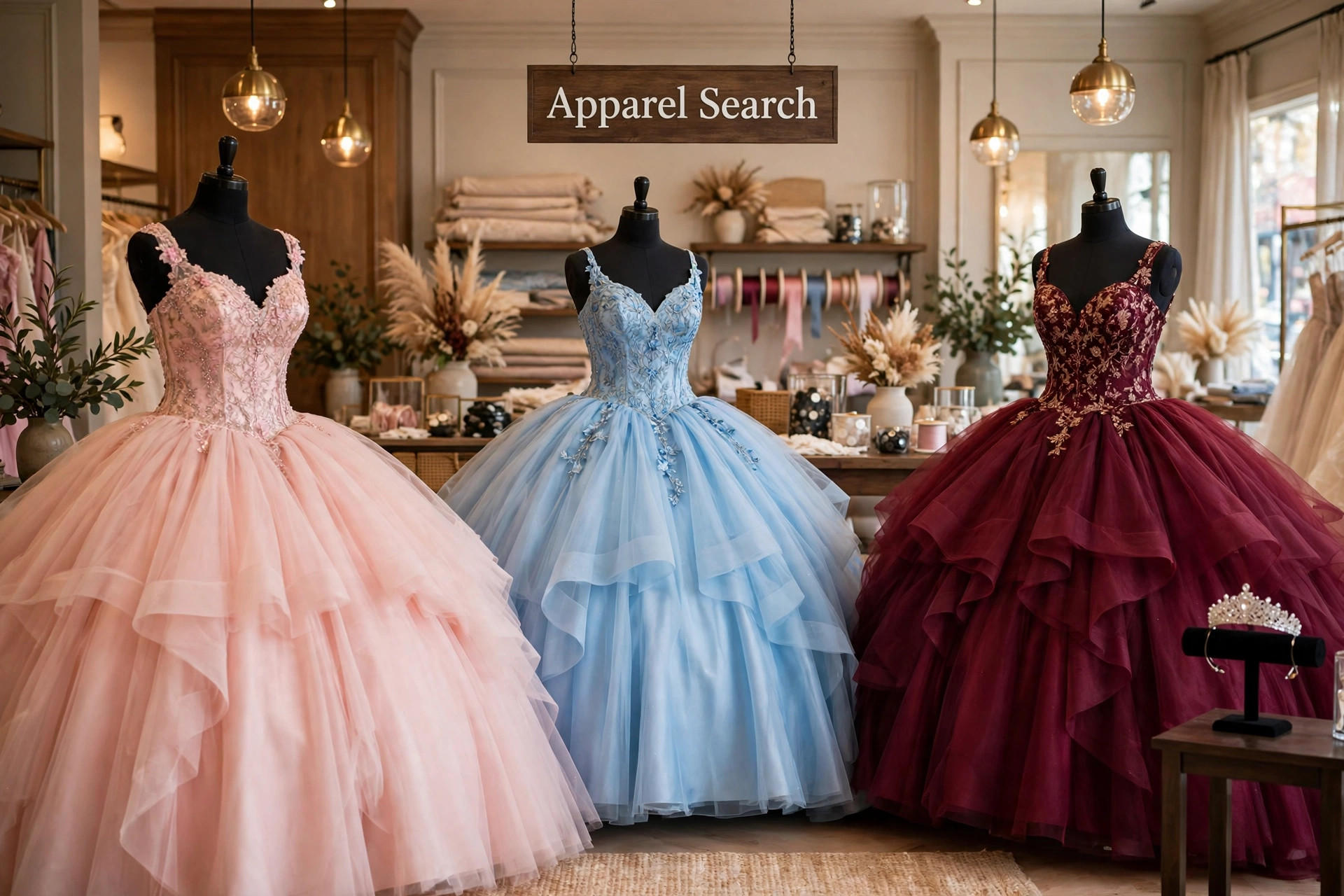
The Dress: Silhouettes
- The classic ballgown is the traditional quinceañera shape: a fitted, often heavily embellished bodice over a very full skirt of tulle or organza layers, usually worn over a petticoat or hoop that gives the skirt its architecture. It is the silhouette the ceremony's photographs are composed around, and the one most families picture first.
- A-line gowns keep the formality with less volume — an easier dress for a smaller venue, a younger-feeling look, and a far easier evening of dancing and sitting.
- Two-piece and convertible dresses are the modern answer: a cropped or separate bodice with the full skirt, or a ballgown skirt that removes to reveal a short party dress for the reception. One purchase, two looks, and the second half of the night danced in comfort.
- Color has widened with the tradition. Soft pastels — blush, baby blue, lavender, champagne — remain the classic register; bold jewel tones, deep reds and even black-accented gowns are now common, and the color usually becomes the theme color the court and the decorations follow.
The Traditions the Dress Takes Part In
Customs vary by family, region and faith, and the family's own version always governs — but several traditions are widely kept, and the dress is chosen with them in mind. The changing of the shoes marks the transition at the heart of the day: the birthday girl arrives in flat shoes and, during the ceremony, her father or a family elder changes them for her first heels — one reason the dress's hem is fitted to the heeled height, not the flat. The last doll (la última muñeca) is a doll, often dressed to echo her gown, presented as a symbol of childhood being set gently aside; some families keep it, some pass it to a younger sister. A tiara or crown is placed as part of the ceremony in many families, which is why the hairstyle and the crown are planned together. None of these is compulsory, and a family keeping none of them has lost nothing — the traditions are a menu of meanings, not a checklist of obligations.
Shop Quinceañera Dresses on Amazon
Ready to shop? Quinceañera gowns, crowns and accessories are collected on the Apparel Search shopping guide:
Shop Quinceañera Dresses on AmazonThis link opens the Apparel Search shopping guide for Amazon, where the product links are kept in one place.
The Court: Damas and Chambelanes
The court of honor — the damas and chambelanes who attend the quinceañera and perform the choreographed waltz and the surprise dance with her — dresses as a frame for her gown. Damas wear coordinated dresses, typically the same color family in a simpler cut than hers; chambelanes wear suits or tuxedos with the accent color carried in the tie, vest or boutonnière. Two practical rules keep this harmonious: her dress is chosen first and everything else keys to it, and the question of who pays for the court's outfits is settled honestly and early — in some families the court members provide their own, in others the hosts do, and either is fine so long as nobody learns the answer by surprise.
Timeline and Budget
- Six to nine months out: set the dress budget inside the whole party budget, visit boutiques, and order the dress — ordered gowns are the norm, and production plus shipping runs in months, not weeks.
- Four to five months out: choose the court's outfits and colors, order the crown and traditional accessories, and book the seamstress if the boutique does not alter in-house.
- Six to eight weeks out: first fitting, in the actual ceremony shoes (the heeled pair, if the shoe-changing tradition is being kept) and with the petticoat or hoop the dress will be worn over.
- Two weeks out: final fitting and pickup; confirm the dress, hoop, crown and shoes travel to the venue as one packed set.
- The day: steam the skirt early, dress at the venue if it allows, and keep a small emergency kit — safety pins, fashion tape, a needle and thread in the dress color — with a trusted aunt or madrina.
On money, plan with open eyes: the gown is one line in a budget that also holds the hall, food, music, photography and the court's costs. Boutique package deals that bundle the dress with crown, bouquet, pillows and other traditional pieces can be genuinely good value against buying piece by piece — compare the bundle against your own list rather than assuming either way. And remember the padrinos tradition: godparents and family friends often sponsor specific elements of the celebration, which is a gift to accept graciously, not a budget line to count on in advance.
Alterations and Fit
A ballgown is architecture, and fit is structural. The bodice should support without squeezing — boning and a proper closure do the work, not tightness — and the hem is set with the ceremony shoes and the hoop in place, clearing the floor by a whisper so the skirt moves rather than trips. Budget alterations into the dress cost from the start (they are rarely free and never optional on a dress this built), and schedule the final fitting close enough to the day that a growing fifteen-year-old has not changed the fit since.
Common Questions
When should we start shopping for a quinceañera dress?
Six to nine months ahead is the comfortable window. Boutique dresses are often ordered rather than taken home the same day, and ordering plus shipping can take months; alterations need their own weeks at the end, with the final fitting close to the party and done in the shoes she will actually wear. Starting early also spreads the cost and the decisions out. It can be done faster — off-the-rack dresses and prom-shop gowns shorten the timeline a great deal — but the widest choice belongs to the families who start first.
How much does a quinceañera dress cost?
Honestly, the range is wide enough that any single figure would mislead. Simple off-the-rack dresses start in the low hundreds of dollars; elaborate boutique ballgowns with heavy beading run into the high hundreds and beyond, and accessories, the court's outfits and alterations add to the dress itself. Many quinceañera boutiques offer package pricing that bundles the dress with the crown, bouquet, pillow and other traditional pieces — worth comparing against buying each item separately. Set the dress budget as one line inside the whole party budget, because the dress competes with the hall, the food and the music for the same money.
Can a prom dress work as a quinceañera dress?
Often, yes. The traditional quinceañera silhouette is a full ballgown, and formal prom gowns in that shape — full skirt, fitted or embellished bodice — cross over directly, especially in the pastel and jewel colors both events favor. Where a prom dress may fall short is the ceremony's traditional pieces (the crown, the matching accessories), which a quinceañera boutique supplies as a matter of course. Our prom dress guide covers the shared formal-gown ground; this page covers what is specific to the quinceañera.
What do the damas and chambelanes wear?
The court dresses in coordination with the birthday girl, not in competition with her. Damas (her female attendants) usually wear matching or same-color dresses in a simpler version of her color story; chambelanes (the male attendants) wear suits or tuxedos with accessories — tie, vest or pocket square — matched to the damas' color. The quinceañera's gown is always the fullest and most elaborate in the room; the court's job is to frame it. Families settle who provides the court's outfits early, because it is a real cost either way.
Celebrations dress their own way in every culture. The quinceañera has its gown and its court; Eid, Diwali and Lunar New Year have their own great garments and customs. Our cultural and festival outfit guide introduces the wider festival calendar — a useful read for any family that plans a celebration properly.