Modest Layering Guide
Layering is the modest dresser's toolkit: the right camisole, slip, sleeve layer or light jacket adjusts the coverage of clothes you already own, without replacing them. This guide covers the pieces and the techniques, one problem at a time.
Shop Modest Layering Now
Shop Modest Layering on Amazon Shop Modest Layering on eBayThe Amazon and eBay links on this page are affiliate links. If you make a purchase through them, Apparel Search may earn a commission.
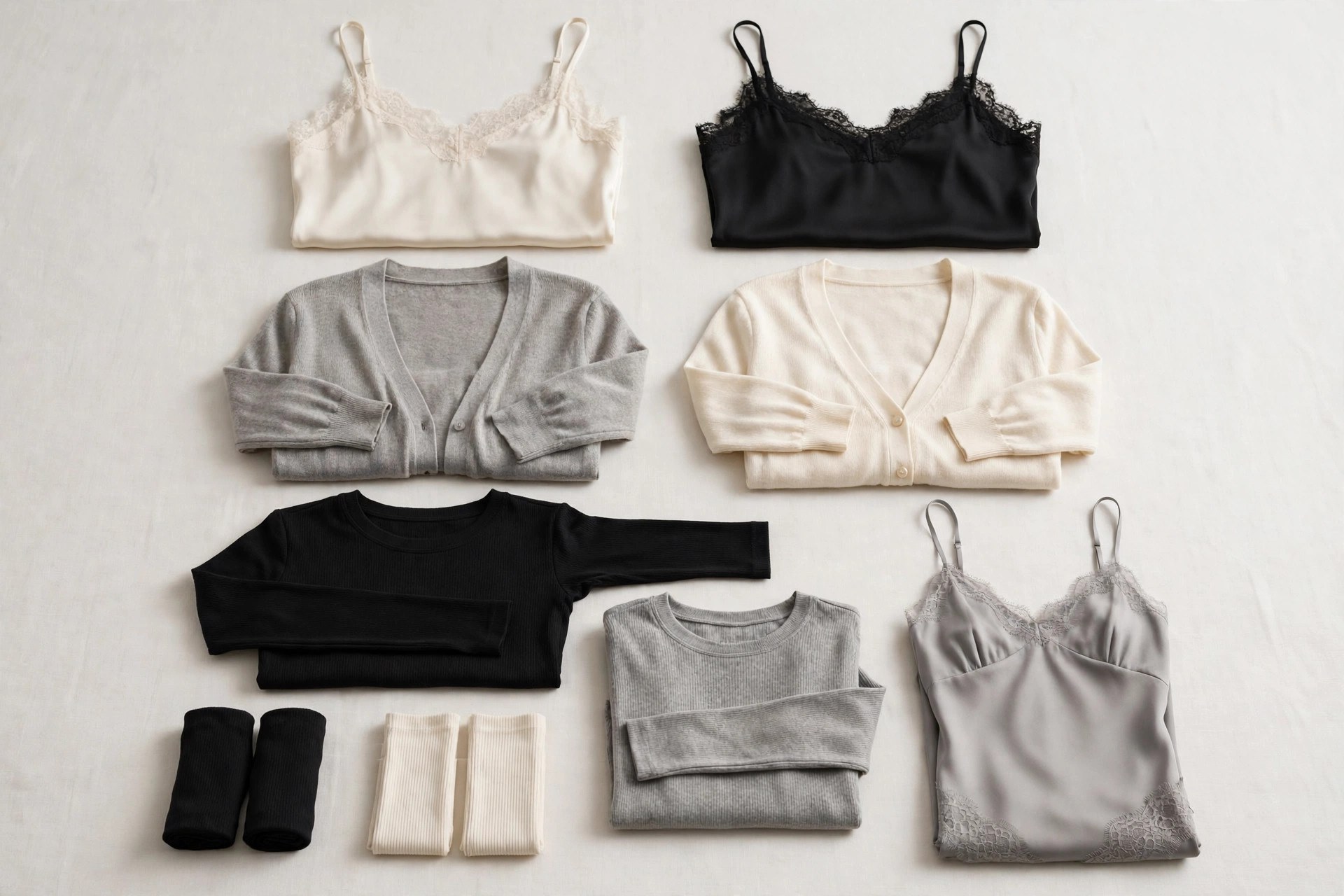
Under-Layering: Camisoles, Slips and Layering Tops
The camisole is the first fix. Worn under a low or gaping neckline, it raises the visible line and adds opacity under thin fabrics. Choose one with enough length to stay tucked, in a colour close to the top layer for a quiet effect or close to your skin tone under pale fabrics. A lace-trimmed camisole turns the fix into a deliberate detail under a V-neck; a plain one disappears. Cotton camisoles breathe in summer; smooth microfibre sits flattest under fitted tops and does not cling to the layer above.
A fitted long-sleeve layering top — a thin crew or mock-neck top in cotton, jersey or microfibre — worn under a sleeveless or short-sleeve dress adds full sleeves and turns a summer dress into a year-round one. Keep the layer genuinely thin so the dress keeps its shape, and match or deliberately contrast the colours. Slips do the same work below the waist: a half-slip adds opacity to unlined skirts, stops static cling, and helps a skirt hang straight, while a full slip smooths a whole unlined dress. These are inexpensive pieces that rescue more garments than any other purchase in this guide.
Over-Layering and Neckline and Sleeve Solutions
Over-layers cover shoulders, arms and backs. Cardigans are the most versatile: cropped cardigans sit at the waist of a fitted dress without hiding its shape, longer ones suit straight and maxi styles, and fine knits read dressier than chunky ones. Blazers and tailored jackets add formality as well as coverage and are covered in the workwear guide. Shawls, wraps and boleros are the evening versions, chosen to match the formality of the dress, as the formal guide explains in detail.
For sleeves specifically, detachable sleeve pieces and shrug or bolero tops add coverage to the arms and shoulders only, which keeps the body of a dress unchanged and cool. For necklines, a camisole is usually better than a scarf added purely for coverage, because it stays in place without adjustment. Necklines that plunge at the back can be handled by a layering top with a higher back or by a jacket kept on — worth checking before an event rather than during it. The principle throughout: add the smallest layer that solves the specific problem, so the original garment still looks like itself.
Extenders, Temperature Balance and Making It Look Intentional
Dress and skirt extenders — a lace or plain hem band worn under a hem to add a few inches of length — lengthen a borderline dress without tailoring, and work best when the extender looks like a designed underskirt rather than an apology. Sleeve extenders and longer layering tops pulled past a short cuff do the same for sleeves. These pieces earn their place for garments you love that miss your preferred length by a small margin; for a large gap, a different garment is the honest answer.
Layering adds warmth, so balance it deliberately. In summer, layer with one thin breathable piece — a cotton camisole, a linen cardigan, a chiffon overlayer — and choose dresses that need the least fixing in hot weather. In winter, layering is a benefit: a thermal or long-sleeve base under a dress, with tights and boots, extends a modest wardrobe through the cold months. Finish by checking the mirror for the intentional test: smooth lines, no tugging, lengths that relate to each other, and colours chosen rather than grabbed. When a layered outfit passes that test, nobody sees the layers — they just see the outfit.
Common Questions
What layering pieces should I buy first?
Start with three: a plain camisole in a neutral colour, a fitted long-sleeve layering top, and a half-slip. Together they fix low necklines, sleeveless dresses, sheer fabrics and unlined skirts — the four most common coverage problems — for a small cost.
How do I layer without looking bulky or too warm?
Add the smallest layer that solves the specific problem, keep under-layers thin and fitted, and choose breathable fibres such as cotton, linen and microfibre in summer. One thin layer under a dress adds coverage without changing its shape or adding noticeable warmth.
Can layering make a dress that is too short modest enough?
For a small gap, yes: a dress extender worn as an underskirt band adds a few inches and looks intentional when it resembles a designed underskirt. For a large gap, layering looks like a workaround, and choosing a longer dress is the better fix.
All Guides in Modest Fashion
Every page in this section:
Continue exploring modest fashion on Apparel Search.
Back to the Modest Fashion Hub — all guides in this section