Modest Fashion Guide
Modest fashion means choosing clothing with more coverage — longer hems, higher necklines, sleeves, and fabrics that are not sheer or clinging — for reasons that are entirely your own. This section explains the garments, not the reasons, so you can shop with clear, practical information.
Shop Modest Fashion Now
Shop Modest Fashion on Amazon Shop Modest Fashion on eBayThe Amazon and eBay links on this page are affiliate links. If you make a purchase through them, Apparel Search may earn a commission.
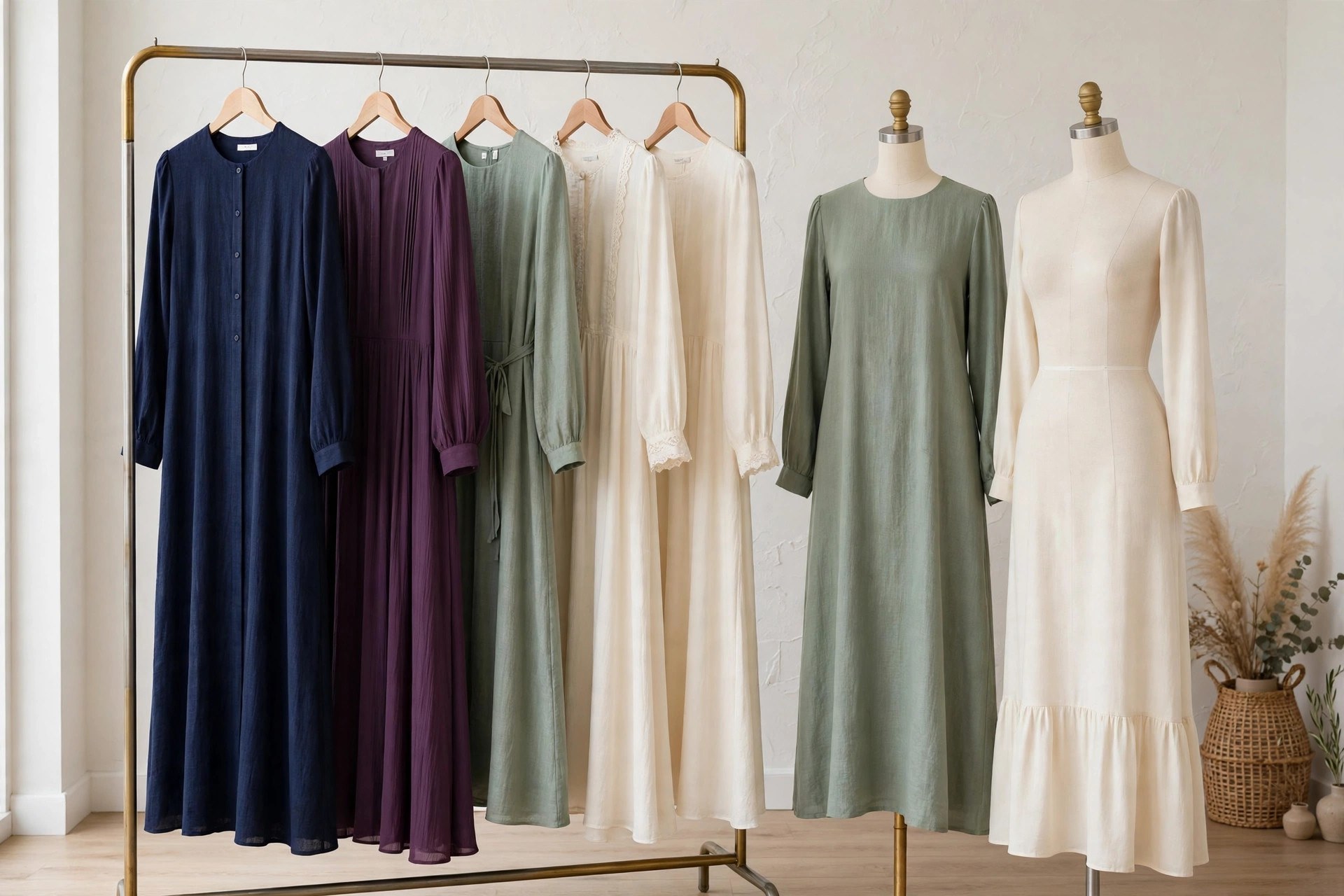
What Modest Dressing Means, in Garment Terms
Coverage is a set of measurable choices, not a single look. A hem that falls below the knee or to the ankle, a neckline that sits at or above the collarbone, a sleeve that reaches the elbow, forearm or wrist, and a fabric with enough weight or lining that it does not show what is underneath — those four decisions, in any combination, are what make a garment read as modest. Different readers set each dial differently, and the same person often sets them differently for work, a wedding, and a beach day.
People choose this coverage for many reasons: faith, personal preference, a workplace dress code, sun protection, comfort, or simply liking how a longer line looks. This guide takes no position on why, and it describes no rules for anyone. It treats coverage the way Apparel Search treats any other fit question — as information about necklines, lengths, sleeves and fabrics that helps you recognise the right garment quickly when you are shopping.
That approach matters because modest clothing is often sold in scattered corners of ordinary ranges rather than under one clear label. A maxi dress, a lined midi skirt, a long-sleeve blouse and a swim tunic may all meet the same goals, but no single tag joins them up. Learning the vocabulary here — opacity, lining, sleeve length and layering — lets you spot those pieces wherever they are stocked.
How This Section Is Organised
Each guide in this section covers one job. The dresses guide works through lengths, necklines, sleeves and fabrics for everyday and occasion dresses. The swimwear guide covers full-coverage swim tops, swim leggings, swim tunics and cover pieces, with the sun-protection angle that makes long swim sleeves practical for everyone. The workwear guide focuses on office outfits that stay polished through a full working day, and the layering guide explains how camisoles, slips, sleeves and lightweight jackets adjust the coverage of pieces you already own.
Two guides cover dressing up. The wedding guest guide translates common dress codes into coverage-friendly silhouettes without breaking the couple's requested level of formality, and the formal and evening guide covers gowns, separates and accessories for black-tie and gala settings. Every guide links back here, and this hub links to every guide, so you can move between topics without starting a search again.
Where a topic already has a strong Apparel Search page, this section links to it rather than repeating it. The church dress guide is the nearest neighbour for occasion dresses for services, and our hijab definition explains that garment on its own terms. Size and fabric guidance lives in the dedicated size guides and fabric guides sections, linked from every page here.
Shopping Principles That Run Through Every Guide
Check opacity first. Hold a garment up to the light, and check it again over the underlayer you will actually wear; many fabrics that look solid on a rail become sheer in daylight or under camera flash. Linings, slips and fabric weight solve more coverage questions than any other single factor, and a lined garment in a mid-weight fabric is usually the safest online order when you cannot test it in person.
Read measurements, not just sizes. Hem length, sleeve length, and neckline depth are printed in many size charts, and they tell you more than a size label does. Our size guides section explains how to use those measurements. Finally, plan the layer with the garment: a dress bought with its camisole, cardigan or jacket already chosen is a finished outfit, while a dress bought hoping a layer will turn up is a project. The layering guide is built around exactly that habit.
Common Questions
What counts as modest fashion?
Modest fashion is clothing chosen for greater coverage: longer hems, higher necklines, sleeves, and fabrics that are not sheer or tightly clinging. There is no single standard, because each wearer sets the level of coverage that suits their faith, preference, work or comfort, garment by garment.
Do I have to shop at specialist modest clothing stores?
No. Many mainstream dresses, skirts, blouses and swim pieces already offer longer lengths, sleeves and lined fabrics, and layering can adjust pieces you already own. Specialist ranges simply group those features together, which can save time, but the garment checks are the same wherever you shop.
What is the quickest way to check whether a garment gives the coverage I want?
Check four things: hem length in the size chart, neckline depth, sleeve length, and opacity, by holding the fabric up to light over your intended underlayer. If all four pass, the garment will usually work; if one fails, the layering guide shows the standard fixes.
All Guides in Modest Fashion
Every page in this section:
Continue exploring modest fashion on Apparel Search.
Start with Modest Dresses — lengths, necklines, sleeves and fabrics explained