Apparel Search · Destination Dressing
What to Wear in Japan
The destination where your socks become part of the outfit: shoes-off customs, quiet neatness, sacred sites, hot springs and two genuinely extreme seasons.
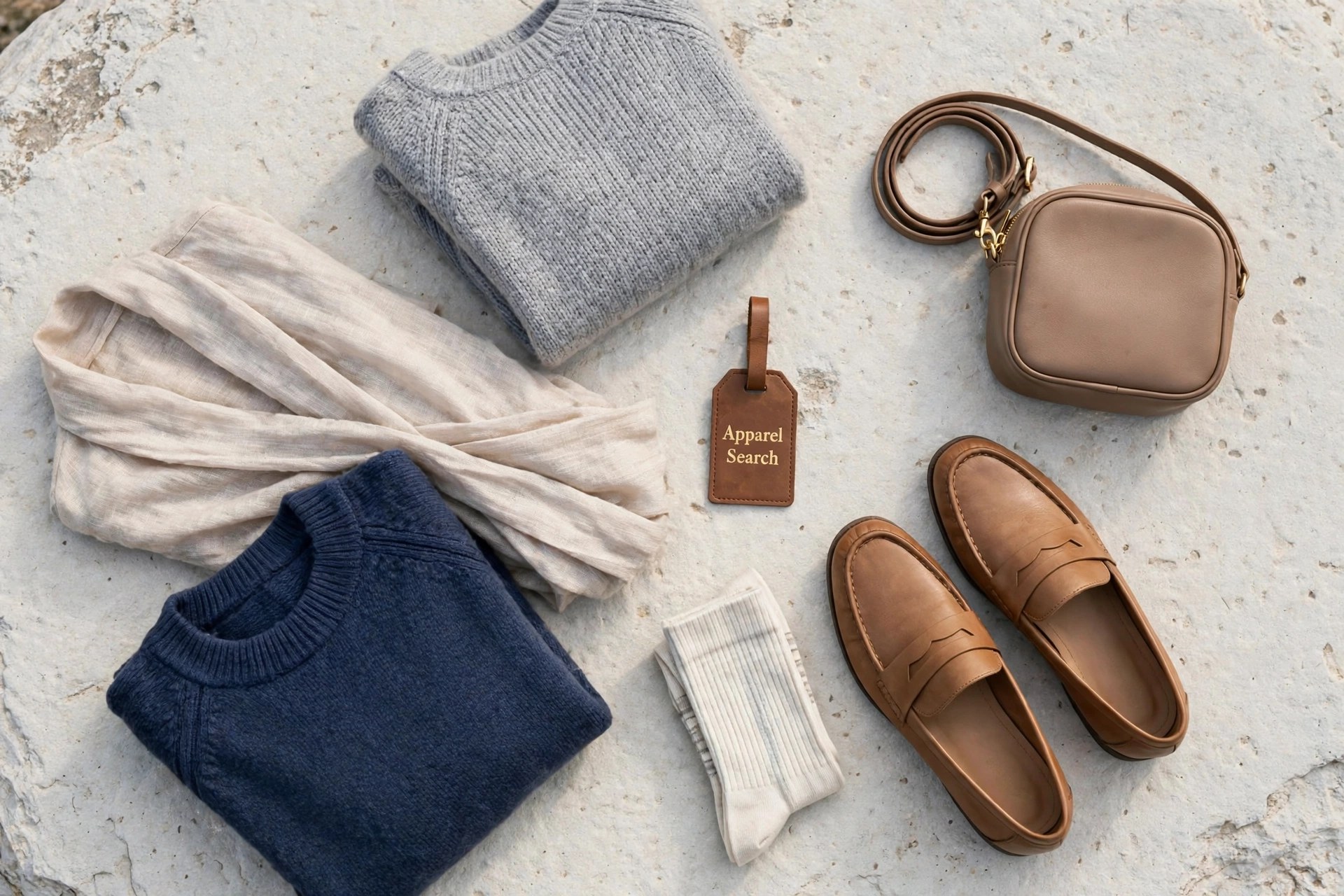
Japan is the most considerate destination in this series to dress for, because its conventions are so consistent: neatness, modesty and an ease with small rituals, of which the biggest is footwear. In Japan your shoes come off constantly — at inns, temples, traditional restaurants, some shops and historic buildings — and that single custom quietly reorganizes a wardrobe: slip-on shoes, socks in perfect condition, trousers that survive being seen without shoes. Add genuinely extreme seasons, humid summers and cold winters, and Japan becomes the fullest test of the destination dressing approach: read the place first, and the packing follows.
01 / Shoes Off
Shoes Come Off, Often
The genkan — the entryway step where shoes are left — appears everywhere in Japan: traditional inns (ryokan), temples and shrine buildings, tatami restaurants, teahouses, castles and older homes, and often at fitting rooms and clinics. The wardrobe consequences are three. First, wear shoes that slip on and off in seconds, without laces to wrestle while balancing on a step: loafers, slip-on sneakers, elastic-sided boots. Second, treat socks as visible clothing, because several times a day they will be: fresh pairs without holes or worn heels, in colors you are content to be seen in. Third, expect indoor slippers to be provided in many places, and change out of them at tatami edges and into the separate toilet slippers where those are offered — the system is explained by example all around you, and following it is the politeness. None of this is a test to fail; hosts are gracious about visitors. But the traveler in slip-ons and good socks moves through the day visibly at ease, and in Japan that ease is the compliment.
02 / The Convention
Neat and Understated
Japan's everyday dress convention is the tidiest in this series: clothing clean, pressed and in good repair, in largely muted colors, worn with a general modesty — shoulders and midriffs usually covered, hemlines moderate in quiet settings — that visitors notice most in how unremarkable everyone looks. Nobody is performing fashion at the neighborhood level; they are performing care. For a visitor the translation is simple: your neatest travel wardrobe, favoring the covered options, fits in almost everywhere, and the pieces that fight the convention are the loud, the very revealing and the visibly worn-out. Our modest fashion guide covers the coverage layer in depth. Big cities, of course, contain every subculture and statement a big city anywhere contains — the convention described here is the mainstream one a visitor is measured against in temples, inns, restaurants and small towns.
03 / Shrines, Temples, Onsen
Shrines, Temples and Onsen
Shrines and temples ask for respectful dress rather than a formal code: covered shoulders and moderate hemlines are the safe convention, hats come off inside halls, and some temple buildings are among the shoes-off places above. Onsen — Japan's hot-spring baths — operate on different rules entirely, and they surprise visitors: bathing is nude and gender-separated, swimsuits and cover-ups are not worn in the baths, and you wash thoroughly at the provided stations before entering the water. The clothing question at an onsen is tattoos. Many traditional onsen have long declined guests with tattoos or asked that tattoos be covered, a policy rooted in old associations that is gradually relaxing; some facilities now permit small covered tattoos, sell or accept cover stickers, or offer private family baths that sidestep the question. Policies vary by facility and change over time, so check the specific onsen's current rules before you go — and know that the cover-up strategies used for clothing (rash guards, wraps) do not apply inside the baths themselves.
The Short Version
The Japan Shoe Rule
If a garment will be removed five times a day, it stops being an accessory and becomes part of the system. In Japan that garment is the shoe — and the system's other half is the sock it reveals.
Slip-on shoes, good socks, no exceptions. Pack as if your socks were outerwear, because several times a day, they are.
04 / Seasonal Extremes
Seasonal Extremes
Japan's seasons are not mild variations but genuinely different climates. Summer, especially in Tokyo, Kyoto and the south, is hot and very humid — the conditions our humid weather guide is built for: breathable fabrics, loose cuts, and an acceptance that the day's second shirt is a real strategy; the June–July rainy season adds a daily waterproof layer. Winter reverses the problem: Tokyo is crisply cold, Kyoto colder in its basin, and Hokkaido is true deep-winter territory covered by our extreme cold guide. Spring and autumn, the famous seasons, are the layering months — the climate guide's system at its most useful, with the note that temple gardens and mountain excursions run several degrees colder than the city streets below them.
Questions
Common Questions
Do I really need slip-on shoes in Japan?
They are the single highest-value packing choice for Japan. You will remove your shoes at inns, temples, traditional restaurants and historic sites, sometimes several times in an hour of sightseeing; slip-ons turn each stop into a moment instead of a procedure.
What socks should I pack for Japan?
Your best ones. Socks are seen daily and closely in shoes-off settings, so pack fresh pairs without holes, thinning heels or novelty prints you would not choose as visible clothing — plain, good-quality socks in your wardrobe's colors.
Can I visit an onsen if I have a tattoo?
Sometimes. Many traditional onsen still decline tattooed guests or require tattoos to be covered; others now allow small covered tattoos, and private baths avoid the issue. Rules differ by facility and are changing, so check the specific onsen's policy before your visit. Swimwear and cover garments are not worn in the baths themselves.
Is there a dress code for temples and shrines in Japan?
Rarely a formal one. The working convention is respectful dress: covered shoulders, moderate hemlines, hats off inside halls, and shoes off where the building requires it. Neat, covered, quiet clothing is appropriate at every site.
Keep Going
More Destination Guides
Japan is one stop in the series. The hub gathers the principles; the other city guides apply them elsewhere.