Apparel Search Consumer Guides
Dressing for the Climate Guide
Heat, humidity, cold, wind and rain each ask something different of your clothes. Read the air first — here is how, plus deep guides to the two hardest conditions.
Most people dress by the calendar: a date in October means a sweater, a date in July means shorts. The calendar is a poor stylist. The same October week can hold a frosty morning, a humid afternoon thunderstorm and a windy evening, and the clothes that were right for one are wrong for the other two. This guide teaches the other way of dressing — by what the air is actually doing. Heat, humidity, cold, wind and rain each ask something different of fabric and fit, and once you can read them, a weather forecast becomes a dressing instruction you can follow in about thirty seconds.
The two deep dives in this section cover the conditions the calendar fails worst. Humidity defeats more summer outfits than heat does, because it disables the body's cooling system — the page explains which fabrics and fits still work when the air is already saturated. Extreme cold is where the familiar three-layer system has to be pushed further and worn more carefully. Between them sits the framework on this page: the five conditions, and how to read a forecast for the one number most people never look at.
Search Apparel Search
The Guides in This Section
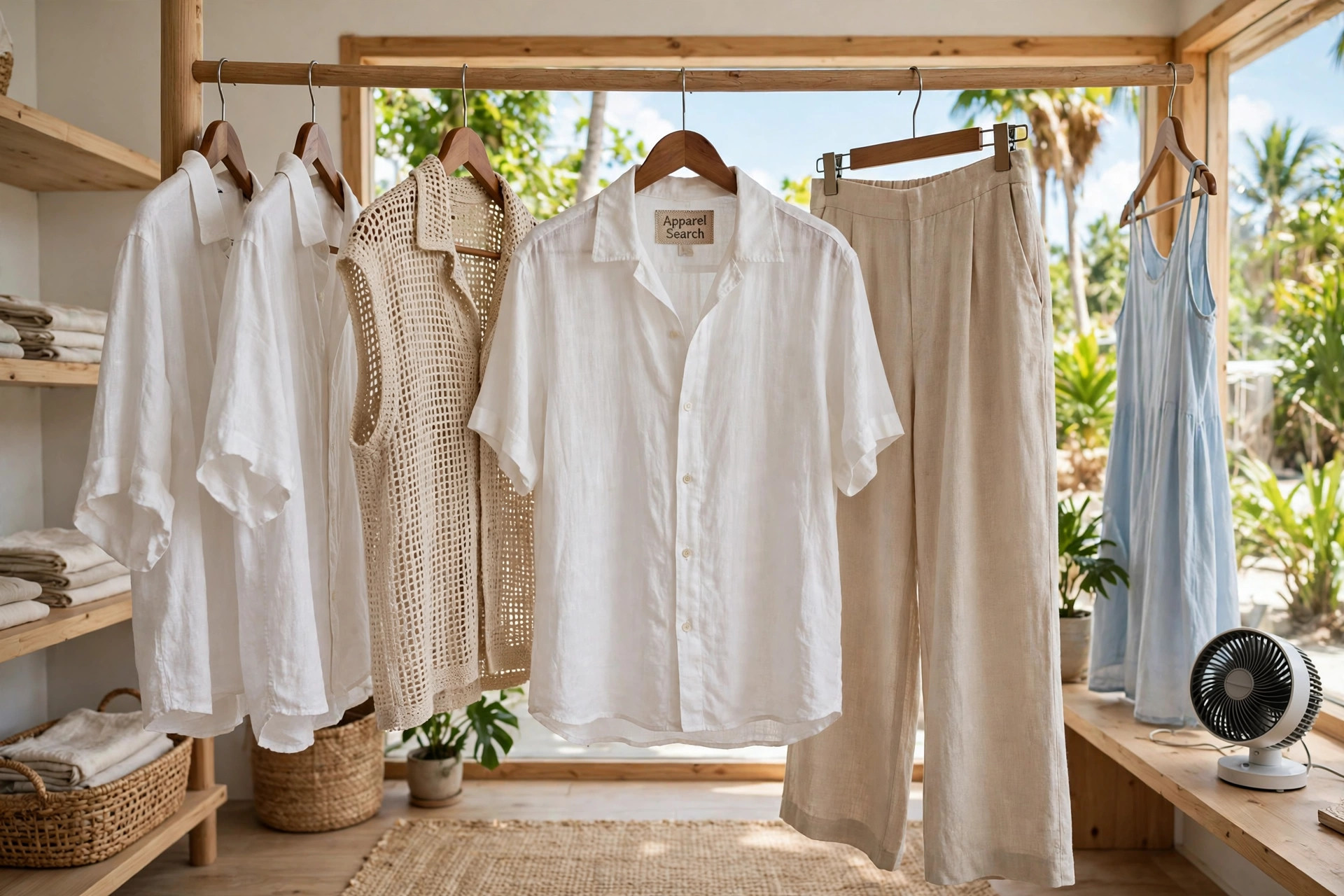 What to Wear in Humid WeatherWhy humidity defeats sweat, the fabrics that still cope — linen, open weaves, moisture-moving synthetics — the loose fits and vented constructions that help, and how to look polished when the air is swampy.
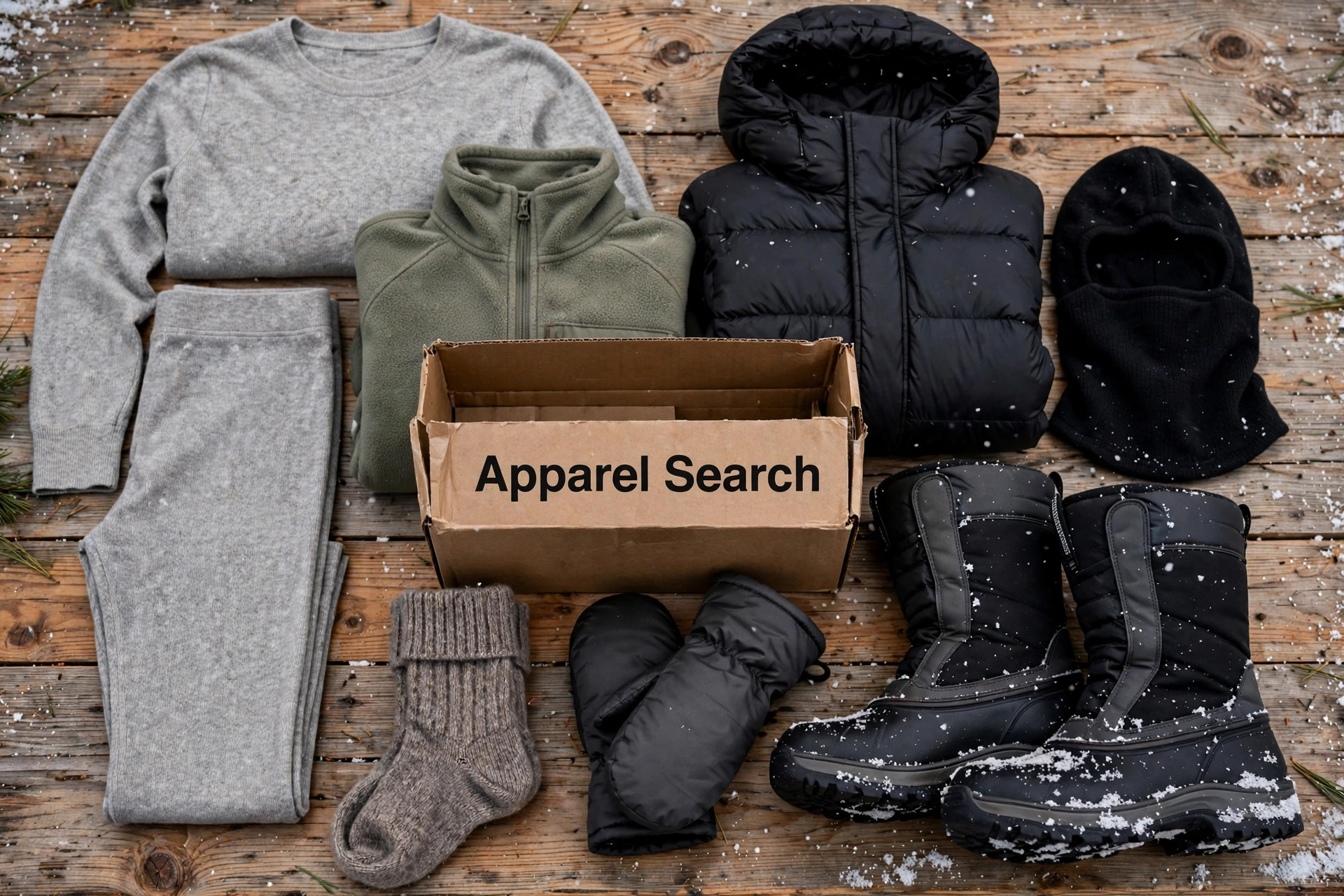 Dressing for Extreme ColdThe layer system at full stretch: base, mid, insulation and shell, protection for face, hands and feet, boots and traction — and the common mistakes, from cotton to too-tight boots, that make people colder.
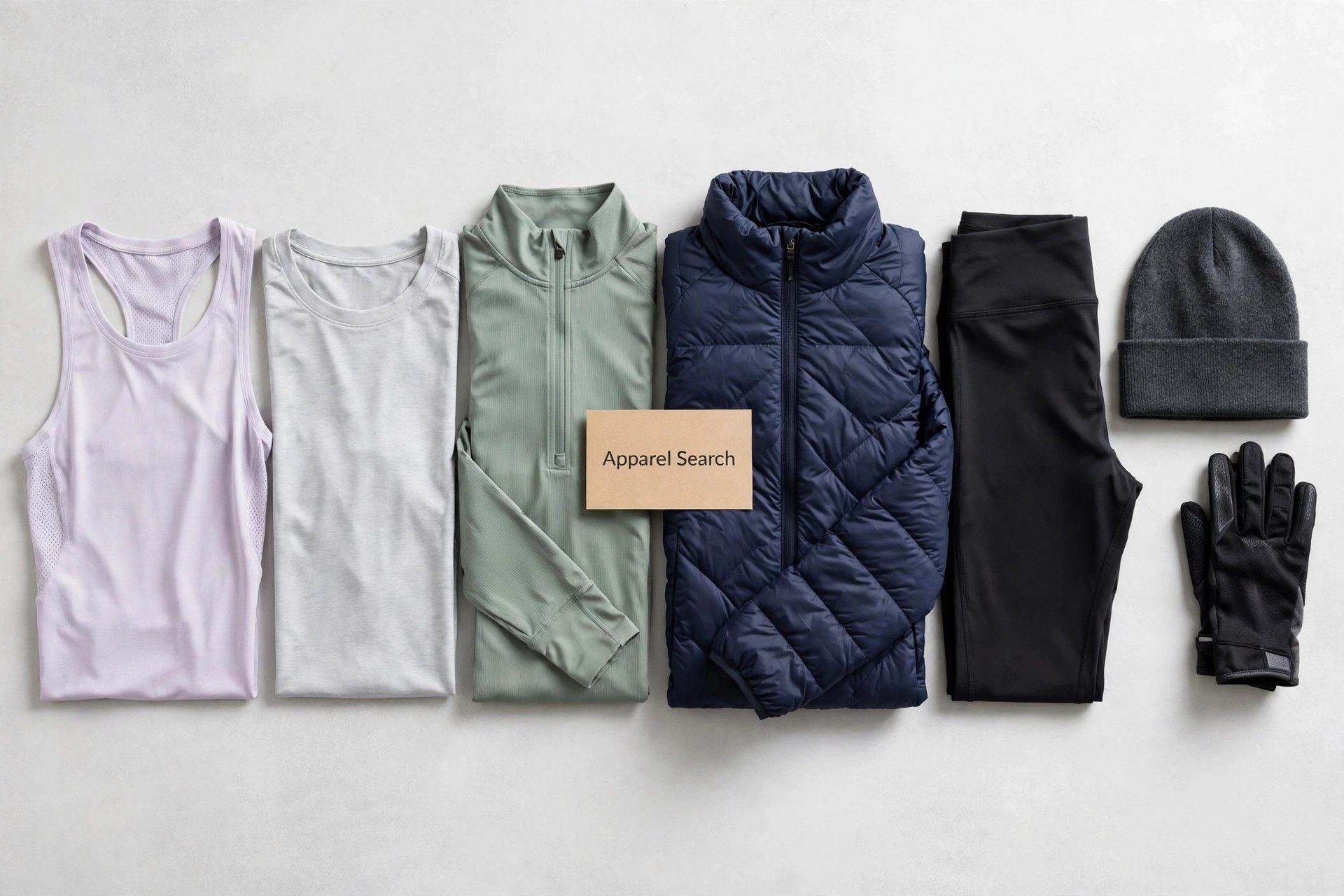 What to Wear Running by TemperatureClimate dressing at running effort: the band-by-band system for what to wear at every temperature, adjusted for wind and rain, built on the dress-for-mile-two principle.
The Five Conditions Your Clothes Actually Face
Heat
Dry heat is the friendliest condition there is. Sweat evaporates freely and cools you, so the job of clothing is mostly to shade skin, allow air to move, and not add insulation. Loose fits, light colors that reflect sun, and fabrics that dry fast handle it. Dry heat is also the benchmark that misleads people: nearly everything that works in dry heat fails the moment humidity joins it, which is why humidity gets its own page in this section.
Humidity
Humidity is moisture already in the air, and it matters because your cooling system is evaporation. When the air is nearly saturated, sweat cannot evaporate, so it sits on the skin and the cooling never happens. Clothing for humidity is therefore an evaporation strategy: fabrics that spread moisture thin and dry fast, weaves open enough for air to pass, and fits that stand away from the body so what airflow exists can reach the skin. The full treatment — fabrics, fits, construction details, and office dressing — is on our humid weather page.
Cold
Cold is a heat-loss problem, and insulation is trapped still air: the thicker and loftier the layer of air your clothing holds around you, the slower your body heat escapes. Ordinary winter dressing handles ordinary cold with a coat and a sweater. When the cold turns extreme — deep sub-freezing temperatures, wind, long exposure — the answer is a system rather than a garment, and small failures (a cotton layer, an exposed neck, boots too tight for thick socks) matter more than the coat. Our extreme cold page builds that system layer by layer.
Wind
Wind is a multiplier on everything else. Moving air strips away the thin layer of warmed air at your clothing's surface and pushes cold air through loosely woven fabrics — the reason a knitted sweater that is warm indoors can feel like a sieve on a gusty street. The countermeasure is a windproof outer layer: a tightly woven shell, a hardshell or even a lined coat turns the same insulation back on by keeping the air inside it still. In heat, wind reverses sign and becomes your friend — every breeze is free cooling, which is one reason loose, open clothing feels so much better in humid places with moving air.
Rain
Wet clothing loses warmth fast and feels clammy in any temperature, so rain dressing is about keeping water out and choosing fabrics that forgive getting caught. A waterproof shell over layers is the system answer; below it, wool and synthetics keep far more of their comfort and warmth when damp than cotton does. Our women's guide to raincoats covers the coat choices, and the raincoat definition explains the constructions behind them.
Reading a Forecast Like a Dresser
- Find the dew point first. It is the number that tells you how the air will feel on skin. Below about 55°F (13°C), dress for the temperature. In the low 60s, expect mugginess and choose breathable fabrics. At 65°F and above, you are dressing for humidity whatever the thermometer says — go to the open weaves and loose fits.
- Read the wind, not just the temperature. A calm 30°F and a windy 30°F are different countries. Double-digit wind speeds call for a windproof outer layer and coverage for ears and neck; in summer, wind is what makes a shaded, breezy outfit work.
- Check precipitation type and timing. Rain at 60°F is a shell problem; rain at 35°F is the most miserable common condition there is, because it is too cold for comfort and too wet for ordinary winter gear — waterproof layers matter more, not less. Note when the rain falls: a shower at noon and a dry evening can be dressed for with one packable shell.
- Look at the whole day, then dress in removable differences. The high and low bracket your day. Dress for the harder end and make the gap a layer you can carry — that is the entire secret of dressing for swing days, travel days and shoulder seasons.
The Number to Learn: Dew Point
Relative humidity changes all day as the temperature moves, which makes it a slippery guide. The dew point barely moves, and it measures the moisture itself. Dressers, runners and farmers have used it for generations for exactly this reason: it tells you, in one steady number, how hard evaporation will have to work — and evaporation is your cooling system. Find it in any full weather forecast, usually one tap below the headline temperature.
Dress for the Hour You Will Be Out In
A forecast describes a whole day; you live it in hours. The commute at 7 a.m., the site visit at noon and the walk home at dusk can be three different climates. The forecast-reading steps above work per outing, not per day — run them for the hours you will actually be outside, and let the indoor hours look after themselves.
Common Questions
What is the dew point, and why does it matter more than the humidity percentage?
The dew point is the temperature at which the air is saturated — the point where moisture in the air would start to condense. Unlike relative humidity, which swings with the temperature through the day, the dew point is a steady measure of how much moisture is actually in the air, which is why it predicts how clothing will feel so much better. As a rough guide, a dew point under about 55°F (13°C) feels dry and comfortable, the low 60s feel muggy, and anything at or above about 70°F (21°C) feels oppressive — the air is holding so much water that sweat barely evaporates.
Why does the same temperature feel fine one day and unbearable the next?
Because temperature is only one of four things your clothes have to handle. Humidity decides whether your sweat can evaporate and cool you. Wind strips heat from your body and pushes through loosely woven fabrics. Sunshine adds radiant heat that a shaded thermometer never records. A dry, still, shaded 85°F and a humid, sunny 85°F are two different climates wearing the same number — dress for all four variables, not the headline temperature.
Is there one wardrobe approach that works in every climate?
The layering principle comes close. A wardrobe built as separable layers — a comfortable next-to-skin piece, insulation you can add or remove, and a shell against wind and rain — adjusts across a far wider range than any single garment can. It is the same system cold-weather dressing uses at full stretch, scaled down: in mild weather the layers are a shirt, a light knit and a jacket; in serious cold they become the full base, mid, insulation and shell sequence.
How should I dress when the forecast shows a big swing during the day?
Dress for the coldest or wettest hour you will actually be out in, and make the difference removable. A layer you can carry beats a jacket you cannot shed: the morning layer goes over the shoulder or into a bag at noon, and back on for the evening. Pieces that only work at one temperature are the ones that leave you wrong for half the day.
The Layering Library
The cold half of this guide stands on a layer-by-layer library built garment by garment: the base layer against the skin, the mid layer that traps the air, and the hardshell that keeps wind and water off both. The cold weather wardrobe collects the full winter wardrobe in one place, and our fall and winter capsule wardrobe applies the same thinking to a whole season of outfits.