Women's Raincoats Guide
A raincoat is judged at its seams — waterproof fabric, sealed construction and the right length decide whether you arrive dry or merely covered.
Shop Women's Raincoats Now
Shop Women's Raincoats on Amazon Shop Women's Raincoats on eBayThe Amazon and eBay links on this page are affiliate links. If you make a purchase through them, Apparel Search may earn a commission.
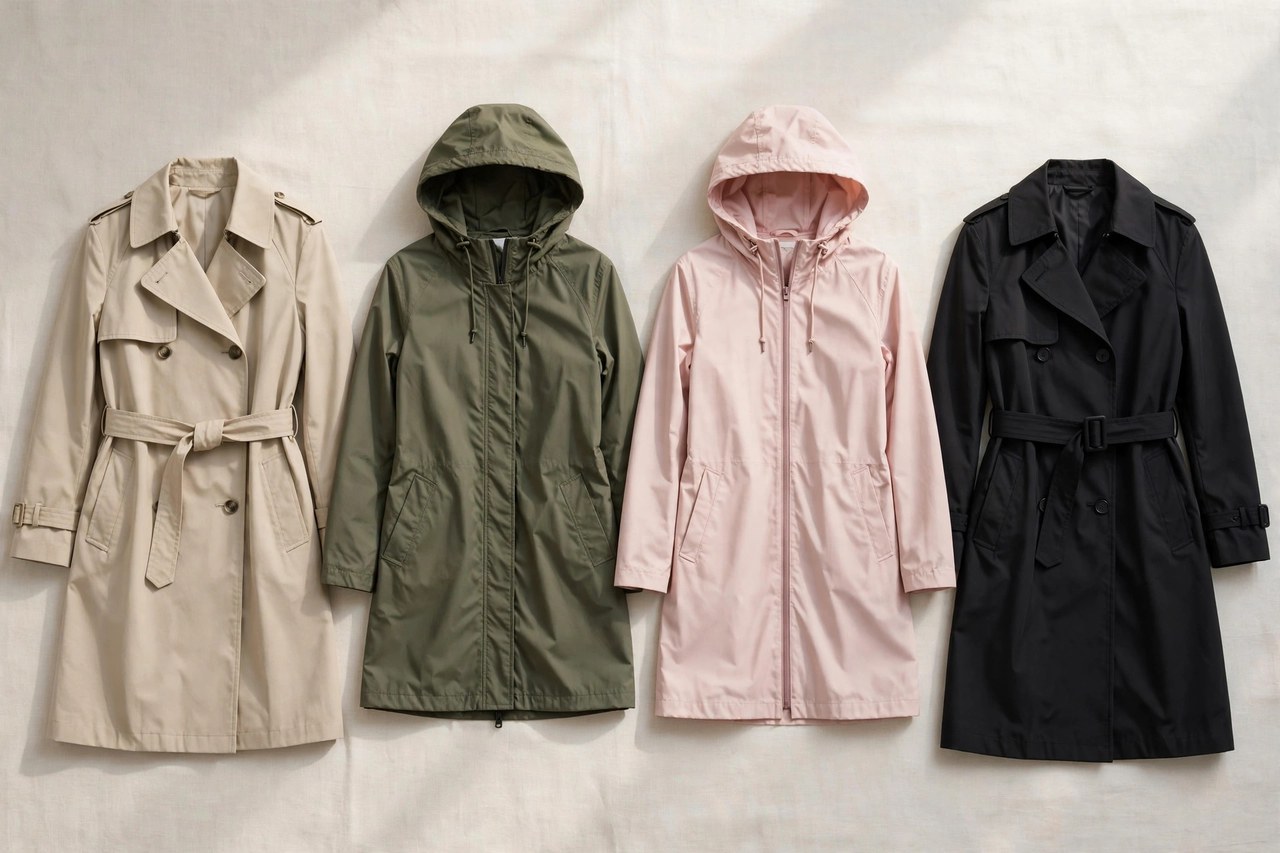
A raincoat is a coat built to keep rain off everything underneath it, which makes it a different purchase from a boot or an umbrella: it has to protect a whole outfit, move with you, and still look like a coat you are glad to own. The central fact of raincoat shopping is that waterproof and water-resistant are not the same claim. Water-resistant fabric sheds light rain and mist for a while; a truly waterproof coat uses a coating or membrane plus sealed construction to hold out sustained rain.
This guide is about coats specifically — their fabrics, seams, lengths and silhouettes, from the classic trench to the packable shell you keep in a tote. The wider category of rainwear, including boots and umbrellas, has its own page; here the focus stays on the garment that does most of the work in a downpour, and on the construction details that separate a coat that keeps a promise from one that only makes it in drizzle.
Waterproofing: Coatings, Membranes and Seams
Most raincoats get their protection one of two ways. A coating, often polyurethane on the inside of the fabric, seals the weave against water and is common on lighter, packable coats. A membrane is a separate waterproof layer laminated inside a shell, usually paired with a durable water repellent finish on the outer face so rain beads and rolls off instead of soaking the surface. Either system works; membranes generally breathe better for active use, while coated coats are lighter, softer and less expensive.
Fabric alone never makes a coat waterproof, because rain enters at the stitching. Look for sealed, taped or welded seams on any coat sold as waterproof — untreated needle holes along the shoulders will leak exactly where rain lands hardest. Then check the openings: storm flaps over zippers, snaps or Velcro closures at cuffs, a chin guard at the collar, and a hood that adjusts so it stays up without covering your eyes. A drawcord hem keeps wind from driving rain upward, and underarm vents or a vented back yoke release the warmth a sealed coat inevitably traps.
Styles and Lengths for Different Rain
The trench-style raincoat is the dressed-up end of the category: belted, knee-length, often with a storm flap and horn-look buttons, in a fabric treated to repel water. It suits commutes and occasions where a technical shell would look wrong, though many fashion trenches are only water-resistant — read the description, not the silhouette. At the practical end, hooded shells and packable raincoats fold into a pocket or pouch, weigh very little, and are the coats that actually get carried on uncertain days.
Length is protection you can measure. A hip-length jacket is fine for dashing between car and door but leaves trousers and skirt hems to the weather; a knee-length or midi raincoat keeps most of an outfit dry and is the commuter's friend; long raincoats approaching the ankle serve dog walkers and anyone standing in rain rather than walking through it. Poncho-style coats trade a tailored fit for complete coverage, including over a bag. Match length to how long you will be out, not how hard it might rain for five minutes.
Fit Over Layers, and Breathability
Try a raincoat over the bulkiest layer you will wear under it — a blazer or a knit — and sit, reach and simulate holding a rail. The coat should close fully without pulling at the buttons or zipper, because a closure under strain opens gaps at exactly the wrong places. Sleeves should cover your wrists with arms forward, and the hood, up, should turn with your head rather than staying fixed while your view narrows. Removable liners extend a raincoat into colder months and are worth having in changeable climates.
Breathability decides comfort on any walk longer than a block. A fully sealed, unvented coat keeps rain out and perspiration in, so for brisk walking or cycling choose vents, mesh linings or membrane fabrics with stated breathability, and open the coat from the bottom with a two-way zipper when the rain eases. For short, slow exposure — school runs, station platforms — ventilation matters far less than coverage and a good hood. Being honest about which kind of rain you mostly meet makes the choice straightforward.
Care That Keeps a Coat Waterproof
A raincoat's water repellent finish fades with dirt and washing. Wash the coat as the label directs, usually gentle and cool with a technical or mild detergent, and avoid fabric softener, which coats fibers and defeats repellency. Many finishes revive with tumble drying on low or a warm iron through a cloth; reproofing sprays and wash-in treatments restore a finish that heat alone no longer wakes up.
Between wears, hang the coat dry and unbuttoned so linings air, shake it out after a soaking rather than balling it into a closet, and check seam tape each season for peeling, especially at the shoulders. Zippers benefit from occasional cleaning so storm flaps lie flat. Stored clean and dry, a well-made raincoat keeps its protection for many seasons, and because its job is so specific, it earns its place in the closet every single time the sky argues otherwise.
Related Women's Guides
Photos


More to Explore on Apparel Search
Women’s Clothes Guide by Letter: Women's Apparel Directory N · Women's Clothes Directory O · Women's Clothing Directory P · Women's Apparel Directory Q · Women's Clothing Directory S · Women's Clothes Directory T
Looking for Women's Clothing Stores?
This guide helps you choose women's raincoats. To browse where to buy, visit our women's clothing store directory, where you can find retailers that carry them.