Women's Trench Coats Guide
A trench coat is a belted, double-breasted raincoat with a storm flap, shoulder epaulettes, sleeve straps and a back vent, traditionally in water-resistant cotton gabardine.
Shop Women's Trench Coats Now
Shop Women's Trench Coats on Amazon Shop Women's Trench Coats on eBayThe Amazon and eBay links on this page are affiliate links. If you make a purchase through them, Apparel Search may earn a commission.
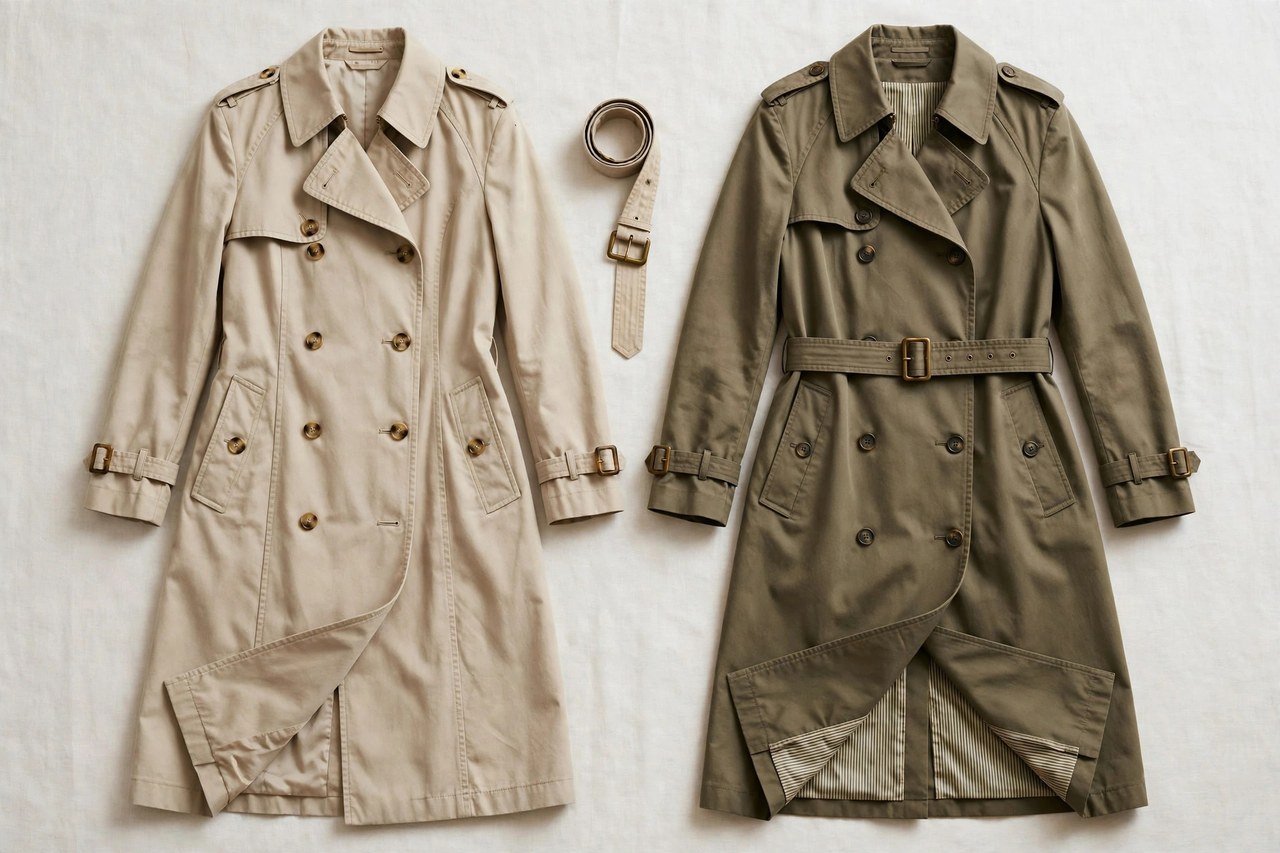
A trench coat is a belted, double-breasted raincoat with a storm flap, shoulder epaulettes, sleeve straps and a back vent, traditionally in water-resistant cotton gabardine. Every famous detail began as military function, and this guide reads the coat that way — which features still earn their place, fabric choices from gabardine to technical cloth, length and fit over layers, and care for a coat expected to last decades.
This guide covers trench coats in the order a careful buyer needs it: what the product is made from, how it is constructed, how it should fit, how to choose it for real use, and how to care for it so it lasts. The focus is on measurable details, named materials and checks you can perform in a shop or on a parcel's arrival, rather than general fashion language.
Fabrics and Construction
Tailored garments like trench coats are built from cloth with body: wool and wool blends in suiting weights, cotton gabardine and twill, linen for summer structure, and technical fabrics where weather protection is part of the design. The cloth is only half the product — inside a tailored piece sit interlinings or canvas, shoulder shaping, taped edges and a lining, and it is this internal architecture that holds the garment's line on the body year after year.
Read the construction at its checkpoints. Collars and lapels should roll smoothly and sit against the body without gaping; sleeves should hang from a shaped sleeve head without twisting; fronts should meet evenly; hems should be level and invisibly finished. Gabardine, the original trench fabric, sheds rain through a tight twill weave and the yarn's finish rather than a coating, which is why old trenches can be re-proofed instead of replaced. Pattern matching at seams, where the cloth has a check or stripe, is the visible summary of a maker's care, because it costs time and fabric to achieve.
Fit and Alteration
Tailoring fits closer to a standard than any other clothing because it assumes alteration. Fit trench coats first at the points that cannot be changed — shoulders above all, then chest or waist — and treat length, waist suppression and hem as the adjustable remainder, since a good tailor can take in, let out within the seam allowances, and shorten, but cannot move a shoulder. Seams should lie flat with no horizontal strain lines, and buttons should meet without pulling the fronts apart.
Wear the garment as it will be worn for the fitting: the layers beneath it, the shoes that set its length, and a full range of movement — sitting, driving posture, arms forward. Structured cloth has almost no stretch, so comfort is engineered through cut and ease, and a tailored piece that feels merely acceptable in the shop usually feels restrictive by the end of a working day. Between sizes, buy for the largest fixed point and alter the rest; that is the system the garment was designed for.
Choosing and Wearing
Choose trench coats by cost per wear across years, not seasons. Tailoring is the slowest fashion in the wardrobe: a classic cut in a mid-tone, durable cloth outlasts trend cycles, while strongly fashionable details date the garment at the speed of the trend that inspired them. Weight the checks by use — a daily working garment earns heavier cloth and stronger construction, an occasional piece can trade durability for fineness — and always price in the alterations the fit will need.
Check a tailored garment in daylight, on the body, in a full-length mirror. In practice, rank these checks in the order your own use demands — frequency of wear first, then weather, washing facilities and budget — because that order differs by wardrobe, and it is the real reason two careful buyers can correctly choose differently from the same rail. Photographs and shop lighting flatter structure; the honest tests are the collar's behaviour when you move, the fronts when you sit, and the cloth's recovery when you crush a sleeve in your fist and watch whether the crease falls out. Good suiting sheds a day's creases overnight on a hanger; poor cloth keeps them as a record.
Care and Storage
Tailored clothing is cared for mainly by rest and air, not washing. Brush garments down after wear, rest them at least a day between wearings on shaped hangers that fill the shoulders, and spot-clean marks promptly. Most structured pieces are dry-clean only, and even then infrequently — each clean is a chemical and mechanical stress — while pressing, by a tailor or with a cool iron and press cloth at home, restores the line that wear removes.
Store tailoring clean, in breathable covers, with room for air to circulate and protection from moths, which target wool especially when it carries traces of wear. Keep knitwear out of this storage system — tailored pieces hang, knits fold — and check stored garments each season for the small repairs that are cheap early: a loose button, a hem coming down, a lining seam opening. Caught in time, these are minutes of work; left, they end garments.
Related Women's Guides
The Classic Specification
The classic garment is a loose, belted, double-breasted raincoat in military style, made of waterproof heavy-duty material — typically cotton gabardine drill, leather or poplin — generally with a removable insulated lining and raglan sleeves, in lengths from just above the ankle to above the knee. A typical trench coat is ten-buttoned and double-breasted, made in tan, black, khaki or beige (though fashion colours are common), with cuff straps, raglan sleeves, shoulder straps and a belt. It was designed as a windbreaker and rain jacket, not as protection against winter cold or snow — a distinction the modern versions still observe.
Photos

Looking for Women's Clothing Stores?
This guide helps you choose women's trench coats. To browse where to buy, visit our women's clothing store directory, where you can find retailers that carry them.