Women's Rain Boots Guide
A women's rain boot exists for one job — keeping feet dry in wet weather — and height, sole grip and calf fit decide how well it does it.
Shop Women's Rain Boots Now
Shop Women's Rain Boots on Amazon Shop Women's Rain Boots on eBayThe Amazon and eBay links on this page are affiliate links. If you make a purchase through them, Apparel Search may earn a commission.
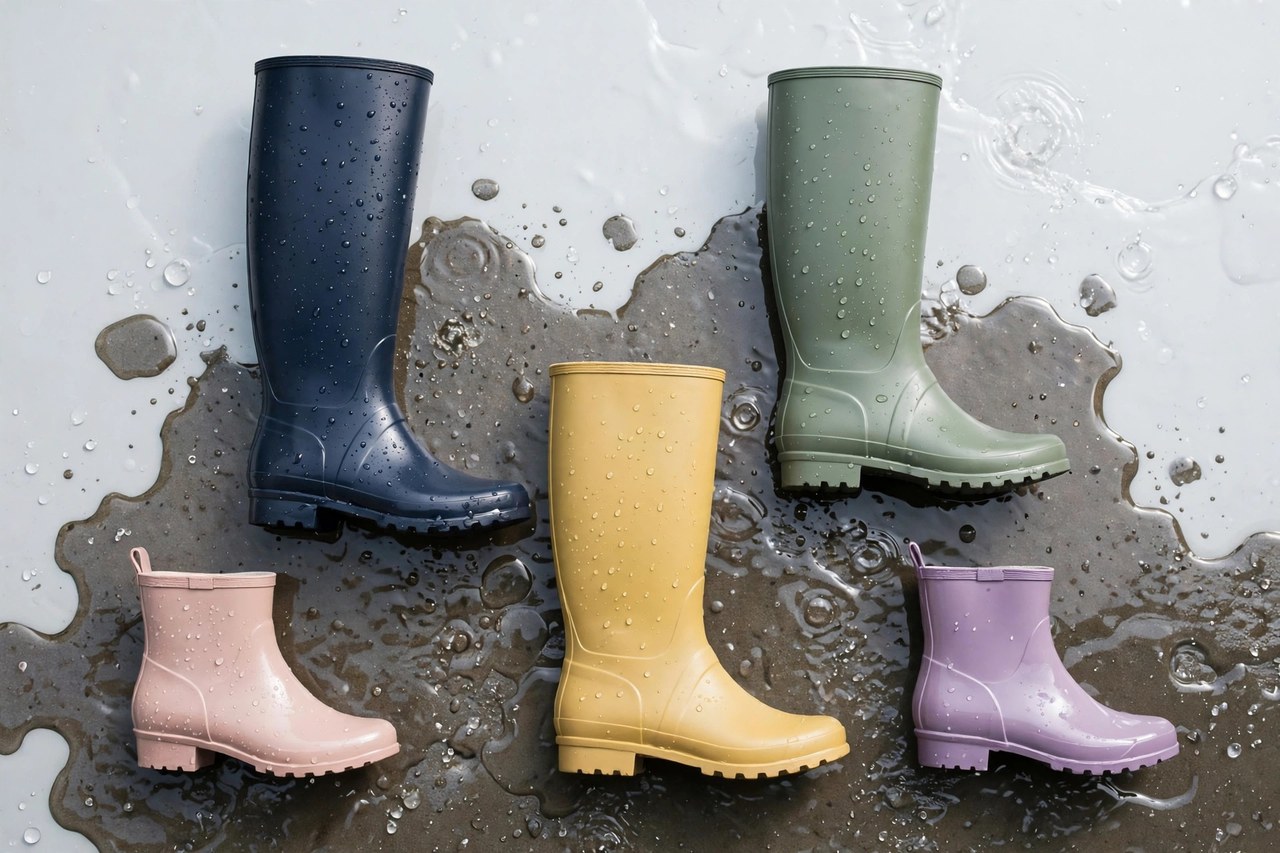
A women's rain boot is footwear made specifically for rainy days and wet environments, built from waterproof material so the wearer's feet stay dry. A boot, in the general sense, covers the foot and ankle and usually part of the lower calf, sometimes rising to the knee; a rain boot uses that coverage as weather protection. Look for rain boots that are waterproof, comfortable and protective, and stylish enough that you will actually wear them when the forecast turns.
This guide covers the boot as footwear: choosing a height, reading a sole, fitting a calf, and understanding where the familiar styles come from. The rubber a boot is made from gets its own detailed page on this site; here the questions are practical ones a shopper asks in the store — how tall, how grippy, how roomy, and whether the pair that looks right will still feel right after a wet mile of walking.
Heights: Ankle, Mid-Calf and Knee
Rain boots are offered in graded leg heights, and height is protection. Ankle rain boots and low garden styles slip on fast and pair with cropped trousers, but they stop splashes, not puddles. Mid-calf boots are the versatile middle, covering the splash zone for most city rain while staying easy to walk and drive in. Knee-high boots give full protection for deep puddles, muddy ground and dog walks through wet grass, at the cost of more weight and a shaft that must fit your calf properly.
Specialty forms fill the edges of the range. Wedge rain boots lift the waterproof boot into dressier territory for commuters. Duck boots pair a rubber lower section with a leather upper — a design dating to L.L.Bean's 1911 Bean Boot — and handle slush and light snow as well as rain. Chelsea-style rain boots borrow the elastic-sided ankle boot shape in waterproof form. Choose height by your real weather and your real route, not by the storm of the century.
Soles, Grip and Comfort Details
A good rain boot sole is thick, protective and made to shed water. Look for a grooved or lugged outsole described as anti-slip or water-dispersing: the channels push water out from under the boot so rubber meets pavement instead of hydroplaning on a wet film. A slight heel, clearly distinguished from the rest of the sole as on most boots, helps in mud; a completely flat fashion sole is the thing to avoid on slick station platforms and wet leaves.
Inside and around the boot, small features decide comfort. A removable insole lets you add arch support or dry the boot faster. A pull tab or pull loop at the back makes a tall, snug boot far easier to get on, and reflective back straps add visibility on dark, rainy evenings. Lined boots — jersey, fleece or neoprene-style linings — turn a cold-weather chore into something pleasant, while unlined boots are lighter and better for warm-weather downpours. Soft, flexible shafts roll or fold for travel; firmer shafts stand up on their own by the door.
Fit: Calves, Socks and the Wellington Story
Rain boots rarely stretch, so fit must be right on day one. Try them with the socks you will actually wear — a thick sock can change a tall boot from comfortable to calf-pinching. Check for extra wide calf versions, adjustable gussets or buckled straps if standard shafts feel tight, and leave about a finger's width around the calf so the boot can move and come off. In length, a little room is normal and useful; many shoppers size up half a size for sock space, since most rain boots come in whole sizes only.
The tall rain boot descends from the Wellington boot, originally a leather boot adapted from Hessian military riding boots and popularized by Arthur Wellesley, 1st Duke of Wellington. Leather wellingtons became a staple for the British aristocracy and middle class in the early 19th century, and the name later transferred to waterproof rubber boots — the wellies now used for farming, gardening and festivals alike. Knowing that riding-boot ancestry explains the tall shaft, the close calf and the pull-on design you still see today.
Color, Care and Storage
Color is the fun decision: yellow rain boots are popular partly for visibility on cloudy days, when a bright boot is easier for drivers to see. Beyond solids there is a huge assortment of prints, from florals to plaid, plus glossy and matte finishes. Knee-high and wedge styles can be genuinely fashionable — pick the pair that fits your coat and your commute.
Care is simple but specific. Rinse mud off before it dries, wash with mild soap and water, and dry boots away from direct heat, which cracks waterproof materials; stuff tall shafts with paper or use boot trees so they stand straight instead of folding and creasing. Store them upright, out of sunlight. A white film called bloom can appear on natural rubber and wipes or conditions away — it is cosmetic, not damage. Kept this way, a good pair of rain boots is ready by the door for years of bad weather.
Related Women's Guides
Photos

More to Explore on Apparel Search
References & Further Reading
Looking for Women's Clothing Stores?
This guide helps you choose women's rain boots. To browse where to buy, visit our women's clothing store directory, where you can find retailers that carry them.