Women's Rain Boot Stores
Waterproof rain boots and wellingtons for women
Rain boots solve a problem ordinary shoes cannot: standing water. A leather boot resists rain for a while, but a true rain boot is moulded waterproof from sole to top, so puddles, mud and flooded paths simply do not matter. This directory lists rain boot retailers for women, headed by Hunter, which sells men's, women's and kids' rain boots online direct from the company, alongside its outerwear and accessories ranges. The listing comes first; below it you will find how rain boots are made, how to choose between tall, mid-calf and ankle heights, why calf fit matters more in this category than in any other footwear, and why rain boot sizing runs differently from leather shoes. For the full range of boot types, the women's boots stores directory covers western, work, hiking and sheepskin boots as well.
More to Explore
- Women's Boot Stores
- Retailer Directory
- Women's Boots
- Women's Rain Boots Guide
- Hunter
- rain boots
- Bridal Shops by State
- Women's Jeans Stores
- Women's Sheepskin Boot Stores
- Women's Sheepskin Slipper Retailers
- Women's Slipper Stores
- Women's Shoe Stores by State
- Women's Skirt Stores
- Women's Swimwear Cover-up Stores
- Women's Outerwear Stores
- Women's Resort Wear Stores
Women's Rain Boot Stores
Women's Boot Stores Retailer Directory Women's Boots Women's Rain Boots Guide
 Hunter : Hunter sell men's,
women's and kids' rain boots online. Buy direct from the company. You
may also wish to consider the outerwear and accessories ranges.
Address: Hunter-Boot USA, 140 West 57th Street, Suite 7B, New York, NY
10019 Phone: 877-495-1500 E-mail:
Information@Hunter-Boot.com
Contact name: Gemma Green
- Women's Boots
- Women's Rain Boots
- Men's Boots
- Children's Boots
Learn more about rain boots in our fashion product influence section.
How Rain Boots Are Made
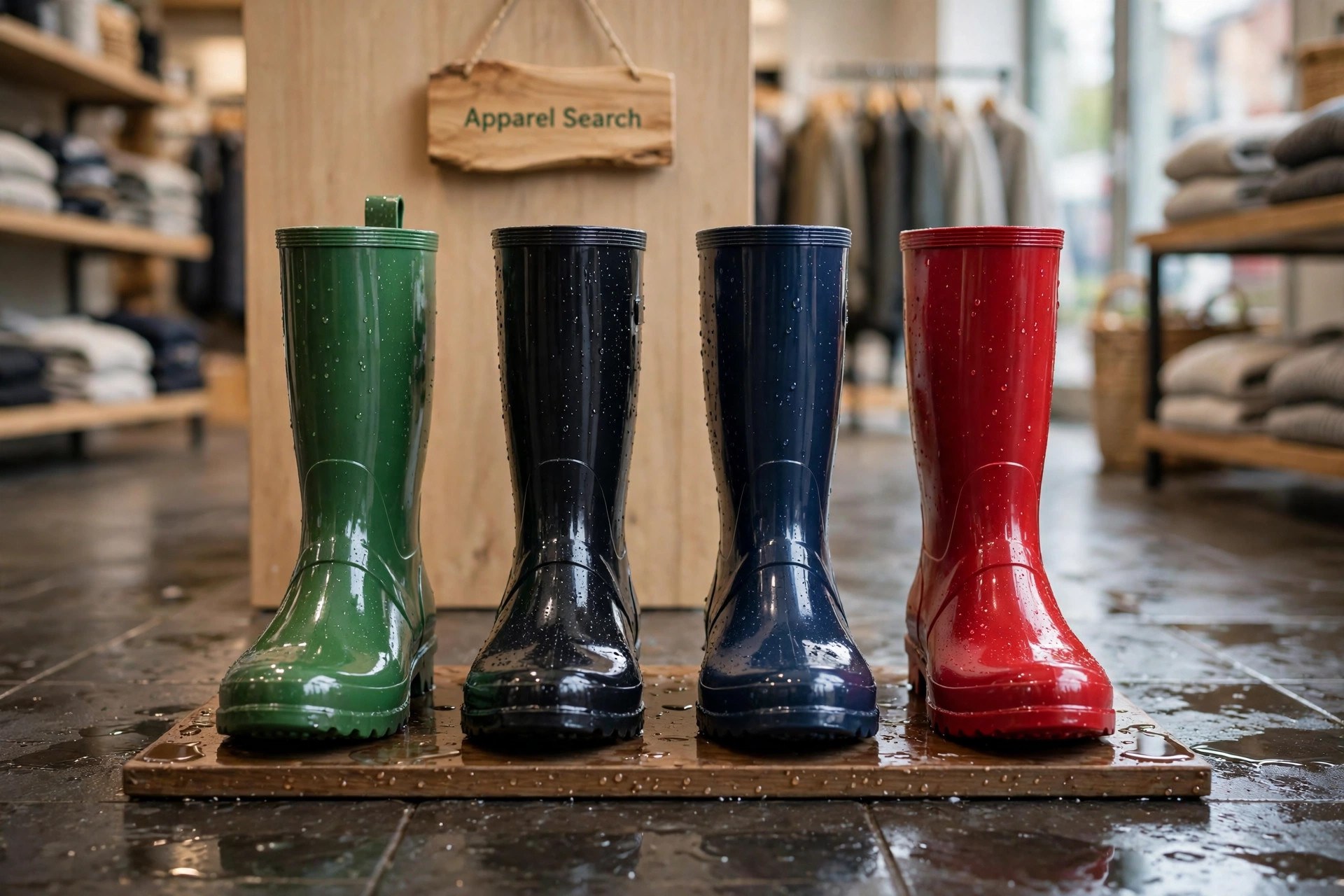
Traditional rain boots — wellingtons — are made from natural rubber, vulcanised so the material becomes durable, flexible and completely waterproof. Modern versions also use PVC and other synthetics, which cost less and weigh less but can feel stiffer in cold weather, when natural rubber stays supple. Construction is the point: a rain boot has no stitched upper seams for water to seep through, and the sole is moulded or bonded as part of the same waterproof unit. Inside, a textile lining helps the boot slide on and manages moisture; neoprene-lined versions add insulation for winter dog walks, gardening in the cold months and festival mud. Gloss, matte and printed finishes are surface treatments — the waterproofing is in the moulding, not the shine — so choose the finish for style and the construction for weather.
Tall, Mid-Calf or Ankle: Choosing a Height
Height is chosen by water depth and by how far you will walk. Tall boots, reaching just below the knee, are the choice for fields, allotments, dog walking across wet ground and any work where mud is ankle-deep or worse. Mid-calf boots split the difference for gardens, school runs and general wet days, and are easier to drive in. Ankle-height rain boots and rain shoes suit city use: they handle puddles and downpours on pavements, pack easily for travel, and read closer to ordinary footwear with trousers or skirts. Traction matters more than most buyers expect — wet leaves, mud, decking and smooth stone are all slippery — so look for a cleated, lugged sole rather than a smooth one, especially if the boots will leave the pavement regularly.
Calf Fit, Sizing and Care
Calf fit is the rain boot variable that catches buyers out. A tall boot must clear your calf in the jeans or leggings you will tuck in, with room to flex as you walk; standard, slim, wide and adjustable-calf versions all exist, and a boot that grips the calf too tightly will be uncomfortable within the hour and hard to remove at the door. Sizing usually comes in whole sizes and runs generous, because the boots are designed for thick socks; if you are between sizes, the thicker sock or an insulating insole usually settles the choice better than sizing down into a tight boot, and there are no laces to adjust a poor fit later. Care is simple: rinse mud off after use, dry the boots away from radiators and direct heat, which can crack rubber, and store them upright and out of strong sunlight. A silicone-based rubber conditioner keeps natural rubber from blooming and drying out. Kept that way, a quality pair of rain boots from a retailer listed here is an occasional purchase measured in years.
Common Questions
Are rain boots completely waterproof?
Yes — that is their defining feature. Moulded rubber or synthetic construction has no stitched seams, so standing water cannot enter the boot.
Why does calf fit matter for rain boots?
Tall rain boots have no laces or zips to adjust them, so the shaft must clear your calf — with the trousers you will tuck in — and still flex as you walk. Wide and adjustable-calf versions exist for that reason.
How should rain boots be stored?
Rinsed clean, dried away from direct heat, and stored upright out of strong sunlight. Heat and sun are what crack and age rubber.