Women's Boots Guide
Ankle to knee-high, rain to winter — the umbrella guide to boot heights, calf fit and choosing the right pair for each job.
Shop Women's Boots Now
Shop Women's Boots on Amazon Shop Women's Boots on eBayThe Amazon and eBay links on this page are affiliate links. If you make a purchase through them, Apparel Search may earn a commission.
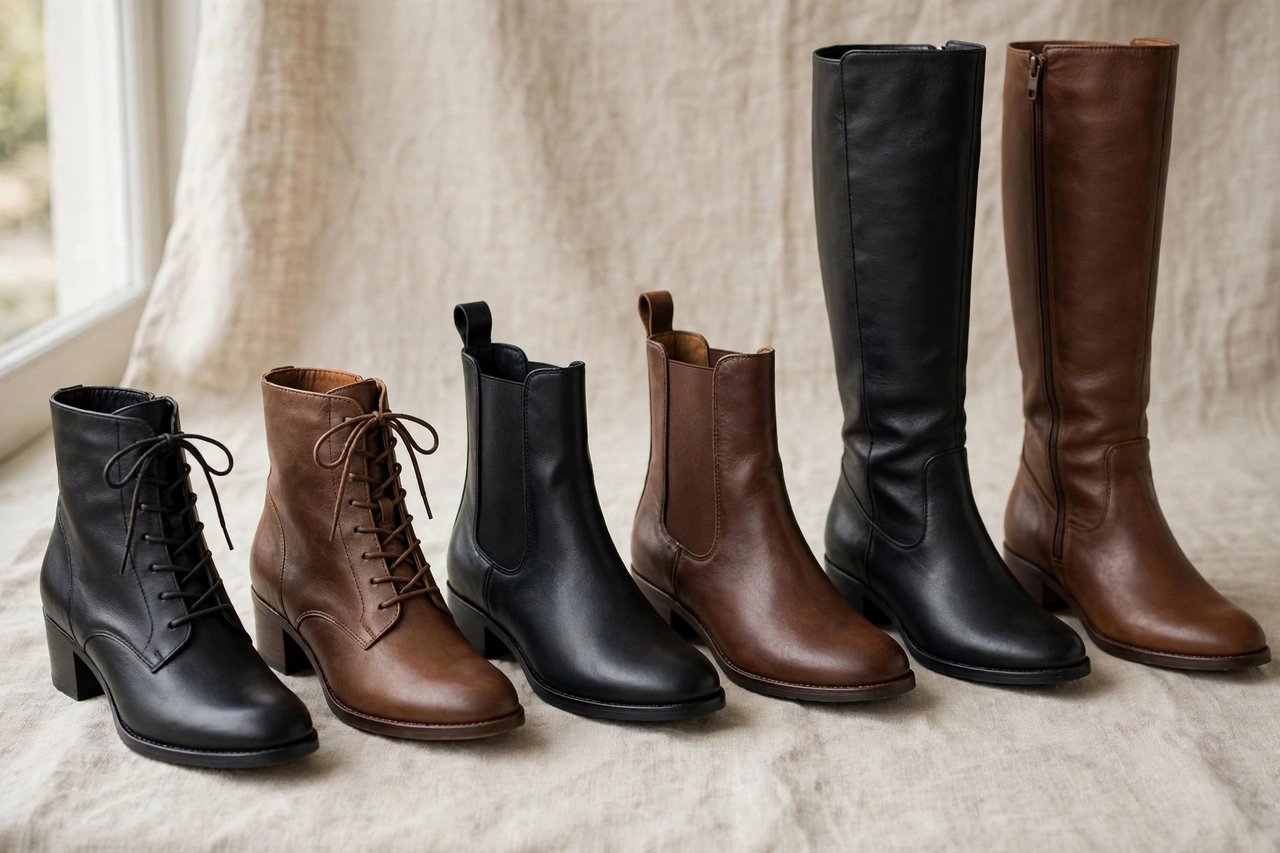
Boots are the most varied family in women's footwear: a single word covers the ankle boot you wear with dresses in October, the rubber boot that saves a rainy commute, the insulated boot that makes winter walkable and the knee-high leather boot that anchors a wardrobe for a decade. Because the category is so wide, boot shopping goes wrong when it starts with a photograph instead of a purpose. This umbrella guide maps the main types by shaft height and function, explains the measurements that decide fit — especially calf fit, the detail most often ignored until a zipper refuses to close — and helps you assemble a small boot collection that covers your actual weather and life.
Start with two honest questions: what weather and ground must these boots handle, and what will you wear above them? A boot that answers both will be worn constantly; a beautiful boot that answers neither becomes expensive closet decoration. The types below are ordered roughly from shortest to tallest, with the weather specialists at the end, so you can find your category quickly and then use the fit and care sections to buy it well.
Boot Types by Height and Style
Ankle boots and booties end at or just above the ankle and are the most versatile boots made, pairing with jeans, trousers, skirts and dresses across three seasons. Within the family, Chelsea boots slip on with elastic side panels for a clean, laceless line; lace-up and combat boots bring a sturdier, edgier character; heeled booties dress up for work and evenings. Mid-calf boots rise to the lower or mid calf and suit tucked skinny jeans and midi skirts, though the height can visually shorten legs if the skirt hem meets it awkwardly. Each ankle style has a dedicated guide in this directory for deeper detail.
Knee-high boots end just below the knee and offer the most polished tall silhouette, in flat riding styles, heeled dress versions and slouchy relaxed cuts. Over-the-knee boots extend above the knee, usually in stretch suede or leather, and replace tights-and-shoes drama in winter outfits. Riding boots, flat with a small heel and a strap detail, are the classic everyday tall boot. As height increases, so does presence: tall boots are an outfit's foundation piece, while ankle boots behave more like shoes, which is why many wardrobes need one of each rather than three of either.
Weather Specialists: Rain, Winter and Work
Rain boots are waterproof by material — rubber or sealed synthetics — in tall wellington, mid and short Chelsea heights. They are unbeatable in downpours and mud but offer little warmth or arch support, so they are specialists, not commuters for all winter. Winter and snow boots combine waterproof construction with insulation rated in grams, deep tread for ice and slush, and room for thick socks; pac boots with rubber lowers and leather uppers are the traditional heavy-duty form. Hiking and work-influenced boots add protective toes, serious lug soles and support for rough ground, crossing into everyday wear in their fashion forms.
Choosing between a fashion boot with water-resistant treatment and a true weather boot is a climate decision. Occasional drizzle and cleared sidewalks suit a treated leather boot perfectly. Standing water, slush piles and unplowed paths demand sealed construction and real tread, and no amount of spray makes a smooth-soled suede bootie safe on ice. Many northern wardrobes settle the question with both: leather boots for most days and one unapologetic weather pair for the worst ones. Be wary of the reverse error as well — heavy insulated boots worn all season indoors will overheat your feet and wear out their linings quickly.
Shaft Height, Calf Fit and Honest Measuring
Two measurements decide whether a boot fits, and neither is your shoe size. Shaft height is measured from the sole up the back of the boot; compare it with the distance from your floor to the crease behind your knee to see where a knee-high will truly land. Calf circumference is the width of the shaft opening, and it must exceed your calf measurement at that exact height, ideally by about half an inch to an inch for comfort and trousers. Measure both calves seated with feet flat, over the socks or skinny jeans you will wear inside, and use the larger number — most people have one calf slightly bigger than the other.
Solutions exist for every calf. Wide-calf boots add two or more inches of circumference and are now made in genuinely stylish designs rather than only basics. Elastic gore panels, stretch backs and adjustable buckles or laces forgive a borderline fit. Athletic calves often prefer a shaft that ends just below the widest point rather than across it. Narrow calves have the opposite problem — a slouching, gaping shaft — solved by stretch materials, sock boots or a cobbler's alteration on quality leather pairs. Trying tall boots at the end of the day, when legs are at their fullest, gives the truest test.
Materials, Heels and Styling the Collection
Smooth leather is the durable, dressable default; suede is richer and softer but needs weather protection; patent and faux leathers serve shine and budget. Heel shapes steer formality: flat and lug soles are casual and practical, block heels are the all-day middle ground, and stiletto tall boots are evening pieces. Pointed toes lengthen, round toes relax, square toes feel current. Color strategy is simple: black first for maximum pairing, then brown or tan if your wardrobe leans warm, then a statement suede or color once the basics are covered.
Styling follows the shaft. Ankle boots need a visible plan at the hem — cropped jeans ending above the shaft, a cuff, or tights matching the boot with skirts. Knee-highs disappear elegantly under midi and maxi hems, stand clean over skinny jeans, and pair with short skirts when a few inches of leg show between hem and shaft. Over-the-knee boots want short hems or long slits and simpler tops to balance their drama. Rain and winter boots style themselves around function, though choosing a handsome color and keeping them clean makes even a storm outfit look deliberate rather than endured.
Care, Storage and Buying Once, Well
Boots repay structure in storage: use boot trees or rolled magazines in tall shafts so they stand without creasing, keep pairs out of direct heat, and let leather rest a day between wears. Condition smooth leather seasonally, brush and spray suede before its first outing and after cleanings, and rinse salt and mud off promptly in winter before they stain. Check heel caps and sole edges each autumn; a cobbler replacing a worn cap for a few dollars prevents damage to the heel itself. Zipper care is simple — keep teeth clean and never force a stiff zip over a bunched sock.
The buying-once argument is strongest in this category. A quality leather boot with a stitched or well-made sole can be resoled, reheeled and conditioned through a decade of wear, growing more comfortable and better looking as it molds to you. Judge candidates by leather thickness, sole construction and the finishing inside the shaft as much as by the silhouette in the mirror. Buy for the life and weather you actually have, in the order of ankle versatility, tall polish and weather protection, and your boot shelf will stop being a collection of almost-right pairs and become a small set of certainties.
Related Women's Guides
More to Explore
Photos

Looking for Women's Clothing Stores?
This guide helps you choose women's boots by height, style and weather. To browse where to buy, visit our women's clothing store directory, where you can find retailers that carry them.