Women's Cowgirl Boots Guide
Pointed toes, angled heels, and stitched shafts — how to tell a real western boot from a fashion copy, and wear either well.
Shop Women's Cowgirl Boots Now
Shop Women's Cowgirl Boots on Amazon Shop Women's Cowgirl Boots on eBayThe Amazon and eBay links on this page are affiliate links. If you make a purchase through them, Apparel Search may earn a commission.
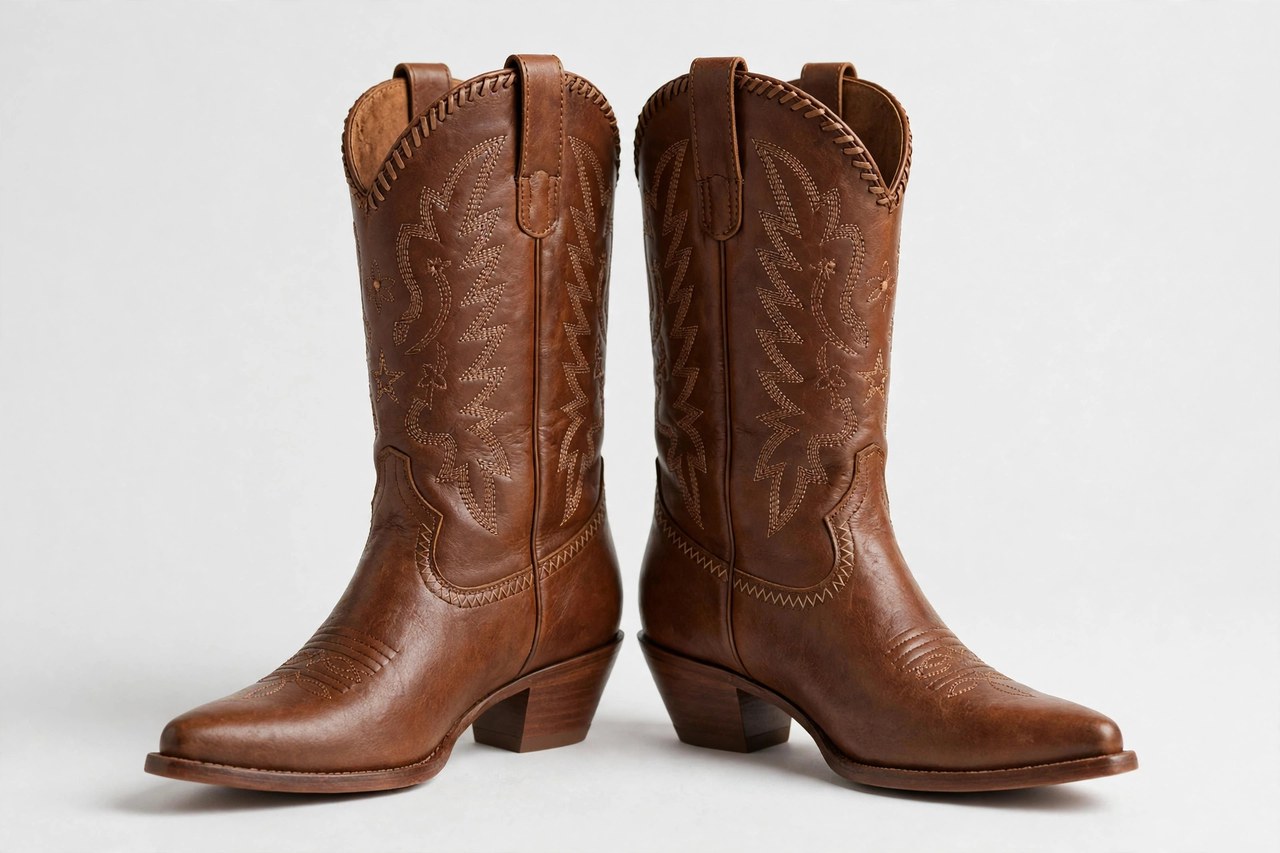
A cowgirl boot is not simply a boot with a western flavor. It is a specific piece of working footwear, refined over more than a century of ranch life, with every detail answering a practical need: the tall shaft protected the leg, the angled underslung heel kept the foot in a stirrup, the pointed toe slid in and out of that stirrup easily, and the decorative stitching stiffened the shaft so it stood up instead of collapsing. Modern women's cowgirl boots range from authentic working boots made by heritage western makers to fashion versions that borrow the silhouette for dresses and festivals. Both have their place, but they are built differently and priced differently. This guide explains toe and heel shapes, stitching, leathers, and fit, so you can choose knowingly — and wear your boots with the confidence that makes the style work.
Classic, Roper, and Fashion Western Boots
The classic western boot has a shaft around twelve inches tall, a pointed or rounded-point toe, and a slanted cowboy heel roughly two inches high. It is the silhouette most people picture, and the most versatile for riding and dressing up. Roper boots are the working cousin: a shorter shaft, a rounder toe, and a low, blocky roper heel made for walking and working on the ground as much as riding. They are the comfortable, practical choice for long days on your feet. Fashion cowgirl boots take the classic shape and play with it — taller or slouchier shafts, snip toes, overlays, fringe, studs, embroidery in bright thread, and colors from turquoise to metallic. Short western booties cut the shaft to ankle height for dresses and jeans.
Toe Shapes and Heel Shapes
Toe shape is the quickest way to read a western boot. The classic pointed toe is traditional and dressy. The snip toe clips the point to a narrow flat end and reads sharp and fashion-forward. Square toes — broad or narrow — give toes room and look modern; they are popular with riders who spend long hours in the boot. Round and roper toes are the most comfortable and casual. Heels divide just as clearly. The cowboy heel is tall and angled, designed to anchor in a stirrup and give the classic western stance. The roper heel is short, wide, and nearly straight, built for walking. Fashion heels borrow both shapes and sometimes add a stacked-leather look even on synthetic soles. If you plan to ride, heel shape is a safety question, not a style one: you want a defined heel that prevents your foot sliding through the stirrup, and a smooth leather outsole that releases cleanly.
Shaft Stitching, Leathers, and Construction
The rows of stitching on a western shaft are called the stitch pattern, and they began as engineering: dense stitching stiffens leather so a tall shaft stands without collapsing. On quality boots the pattern is crisp, even, and often unique to the maker, in contrasting or tonal thread. Sloppy, puckered stitching is a quick quality warning. Leather choice sets price and character. Cowhide is the durable standard, in smooth, distressed, or tooled finishes. Exotic leathers — ostrich with its distinctive quill bumps, snakeskin, lizard, and alligator — cost far more, need specialist care, and carry legal restrictions in some places, so buy them from reputable makers with proper documentation. Construction matters underneath: a leather outsole with a nailed or stitched shank is the traditional build and can be resoled, while cemented rubber soles suit fashion and roper styles.
Fit: The Instep Pop and Break-In
Western boots fit by the instep, not by laces — there are none. The correct test is the slip and pop: the boot should resist as your foot pushes past the narrow instep, then seat with a soft pop as your heel drops in. Once on, your heel should slip slightly, roughly a quarter to half an inch, when the boot is new; the leather insole will mold to your foot and the slip reduces as the boot breaks in. Toes should have room to lie flat and wiggle even in a pointed toe, because the point extends beyond your longest toe. The ball of your foot should sit at the boot's widest point. A boot that is painfully tight across the instep will stretch only a little, so do not buy on hope; a boot that feels loose everywhere will never improve. Try both boots on, walk on a hard floor rather than carpet, and remember that shaft width matters for wider calves — many makers offer wide-calf versions of popular styles.
Styling and Care
Cowgirl boots have outgrown the ranch in the best way. With dresses, they balance floaty fabrics and shorten a midi hem beautifully; choose a classic shaft for prairie and floral dresses and a snip-toe fashion boot for evening. With jeans, the traditional pairing is boot-cut or straight legs worn over the shaft, while skinny and cropped jeans show the stitching when tucked in or worn above the boot. Shorts and denim skirts with boots are festival staples, and a roper with tailored trousers can even work in creative offices. Care is straightforward but specific: condition smooth leather regularly, keep exotic leathers out of prolonged sun, and use boot trees to hold the shaft and toe shape. Let wet boots dry slowly away from heat, stuffed with paper. Store tall boots upright with shapers so the shafts do not fold and crack at the ankle, and have leather soles protected or resoled before you wear through to the midsole.
Related Women's Guides
Photos

More to Explore on Apparel Search
Looking for Women's Clothing Stores?
This guide helps you choose women's cowgirl boots by style, material and fit. To browse where to buy, visit our women's clothing store directory, where you can find retailers that carry them.