Women's Rainwear Guide
Rainwear is the umbrella category — coats, boots, trousers, hats and umbrellas working as one system so a wet day stays a normal day.
Shop Women's Rainwear Now
Shop Women's Rainwear on Amazon Shop Women's Rainwear on eBayThe Amazon and eBay links on this page are affiliate links. If you make a purchase through them, Apparel Search may earn a commission.
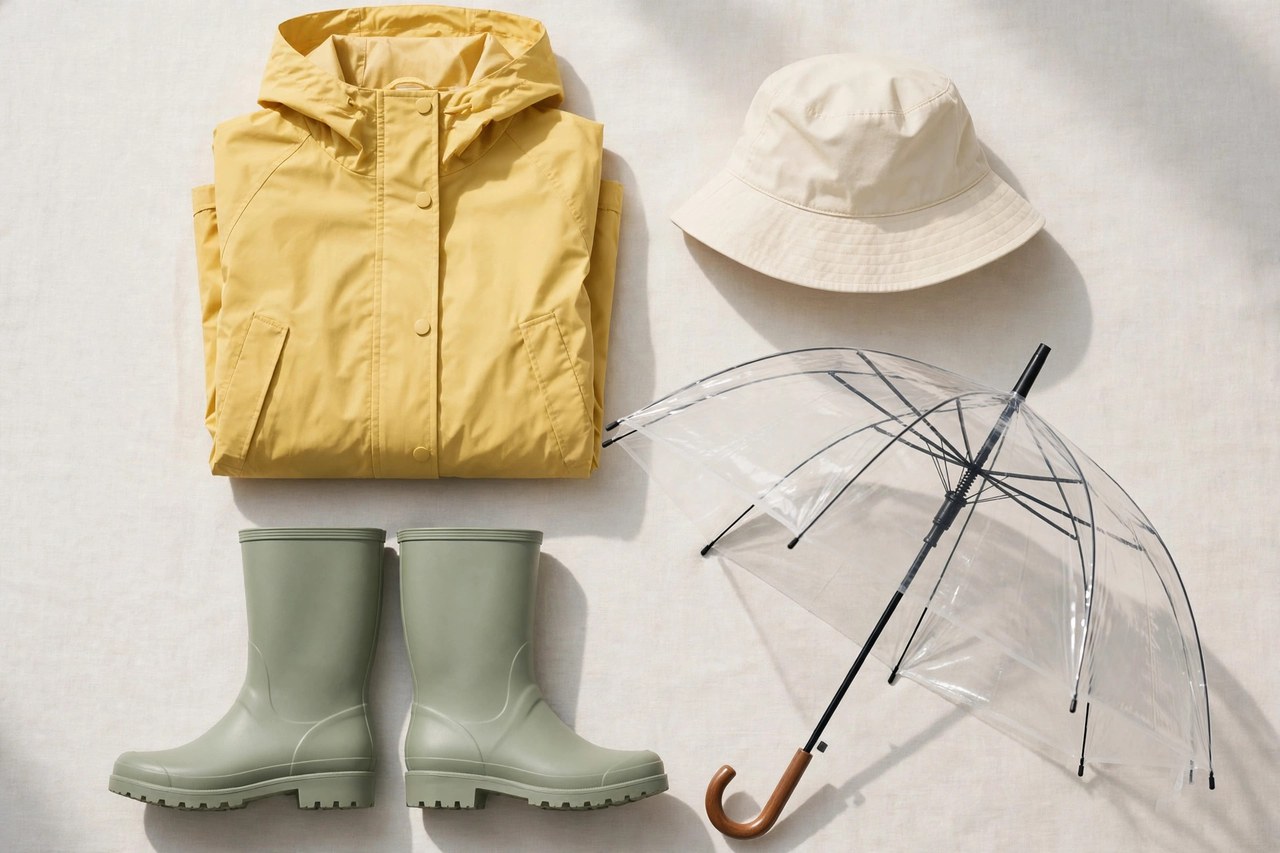
Rainwear is the umbrella term in both senses: the whole category of clothing and gear designed for wet weather, of which the raincoat and the rain boot are only the best-known members. A complete rainwear kit can include a waterproof coat or jacket, rain boots or waterproof shoes, waterproof trousers or a rain skirt, a hat or hood, gloves in cold rain, and the actual umbrella. Bought as a system rather than as isolated pieces, rainwear stops the familiar failure where your top half is dry and everything below the knee is soaked.
This guide takes the category view. Other pages here go deep on single items — boots as footwear, rubber as a material, coats as garments — while this one is about how the pieces fit together: which items matter most for different kinds of wet days, how to layer them without overheating, and how to build a kit gradually, starting with the two or three pieces that solve most of the problem for most people.
Building the System From the Top Down
Start with head and torso, where rain lands first and where a good coat does the most work. A hooded waterproof coat or a coat plus a waterproof hat protects hair, face and the top of an outfit; an umbrella covers this zone too, on calm days, but fails in wind and occupies a hand. Next, legs: for anything longer than a short walk, waterproof trousers, a rain skirt or tall boots are what separate a system from a gesture, because coat hems shed water directly onto thighs and shins.
Finish with feet and hands. Waterproof footwear is non-negotiable in standing water, and its height should complement the leg coverage above it: tall boots under waterproof trousers is belt and braces, while ankle boots plus bare trousers is a gap the rain will find. Cold rain adds gloves and a warm layer under the shell. Think of the kit as overlapping coverage with no untreated gap from hood to sole, and you will spot exactly which piece your current wardrobe is missing.
Rainwear for Commuting, Travel and Outdoors
The commuter kit prizes appearance and packability: a proper raincoat that suits work clothes, ankle or mid-calf boots that pass as ordinary footwear, and a compact umbrella as backup. Everything should dry quickly at a desk and ask nothing of you by evening. The travel kit prizes weight: a packable coat, waterproof shoe covers or one pair of waterproof shoes, and layers that double as ordinary clothing, so rain gear never consumes the suitcase it is meant to save.
Outdoor rainwear — for hiking, gardening, dog walking and sidelines — can ignore appearance entirely and optimize for coverage and breathability: a longer coat or jacket-and-trouser suit, tall boots, and vents you can open while moving. Festival and event rainwear sits in between, where a poncho over everything, including a bag, is often the smartest single purchase. The categories share pieces freely; a great pair of boots serves all three kits, which is why the system view helps you buy once and combine often.
Materials Across the Category
Across all rainwear, protection comes from the same few ideas repeated in different forms: rubber and PVC in boots and traditional slickers, completely waterproof but not breathable; coated and membrane fabrics in coats and trousers, trading a little absolute simplicity for comfort; and water repellent finishes on hats, gloves and softer pieces that need to shed rather than seal. Understanding that spectrum lets you read any rainwear label: fully waterproof pieces for immersion in rain, resistant pieces for the edges of the system.
Weight and noise are the category's quiet variables. Heavy traditional rainwear is durable and silent in the way only thick fabric is; ultralight technical rainwear rustles and feels fragile but vanishes into a bag. Neither is better in the abstract. Match material to exposure time: the longer you will be out, the more breathability and fit matter, and the less a cheap, sealed, sweaty layer will do, even if not one drop of rain gets through it from outside.
Care for the Whole Kit
Rainwear fails from storage more than from use. Everything should go away clean and completely dry: mud rinsed off boots, coats hung until linings dry, umbrellas opened to dry rather than furled wet, which rusts ribs and mildews canopies. Keep the kit together in one accessible place by the door or in the car, because rainwear left in a distant closet is rainwear that does not get worn, and a system only works on the days it is actually used.
Once a season, run a quick audit: reproof coat finishes that have stopped beading, check boot shafts for cracks and coat seam tape for peeling, replace an umbrella that inverts in ordinary wind, and confirm sizes still fit over winter layers. Small maintenance keeps each piece overlapping the next, and that overlap is the entire idea. With a maintained kit, rain stops being a wardrobe emergency and becomes what rainwear promises: just weather, dressed for.
Related Women's Guides
Photos


Looking for Women's Clothing Stores?
This guide helps you choose women's rainwear. To browse where to buy, visit our women's clothing store directory, where you can find retailers that carry them.