Women's Petite Rain Coats Guide
A petite rain coat keeps the rain out and the proportions right — a hem that ends where intended, sleeves that clear the hands, and a hood scaled to frame a shorter wearer's face instead of swallowing it.
Shop Women's Petite Rain Coats Now
Shop Women's Petite Rain Coats on Amazon Shop Women's Petite Rain Coats on eBayThe Amazon and eBay links on this page are affiliate links. If you make a purchase through them, Apparel Search may earn a commission.
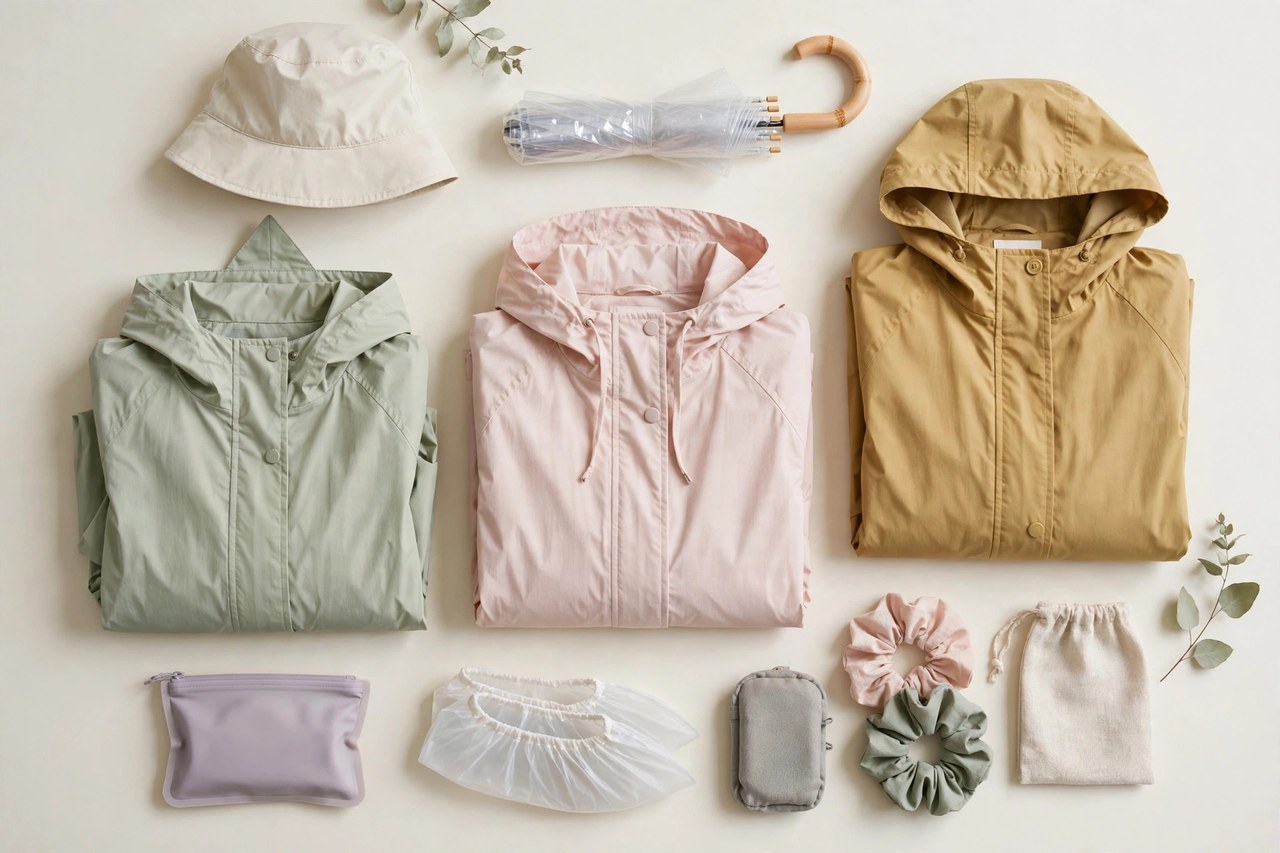
A rain coat is a coat built to keep rain off the wearer and the clothing underneath: a waterproof or strongly water-resistant shell, sealed or covered seams, and closures that shed water rather than absorb it. This guide is about that garment in its petite form, cut for women 5'4" and under. The garment-specific problems of a regular rain coat on a petite frame are concrete: a knee-length coat becomes a mid-calf one that soaks its own hem in puddles, sleeves cover the hands that hold the umbrella, and the hood falls forward over the eyes.
Petite rain coats shorten the body and sleeves, raise the pockets and belt, and scale the hood, collar and storm flaps to the frame, so the waterproof engineering works as designed. Below are the main rain coat styles in petite cuts, how waterproofing actually works, the fit details unique to wet weather, and the care that keeps a rain coat waterproof season after season.
Rain Coat Styles in Petite Cuts
The petite trench rain coat is the classic: a belted, double- or single-breasted coat in water-resistant cotton gabardine or a modern technical fabric, with a storm flap and a belt that, in petite grading, buckles at the real waist. The hooded rain parka trades polish for coverage, with a longer back hem and a drawcord hood; petite versions keep that hem at mid-thigh rather than the knee. The classic slicker, in rubberized or PVC-coated fabric, is fully waterproof and cheerful, and reads best at true petite lengths.
Packable rain coats fold into a pocket or pouch for travel and commuting, and their light shells make petite proportions easy to find. A-line and swing rain coats flare from the shoulder, shedding water away from the body and fitting easily over sweaters and bags. Across styles, the petite tells are the same: a hood that frames the face, cuffs that adjust at a shorter wrist, and a hem that ends at the stated length so the coat protects trousers instead of wicking puddle water up its own lining.
How Waterproofing Works
Rain coats sit on a spectrum. Water-resistant coats use a durable water repellent (DWR) finish that makes rain bead and roll off; they handle showers and commutes but eventually wet through in sustained rain. Waterproof-breathable coats add a membrane or coating under the face fabric that blocks liquid water while letting perspiration vapor escape — the technology of serious rain gear — and fully waterproof non-breathable coats, like classic slickers, block everything and ventilate only through vents and loose cuts.
Construction decides real-world performance as much as fabric. Sealed or taped seams close the needle holes that otherwise leak at every stitch line; a storm flap over the front zipper, snap or button closures that shed water, and a hood with a small brim or drawcord all keep water out at the openings. For petite wearers, check that these features scale: a storm flap that ends at the right point, vents placed where a shorter torso needs them, and a two-way zipper that lets a shorter stride move freely under a longer coat.
Wet-Weather Fit Details
Fit a rain coat over the layers you will actually wear, usually a sweater or blazer, with room to move but not so much volume that wind drives rain inside. Length is a protection decision: a petite coat ending just above the knee covers most of the leg while keeping the hem out of the wettest zone, and a seated test confirms it covers your lap in a car or on a train. Sleeves should reach the wrist with the arm extended — holding an umbrella shortens effective coverage — and adjustable cuffs seal the gap over gloves.
The hood deserves its own test: pull it up, turn your head both ways, and confirm peripheral vision and that the hood moves with you rather than sliding over your eyes, the classic failure of an oversized regular hood on a petite wearer. Pockets should be reachable and, ideally, protected by flaps or placed to shed water away from the opening, since a rain coat pocket that fills with rain is a design error at any size. Finally, check the coat with your usual bag: straps should not channel water under the coat's shoulder.
Care and Buying Tips
Rain coats fail by losing their finish, not by wearing out. Wash waterproof-breathable coats with technical-fabric detergent, never fabric softener, which clogs membranes and kills beading, and refresh the DWR finish with a spray or wash-in treatment when water stops beading on the shell. Tumble drying low, where the label allows, reactivates many finishes. Rubberized and PVC coats wipe clean and should be stored dry and uncreased, away from heat that cracks the coating.
Buy for your actual rainfall: commuters in wet climates deserve a genuinely waterproof petite coat with sealed seams; occasional-shower climates are well served by a water-resistant trench. Try coats late in the day over real layers, test the hood, and measure the length against your most-worn trousers and boots. Because petite rain coats are stocked in limited runs, a coat that fits the shoulder, sleeve and hem at once is worth buying in season — rain, unlike fashion, does not wait for the size to come back in stock.
Related Women's Guides
Looking for Women's Clothing Stores?
This guide helps you choose women's petite rain coats. To browse where to buy, visit our women's clothing store directory, where you can find retailers that carry them.