Women's Petite Coats Guide
Petite coats are cut for women 5'4" and under, with shorter lengths, raised waistlines, narrower shoulders and sleeves that end at the wrist instead of swallowing the hand.
Shop Women's Petite Coats Now
Shop Women's Petite Coats on Amazon Shop Women's Petite Coats on eBayThe Amazon and eBay links on this page are affiliate links. If you make a purchase through them, Apparel Search may earn a commission.
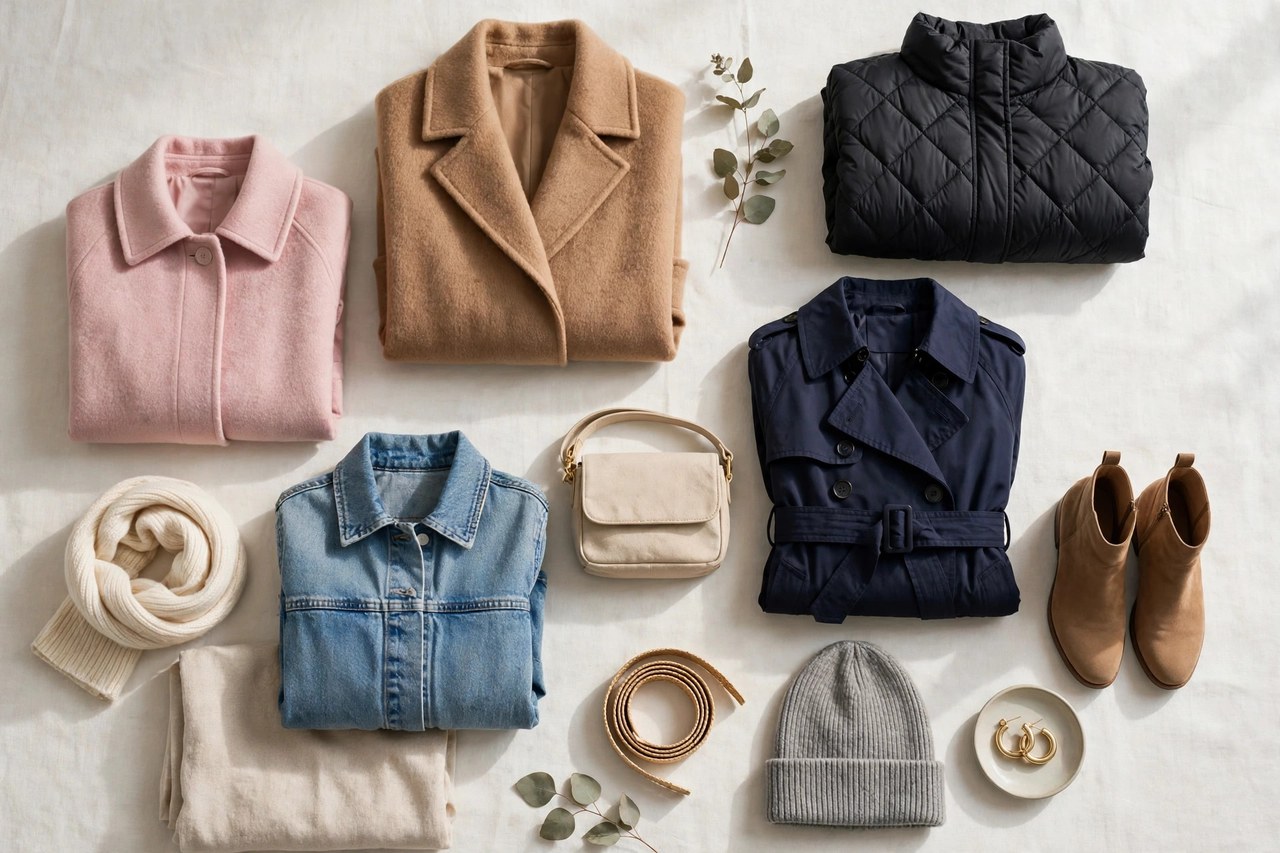
A petite coat is not simply a regular coat in a smaller size. Petite sizing, made for women 5'4" and under, shortens the whole garment in proportion: the body length, the sleeve, the distance from shoulder to waist, and even the depth of pockets and the size of lapels, buttons and collars are all scaled down. That scaling is what keeps a winter coat from looking borrowed, because on a shorter frame an inch of extra length in five places quickly adds up to a coat that wears you.
This umbrella guide covers petite coats as a whole category — the everyday outer layer you reach for from autumn through spring. It explains the main styles, from trenches to wool dress coats, how petite proportions change each one, which fabrics balance warmth against weight, and the fit checks that matter in the shop. Insulated and puffer styles have their own dedicated guide; here the focus is the broader coat wardrobe and how to build it in true petite scale.
Main Styles: Trench, Wool, Dress and Casual Coats
The petite trench coat is the classic transitional layer: a belted, double- or single-breasted rain coat whose storm flap, epaulettes and cuff straps are all reduced in petite versions so they frame rather than overwhelm. The wool coat covers tailored single-breasted, wrap and cocoon shapes for cold weather and work. A dress coat is the polished, longer style kept for evenings and formal days, while casual coats include quilted barn styles, shirt jackets and short car coats for weekends.
Length is the first style decision. On a petite frame, a knee-length coat usually lands where a mid-calf coat was intended to land on a taller woman, and it is the most versatile choice: long enough for warmth and skirts, short enough to keep the leg line visible. Cropped and hip-length coats suit trousers and high-waisted bottoms. True maxi coats do exist in petite ranges, but check that the hem clears the ankle and that vents and slits start at a height scaled to your leg, not left at a regular pattern position.
Petite Proportions: Shoulders, Sleeves and Details
Start at the shoulder. A petite coat's shoulder seam should sit exactly on your shoulder point, because the narrower petite shoulder width is the measurement regular coats most often miss — dropped seams make even an expensive coat look sloppy. Sleeves should end at the wrist bone with arms relaxed, showing a sliver of cuff or glove, never covering your fingers. If you regularly drive or carry bags, check that the shorter petite sleeve still allows a full reach without the whole coat riding up.
Details are scaled for a reason. Petite lapels are narrower, collars sit lower, pocket flaps are shallower and pockets themselves are positioned higher, at a hand's natural petite reach rather than down by the thigh. Buttons are smaller and spaced closer together, and belts have extra holes punched toward the end so the buckle actually cinches at a petite waist. Prints follow the same logic: a smaller-scale plaid, houndstooth or herringbone reads as pattern on a petite frame, while an oversized check can read as upholstery.
Fabrics and Warmth Without Bulk
Weight matters more on a small frame. A heavy, stiff coat that a taller woman carries easily can fatigue petite shoulders and restrict movement, so look for warmth engineered with lighter cloth: wool blended with a little nylon for strength, wool-cashmere for softness at lower weight, and modern bonded or double-faced fabrics that skip a bulky lining. Melton and boiled wool cut wind well; camel hair and alpaca blends give a dressy finish; water-resistant cotton gabardine remains the trench standard.
Match insulation to your real winter. A lined wool petite coat handles a temperate commute, especially layered over a thin knit, while sustained deep cold calls for an insulated style from the down and puffer category rather than simply sizing up a dress coat for layering room — sizing up destroys the petite shoulder and sleeve fit you came for. Petite ranges solve this properly by adding warmth inside the correct proportions, so stay in your petite size and change category, not size, when the weather demands more.
Fit Checks, Sizing and Care
Fit a coat over the bulkiest layer you will honestly wear under it, usually a mid-weight sweater. You should be able to hug yourself, fasten every closure without pulling, and sit without the front gaping or the hem hiking dramatically. The waist seam, belt or wrap tie should sit at your natural waist — in petite coats this is raised compared with regular ranges, which is precisely what restores leg length visually. Check the back vent opens when you walk and the lining does not show below the hem.
Petite sizes are usually marked P or Petite after the number, and the number itself follows your regular dress size, but proportions differ by brand, so compare the garment's stated length and sleeve measurements when shopping online. For care, wool coats want brushing, airing and rest days, with dry cleaning once or twice a season rather than after every wear; trenches often machine wash gently or wipe clean. Store coats on wide hangers that support the scaled shoulder, fastened, in breathable bags away from direct light.
Related Women's Guides
More to Explore on Apparel Search
- Petite Jackets
- Petite Clothing Stores
- Clothes
- Petite Fashion
- Petite Clothing 2
- women's coat
- Petite Rain Coats
- Fashion
- Clothing Retail Stores
- Fashion Designers
- Popular Brands
- Apparel
- Women's Clothing Stores
- Women's Clothing Wholesalers
- Women's Fashion
- Women's Fashion Brands
- Women's Fashion News
- petites
- Fashion Designer Directory
Looking for Women's Clothing Stores?
This guide helps you choose women's petite coats. To browse where to buy, visit our women's clothing store directory, where you can find retailers that carry them.