Women's Petite Jackets Guide
A petite jacket shortens the body and sleeves, raises the waist and pockets, and narrows the shoulders — so a blazer, denim jacket or bomber lands where the style intends on a 5'4"-and-under frame.
Shop Women's Petite Jackets Now
Shop Women's Petite Jackets on Amazon Shop Women's Petite Jackets on eBayThe Amazon and eBay links on this page are affiliate links. If you make a purchase through them, Apparel Search may earn a commission.
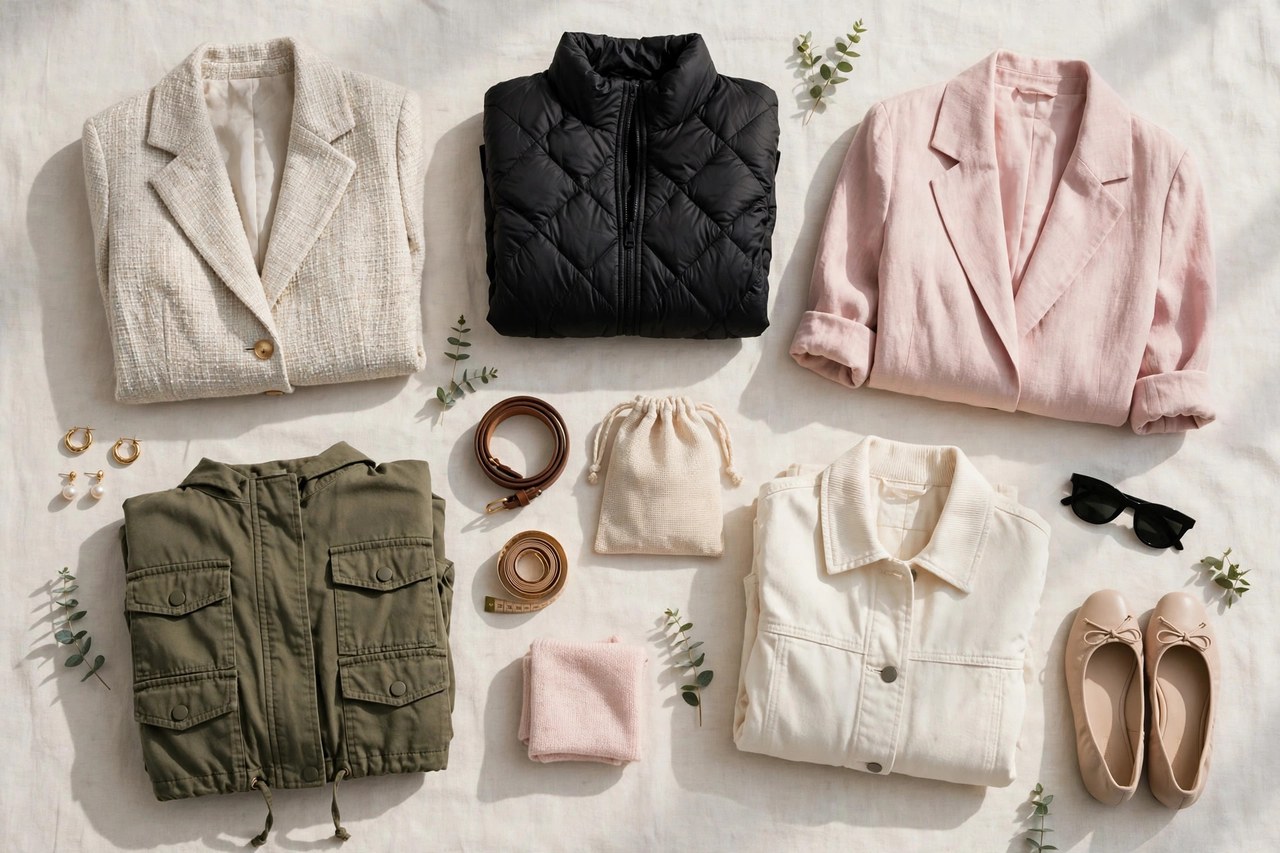
Jackets are the most architecture-dependent garments in the wardrobe: shoulders, waist, pockets, buttons and hem all have assigned places, and the design fails visibly when those places drift. On a petite woman, a regular jacket drifts everywhere at once — shoulders slope past the shoulder point, sleeves cover the hands, the waist suppression sits at the hips, pockets land at the thigh, and the hem hangs inches below its intended line. A petite jacket re-places every one of those points for a frame of 5'4" and under.
This is the umbrella guide to petite jackets: blazers, denim jackets, bombers, moto styles, utility and cropped jackets, in their petite versions. Leather jackets have their own dedicated guide, and coats and down jackets theirs; here the focus is the mid-weight layer most women reach for daily, and the fit rules that apply across every style in the family.
The Five Placements That Define a Petite Jacket
First, shoulder width: petite jackets are narrower across the shoulder, so the shoulder seam sits at the bone and the sleeve hangs straight. Second, sleeve length: typically one to one and a half inches shorter, ending at the wrist bone with a sliver of shirt cuff able to show. Third, body length: a classic blazer that ends mid-thigh in regular sizing ends at the hip bone in petite, preserving the style's line instead of turning it into a coat.
Fourth, waist and button placement: suppression, belts and the button stance move up to the natural waist, which is what makes a petite blazer shape the torso instead of the hips. Fifth, pocket placement: flap and welt pockets rise with the waist, and the pockets themselves shrink slightly — a full-size patch pocket can cover half the front of a petite jacket. When you try a jacket, check these five in order; a failure at the shoulder or waist cannot be tailored away cheaply, while sleeve and hem length can.
The Main Styles in Petite Cutting
The petite blazer is the wardrobe's hardest worker: single-breasted, one or two buttons placed at the true waist, in lengths that end at the hip. It is the style where petite cutting pays most, because a blazer's entire effect is precision. The denim jacket in petite form shortens the body to the waist or high hip — where the classic trucker style belongs — and scales the chest pockets and hardware down. A regular trucker on a petite frame reads oversized in the wrong, sloppy way; the petite version keeps the attitude and loses the swamp.
The bomber jacket suits petites naturally when its ribbed hem lands at the waist or high hip rather than the mid-hip, where a regular bomber's band blurs the waist entirely. Moto jackets in non-leather fabrics, utility and field jackets with belts that must sit at the waist to work, and cropped jackets — already short, but in petite versions also narrowed through the shoulder and sleeve — round out the family. In every style, the petite question is the same: are the features placed for your torso, or merely attached to a shortened body?
Fabrics, Linings and Hardware at Petite Scale
Jacket fabrics run from suiting wools and crepes for blazers, through denim and twill, to ponte, scuba and soft synthetic shells for casual styles. On a petite frame, fabric weight interacts with size: a very stiff fabric in a full cut overwhelms, while the same fabric in a precisely placed petite cut reads tailored. Prefer structured but not bulky — enough body to hold the shoulder line, not so much canvas and padding that the jacket wears you. Shoulder pads, where used, should be thin and small in petite versions.
Linings matter for wearability: a lined blazer slides over sweaters and lasts longer; unlined and half-lined jackets suit summer and layer more easily. Hardware is a scale check in itself — buttons, snaps, zips and belt buckles should be a touch smaller on a petite jacket. Oversized hardware on a small frame is the fastest tell of a regular garment that was only hemmed. Zipper length, too, is graded: a petite moto's diagonal zip should cross the torso it was designed for, not wrap past it.
Fit Checks, Alterations and Buying Tips
Fit a jacket buttoned, over the layers you will actually wear. The shoulders must sit at your shoulders with the buttons closed and no pulling across the back; you should be able to hug and drive without the sleeves riding halfway to the elbow. Sleeve length is the cheapest alteration in tailoring, hem length the second — budget for those two and insist the shoulder and waist be right off the rack, because altering shoulders costs more than many jackets do.
Build the petite jacket wardrobe in order of hours worn: usually a navy or black blazer first, then the casual jacket your life uses — denim, bomber or utility — then seasonal pieces. Buy from committed petite ranges where the whole pattern is re-graded, and be suspicious of a lone petite size in an otherwise regular line. Keep the five placements in mind as a checklist and you can judge any jacket, in any store, in about thirty seconds — which is fortunate, because the right petite jacket is the single most transformative layer a shorter wardrobe owns.
Related Women's Guides
More to Explore on Apparel Search
Looking for Women's Clothing Stores?
This guide helps you choose women's petite jackets. To browse where to buy, visit our women's clothing store directory, where you can find retailers that carry them.