Women's Petite Sweaters Guide
Petite sweaters shorten the body and sleeves and place necklines, pockets and patterns for a shorter torso, so knitwear fits a 5'4"-and-under frame instead of ending at the thigh with cuffs at the knuckles.
Shop Women's Petite Sweaters Now
Shop Women's Petite Sweaters on Amazon Shop Women's Petite Sweaters on eBayThe Amazon and eBay links on this page are affiliate links. If you make a purchase through them, Apparel Search may earn a commission.
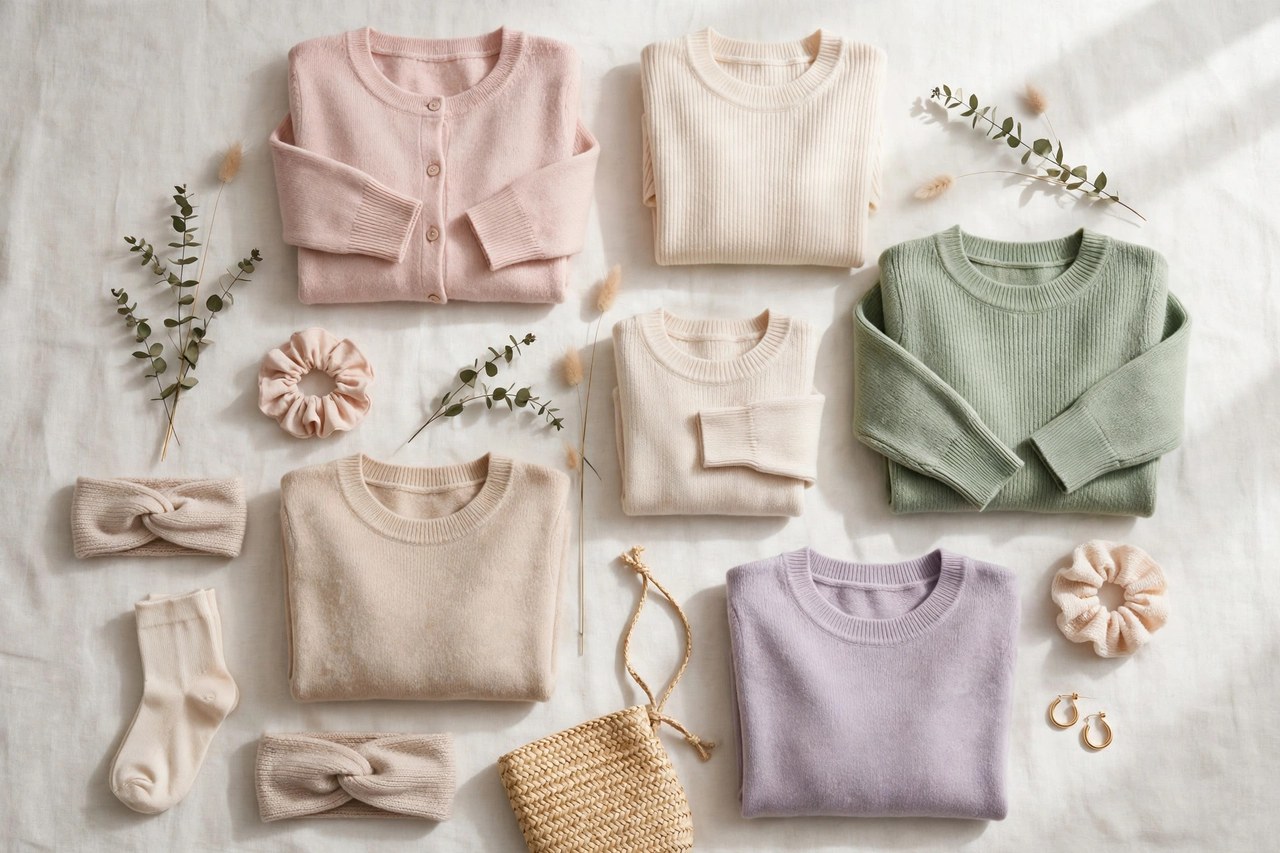
A sweater is a knitted top, worn for warmth, in wool, cotton, cashmere, synthetic yarns or blends. Knitwear hides proportion problems worse than any woven garment, because it stretches and drapes: a regular sweater on a petite woman does not just run long, it sags — the body ends at mid-thigh, the dropped shoulder seam slides down the arm, the sleeves cover the hands, and the intended hip-length silhouette becomes an accidental tunic that shortens the legs and hides the waist entirely.
Petite sweaters are knitted to a shorter pattern. The body is typically one to two inches shorter, ending at the hip bone as designed; sleeves end at the wrist; shoulder seams sit on narrower petite shoulders; and necklines, button placements, pockets and Fair Isle or cable patterns are all placed and scaled for a shorter torso. For women 5'4" and under, that re-patterning is what makes the difference between a sweater that layers neatly under a petite coat and one that bunches at every waistband. This guide covers styles, yarns, pattern scale and the care knits need.
Petite Sweater Styles: Pullovers, Cardigans and Turtlenecks
Crewneck and V-neck pullovers are the core styles. In petite cuts the V sits higher and shorter, so it frames a shorter neck and torso instead of plunging to the waist, and the crewneck is smaller in circumference so it does not gape on narrower shoulders. Cardigans in petite ranges end at the hip bone or, in longline styles, at a measured mid-thigh, with buttons spaced more closely for a shorter front and pockets placed at the hip rather than the upper thigh.
Turtlenecks and mock necks need a shorter, narrower neck on petite frames so the collar folds once neatly rather than bunching; the dedicated petite turtlenecks guide covers that style in full. Boatneck and scoop sweaters should be checked for width — a boatneck cut for regular shoulders can slide off petite ones. Sweater vests and sleeveless knits avoid the sleeve problem entirely and layer well. Across styles, set-in sleeves suit petites best; raglan and dropped shoulders add width and length a short frame rarely needs, unless the whole sweater is deliberately oversized and cropped to balance it.
Yarns: Wool, Cotton, Cashmere and Blends
Wool, including merino and lambswool, is the warm, elastic, resilient sweater yarn: it holds a petite sweater's shape, resists odor and suits the coldest months. Cashmere gives the most warmth for the least weight and bulk — a real advantage on a petite frame, where a chunky knit adds visual and actual heaviness — at a higher price and with gentler care.
Alpaca is warm and light but drapes and grows in wear, so petite alpaca sweaters should fit neatly at purchase. Synthetic and blended yarns — acrylic, nylon and viscose blends — lower cost and ease washing, with quality varying widely; a blend with natural fiber usually feels and ages best. Gauge matters for proportion: fine-gauge knits layer under petite jackets without bulk and read dressier, while chunky gauges should be reserved for one statement sweater, ideally cropped or hip length in a true petite cut so the volume sits where it was designed to.
Pattern Scale, Body Length and Sleeve Fit
Knit patterns are designed on the garment, and petite ranges redraw them. A Fair Isle yoke on a petite sweater is shallower, so the pattern band ends above the bust line as intended instead of across it. Stripes are narrower and more closely spaced, cables are finer, and color-block panels are repositioned so a horizontal division lands at the petite waist or hip rather than mid-thigh.
Length checks are simple and decisive. A standard petite sweater body should end at or just below the hip bone; cropped styles end at the waist and pair with petite high-rise trousers and skirts. Sleeves should end at the wrist bone with a cuff that is not folded back — a folded cuff is a clear sign of a regular sleeve. Shoulders should not drop: on a petite frame even a small drop adds slouch.
Care and Buying Tips
Knitwear care protects the petite fit you paid for. Wash sweaters only when needed, in cool water with mild detergent, by hand or on a machine wool cycle in a mesh bag; never wring. Dry flat on a towel, reshaping the sweater to its measurements — this is where a petite sweater can be coaxed back to its correct shorter length if it has grown. Never hang a wet or heavy sweater, because the weight pulls the body longer, undoing the petite cut in a single afternoon.
When buying, note the stated body length from shoulder to hem and sleeve length, and compare them with your best-fitting sweater measured flat. Shop petite knitwear early in the season for the full color range in your size, and consider cost per wear: one fine-gauge merino and one cashmere or cashmere-blend petite sweater, in colors that work with your petite trousers, skirts and dresses, will be worn for years. Add a cotton knit for spring and a cardigan for layering, and the petite sweater wardrobe is complete — every piece ending exactly where it should.
Related Women's Guides
Looking for Women's Clothing Stores?
This guide helps you choose women's petite sweaters. To browse where to buy, visit our women's clothing store directory, where you can find retailers that carry them.