Women's Petite Shawls Guide
A petite shawl is cut shorter and narrower than a standard wrap, so it drapes at the waist and hip instead of overwhelming a frame that is 5'4" and under.
Shop Women's Petite Shawls Now
Shop Women's Petite Shawls on Amazon Shop Women's Petite Shawls on eBayThe Amazon and eBay links on this page are affiliate links. If you make a purchase through them, Apparel Search may earn a commission.
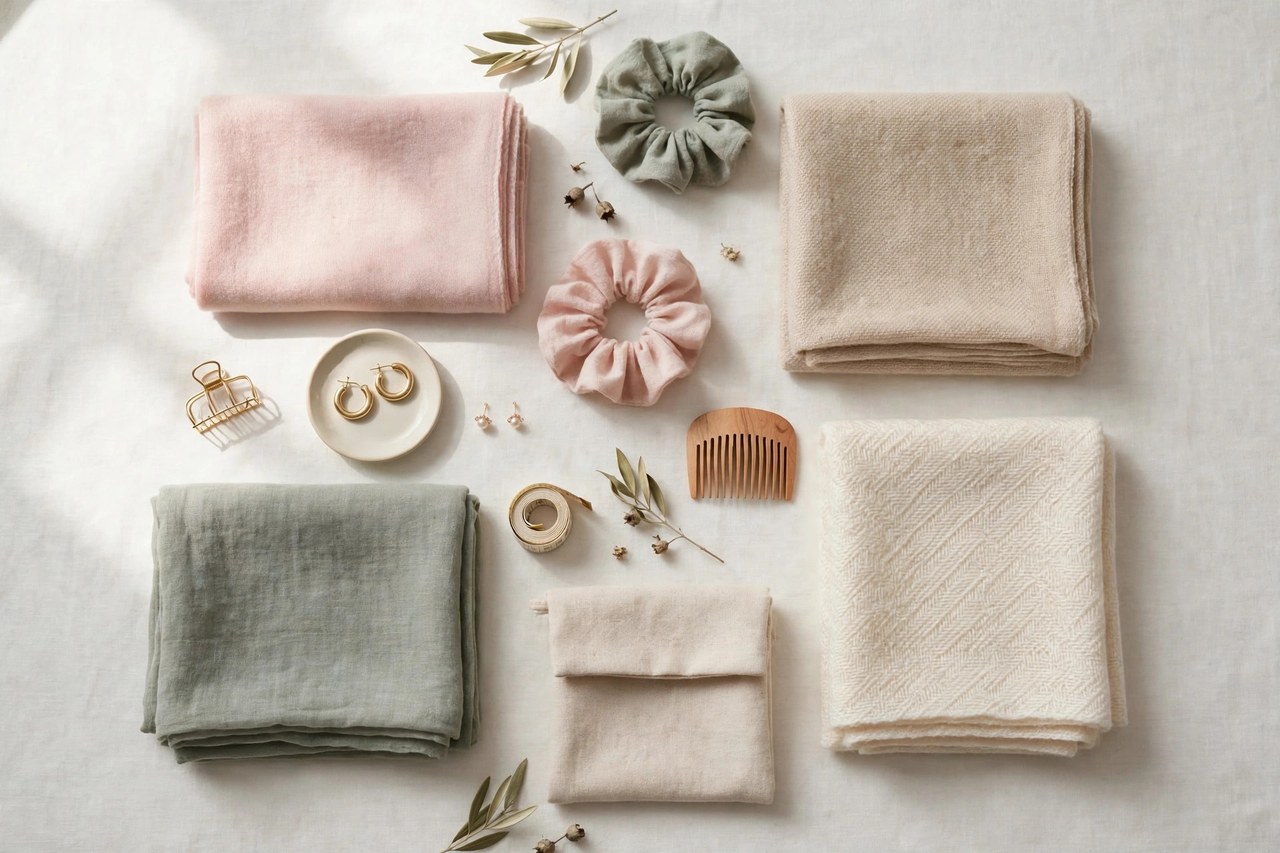
A shawl is a loose, usually rectangular or triangular piece of fabric worn draped over the shoulders, arms or head for warmth, coverage or decoration. For petite women — generally 5'4" and under, with narrower shoulders and a shorter back length — the standard shawl is simply too much cloth. A regular wrap that ends at mid-thigh on a taller woman can reach the knees, widen the silhouette and slip constantly from narrower shoulders.
Petite shawls solve that with proportion, not just a smaller size label. Length, width, fringe and even the scale of lace, embroidery or plaid are reduced so the finished drape ends where it should: around the waist or high hip when worn loose, and neatly at the elbow when thrown over one shoulder. This guide covers petite wrap styles, fabrics from evening chiffon to winter pashmina-style weaves, how to judge the right dimensions, and how to wear and store a shawl without stretching it out of shape.
Styles Cut for a Shorter Frame
The classic rectangular wrap is the most versatile petite shawl: look for lengths roughly 60 to 68 inches rather than the 72 inches and longer of standard wraps, and widths around 24 to 28 inches. That shorter drop gives coverage across the back without a trailing point that catches on chairs. Triangular shawls, worn point-down at the back, should have a shallower depth for petites so the point lands at the waistband, not below the seat — a small difference that keeps the look tailored rather than swamped.
Ruanas and cape-style wraps add a front opening and sometimes arm slits; in petite cuts the front panels are narrower so they do not overlap into bulk at the chest. Stoles are the narrow evening version, ideal over petite cocktail and formal dresses because they cover the shoulders without hiding a scaled bodice. Shrug-style and bolero shawls are shaped and cropped, ending at the ribcage, and are often the easiest choice when you want warmth with no draping to manage at all.
Fabrics, Weight and Scaled Detail
Fabric weight matters more on a small frame because heavy cloth pulls and collapses the drape. Chiffon, georgette and fine voile make the lightest evening shawls and pack to almost nothing for travel. Pashmina-style wraps — today usually wool, cashmere blends or fine acrylic woven to imitate the original Himalayan goat-wool shawls — give real warmth with a soft hand; in petite weights they warm the shoulders without the bulk of a coat. Knitted shawls in lace or garter patterns stretch gently and stay put better on narrow shoulders.
Detail must be scaled, too. On a petite shawl, fringe longer than about four inches looks out of proportion and tangles at the hip; petite versions keep fringe short and fine. Large plaids, oversized florals and wide borders can dominate a short torso, so look for small-to-medium repeats, narrow borders and fine lace edging. Solid colors and subtle tone-on-tone weaves are the most flexible: one well-chosen petite shawl in navy, burgundy or soft grey will work over dresses, suits and evening wear for years.
Fit, Dimensions and How to Wear Them
Judge a petite shawl by where it lands, not by the one-size label. Draped evenly over both shoulders, the front ends should finish between the waist and high hip; if they hang past the fingertips, the shawl is too long and will need constant adjusting. Across the back, the fabric should cover the shoulder blades without sliding — narrower petite widths, around 24 to 28 inches, grip better than wide standard wraps that pool at the neck. If you are under 5'1", try the shortest lengths first.
Styling tricks help a petite shawl stay elegant. A single-shoulder throw creates a diagonal line that lengthens a short torso. Belting a fine wrap over a dress at the natural waist defines shape and stops slipping. For evening, pinning with a small brooch at one shoulder keeps a stole in place without a knot of excess fabric. Avoid wrapping a thick shawl twice around the neck — on a petite frame that volume shortens the neck visually; a single soft loop is enough.
Care and Buying Tips
Care follows fiber. Wool and cashmere-blend shawls should be folded, not hung, rested between wears, and washed rarely in cool water with mild detergent or dry cleaned; store them with cedar or lavender to deter moths. Chiffon and georgette can usually be hand washed cool and dried flat, rolled rather than wrung. Knitted lace shawls may need gentle blocking — pinning damp to shape — to reopen the pattern. Never hang a heavy wet shawl, because the weight stretches the weave unevenly.
When buying, hold the shawl up and check both dimensions on the listing, not just the photograph, and confirm fringe is included or excluded from the stated length. Petite specialists list true petite measurements; a standard wrap marketed as suitable for everyone rarely is. Start with two: a lightweight evening stole in a neutral or metallic thread, and a warmer pashmina-style wrap in a solid color that matches your coat. Those two, correctly proportioned, cover nearly every occasion a shawl is wanted for.
Related Women's Guides
Looking for Women's Clothing Stores?
This guide helps you choose women's petite shawls. To browse where to buy, visit our women's clothing store directory, where you can find retailers that carry them.