Women's Petite Evening Gowns Guide
Petite evening gowns bring floor-length formality into proportion — hems that sweep without pooling, bodices engineered for a shorter torso, and trains and embellishment at a scale a smaller frame can carry.
Shop Women's Petite Evening Gowns Now
Shop Women's Petite Evening Gowns on Amazon Shop Women's Petite Evening Gowns on eBayThe Amazon and eBay links on this page are affiliate links. If you make a purchase through them, Apparel Search may earn a commission.
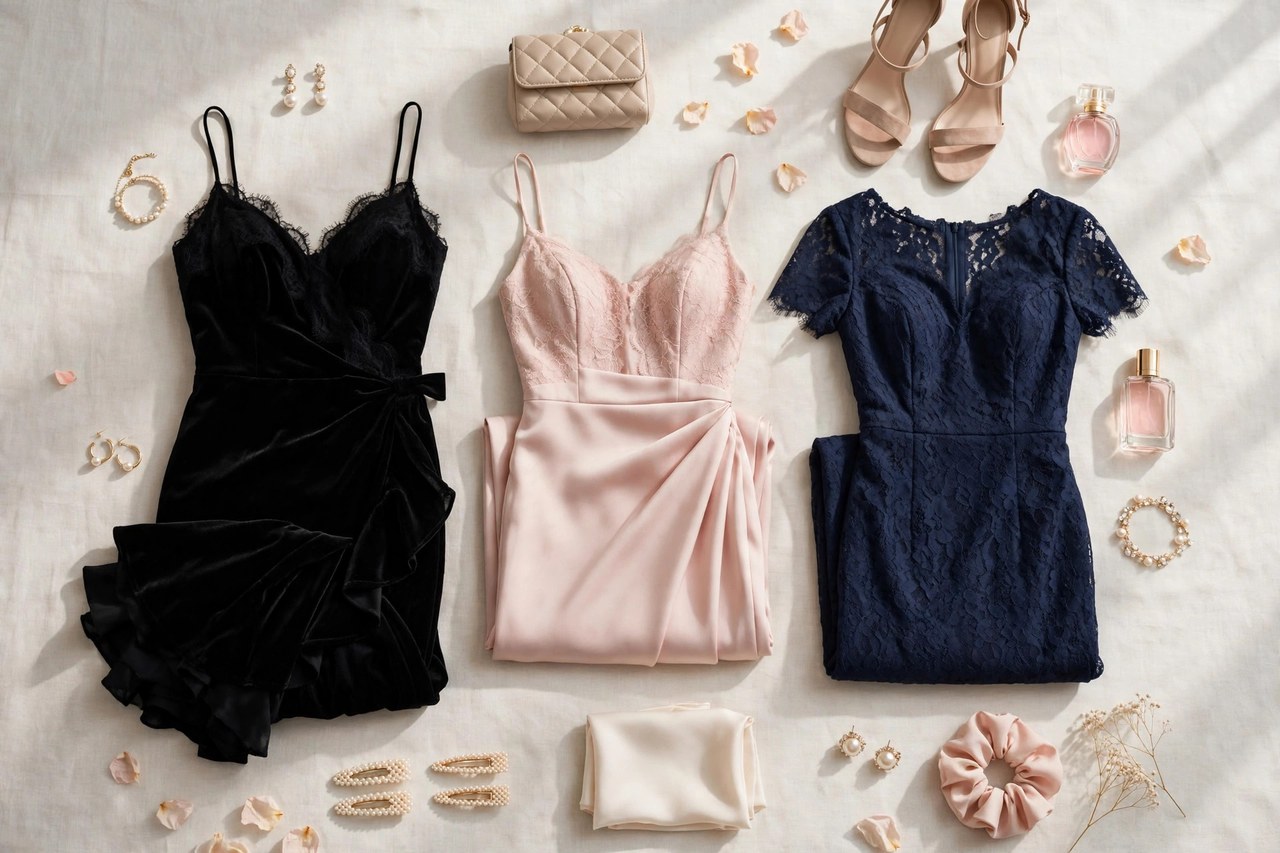
An evening gown is the most formal dress in the wardrobe: floor length, made from luxurious fabric, worn to galas, black-tie weddings, award nights and formal balls. For petite women, 5'4" and under, gowns are also the highest-stakes garment to buy, because a regular gown is wrong in every vertical measurement at once — a bodice built for a longer torso, a waist in the wrong place, a skirt with a foot of extra length collapsing in folds at the floor. A petite evening gown re-patterns all of it, so the drama arrives at your scale.
This guide covers gowns as the pinnacle of formal dressing, distinct from shorter formal dresses and from cocktail styles. It explains the classic gown silhouettes and what petite cutting changes in each, how floor length and trains should actually be measured on a petite body, the fabrics and internal construction that make a gown hold its shape for an evening, and the alteration and care planning that a garment of this importance and price deserves well before the night itself.
Silhouettes: A-Line, Ballgown, Mermaid and Column
The A-line gown is the most universally successful petite silhouette: fitted through a shortened bodice, it opens gradually from a correctly placed waist to a full-length hem, giving the sweep of formality without a single overwhelming feature. The ballgown adds a dramatically full skirt; in petite versions that fullness is deliberately reduced in volume and the waist sits high and true, so the skirt reads as grandeur rather than costume. Petite ballgowns suit formal balls and grand venues where the room itself is large.
The mermaid and trumpet fit close through body and flare below the knee — in petite cutting that flare point is raised to a petite knee, without which the style hobbles walking and looks cut off. The column or sheath gown falls in a narrow, elegant line that lengthens a petite frame beautifully in matte crepe or satin, relying on fabric and neckline rather than volume. The empire gown raises the seam to just under the bust, a naturally petite-friendly line. In every silhouette, the petite difference is placement: seams, flare points and embellishment mapped to a shorter body's landmarks.
Floor Length, Trains and Hem Planning
Floor length on a petite woman is a measurement, not a mood. A petite gown is patterned several inches shorter than a regular gown, and its hem should just kiss the floor over your event shoes, clearing it by a whisper at the front so you can walk without catching fabric underfoot. Always fit and hem a gown wearing the exact shoes, or their exact heel height, planned for the event; a half-inch of heel changes a floor hem completely, and a gown hemmed for flats is unsafe in heels and sloppy in the reverse.
Trains need the most honest scaling of all. A petite gown's train is shortened in proportion — a sweep or brush train that trails a few inches behind the hem gives the formal effect while remaining manageable on stairs, in cars and on a dance floor. Chapel-length and longer trains exist in petite formalwear but should be chosen only with a bustle plan, a wrist loop or an attendant strategy, and practiced before the event. Check that any beading or lace applique at the hem is repositioned in the petite pattern rather than simply cut off by hemming, which is the tell-tale sign of a regular gown shortened rather than a gown designed petite.
Fabrics and Bodice Construction
Gown fabrics are chosen for how they hold a long line. Satin and silk give liquid shine and structure for A-line and ballgown skirts; chiffon and tulle build volume without weight, layer upon layer — critical for petite wearers, since a heavy skirt fatigues a smaller frame over a long evening; crepe gives the matte column its fluid weight; velvet anchors winter formality; and sequinned and beaded fabrics deliver maximum evening light, with motifs scaled smaller and lighter in true petite gowns so the bodice is not armoured in oversized embellishment.
Inside, a serious gown is engineered. Look for a structured bodice with boning or internal support sized to a petite torso — boning cut for a longer body pokes and buckles — a waist stay that anchors the skirt's weight to your waist rather than your shoulders, cups or a neckline that removes bra guesswork, and a lining that lets the skirt glide. Necklines sit higher and narrower in petite patterns and straps are shortened and set inward for narrower shoulders. This internal work is invisible in photographs and decisive in person: it is why a well-made petite gown feels secure at midnight as well as at seven.
Fittings, Alterations and Care
Plan gown shopping like a project. Start early enough for ordering petite sizes and for two fittings; bring the event shoes and underpinnings to every fitting. Even true petite gowns commonly need final hemming to your shoe and minor bodice tweaks, and a tailor should confirm that hem lace, beading and the train's shape survive the adjustment. Test at the final fitting: walk, climb a step, sit carefully, raise your arms and practice the bustle if there is one. A gown is ready when you can forget you are managing it.
On the night, carry a small kit — fashion tape, a safety pin, a travel steamer's results checked in advance — and know your fabric's limits with drinks and dance floors. Afterward, have the gown cleaned promptly by a specialist in formalwear, pointing out hem soiling and any spills, since sugar and champagne set invisibly. Store it in a breathable garment bag, heavily beaded gowns laid flat or hung from loops rather than straps to protect the scaled shoulders, away from light. A petite gown bought in true proportion is a repeat performer across years of formal invitations, not a single-evening expense.
Related Women's Guides
More to Explore on Apparel Search
Looking for Women's Clothing Stores?
This guide helps you choose women's petite evening gowns. To browse where to buy, visit our women's clothing store directory, where you can find retailers that carry them.