Women's Petite Gowns Guide
A petite gown is re-proportioned, not just shortened: the waist, bodice and neckline are placed for a shorter torso, so the silhouette the designer intended survives at 5'4" and under.
Shop Women's Petite Gowns Now
Shop Women's Petite Gowns on Amazon Shop Women's Petite Gowns on eBayThe Amazon and eBay links on this page are affiliate links. If you make a purchase through them, Apparel Search may earn a commission.
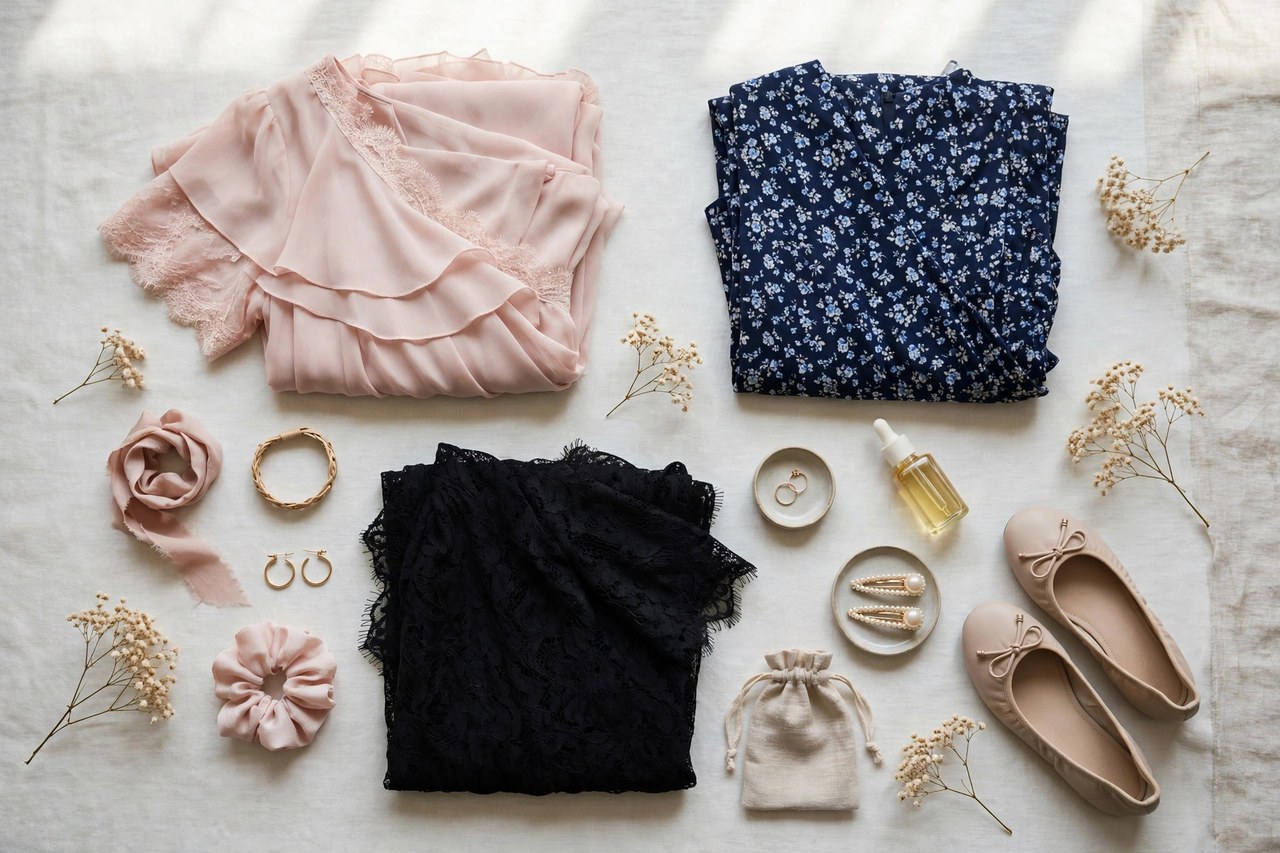
Gowns are the most length-sensitive garments a woman buys, and the most punishing when the proportions are wrong. A regular-size gown shortened at the hem still carries a bodice built for a longer torso: the waist seam drops below the natural waist, the neckline plunges further than designed, and skirt embellishment that was meant to start at the hip starts at the knee. A petite gown re-places all of those points for a frame of 5'4" and under.
This umbrella guide covers gowns generally — evening, formal and special-occasion long dresses in petite cutting. It explains which proportion points change, how the main silhouettes behave on a shorter frame, why print and embellishment scale matters as much as length, and how to judge when a regular gown can be altered successfully and when only a true petite cut will look right.
What Petite Cutting Changes in a Gown
Four measurements define a petite gown. The bodice is shorter, so bust shaping and any waist seam sit at the natural waist instead of drifting toward the hips. The neckline and armholes are raised and narrowed, matching narrower petite shoulders, so straps stay up and a V-neck stops where it should. The skirt is graded in length from the waist, preserving the designed flare and the position of slits, tiers and trains. And details are scaled: smaller lace motifs, finer beading patterns, narrower sashes and belts cut to a shorter torso.
The practical test is the waist. Put the gown on and find the seam or sash line: it should meet your natural waist, the narrowest point of your torso, without you hiking the dress up. If the waist sits correctly, the skirt length and neckline usually follow, because the whole garment is hanging from the right anchor point. If the waist drops, no amount of hemming fixes the top half — that gown needs a petite version, not a tailor's hem.
Silhouettes on a Petite Frame
Sheath and column gowns are natural petite successes: an unbroken vertical line lengthens a shorter frame, provided seams and darts are placed for a shorter torso. A-line gowns flatter nearly everyone and forgive fit through the hip; in petite cuts the flare begins higher, keeping the skirt graceful rather than overwhelming. Empire gowns, with the waist seam just under the bust, are especially kind to petites because the raised seam is both the style and the proportion fix at once, and they suit shorter torsos beautifully.
Ball gowns and full skirts need the most care: volume is the point, but on a petite frame the skirt's diameter should be scaled down along with its length, or the wearer disappears behind the dress. Mermaid and trumpet gowns depend entirely on placement — the flare must begin at your actual knee, which is precisely what petite grading ensures and hemming cannot. Wrap and surplice bodices adjust to torso length better than rigid styles and are a forgiving choice when buying across size ranges.
Fabrics, Prints and Embellishment at Petite Scale
Fabric weight should match frame size. Heavy satins, stiff brocades and densely beaded fabrics can carry a petite wearer instead of the reverse; fluid crepe, chiffon, silk and soft satin drape in proportion and move without swallowing the silhouette. That said, structure has its place: a well-fitted crepe sheath with internal support often looks more formal on a petite frame than yards of floating chiffon. Choose the fabric for the silhouette first, then check that its weight feels balanced on your shoulders, since narrower shoulders carry wide, heavy straps and off-shoulder bands less comfortably.
Scale is the quiet rule of petite dressing. Large prints, oversized lace and wide embellished borders are designed for a longer canvas; on a petite gown they crowd. Look for small-to-medium prints, lace motifs no larger than your palm, beading patterns that repeat at a finer interval, and border prints placed at a petite hem rather than cut off mid-motif. Monochrome and tonal dressing — one color head to toe — remains the most reliable lengthening strategy for formal occasions.
Hemming, Alterations and Buying Tips
Even a petite gown usually needs a final hem to your exact shoe height, so buy with alterations in mind: bring the event shoes to every fitting, and expect to pay for hemming as part of the purchase. What a tailor can fix on any gown: hem length, strap length, minor waist ease. What is costly or impossible: raising a dropped waist seam on a beaded bodice, moving a mermaid flare, re-placing a lace border. Shop accordingly — fit the bodice and waist off the rack, tailor the hem.
Buy from ranges that cut true petites rather than ranges that simply offer short lengths, and say so in reviews when you find one; petite gown selection improves when makers hear it sells. Order early for formal seasons, since petite sizes sell out first in popular styles. Finally, store a gown hung by its internal loops (never by delicate straps), in a breathable bag, and have it cleaned promptly after the event — a well-proportioned petite gown is hard enough to find that the one you own deserves keeping ready.
Related Women's Guides
More to Explore on Apparel Search
Looking for Women's Clothing Stores?
This guide helps you choose women's petite gowns. To browse where to buy, visit our women's clothing store directory, where you can find retailers that carry them.