Women's Petite Wedding Gowns Guide
Wedding gowns are the formal, full-length end of bridal — and in petite proportion the train, veil, skirt volume and bodice are all scaled so a floor-length gown lengthens a 5'4"-and-under frame instead of swallowing it.
Shop Women's Petite Wedding Gowns Now
Shop Women's Petite Wedding Gowns on Amazon Shop Women's Petite Wedding Gowns on eBayThe Amazon and eBay links on this page are affiliate links. If you make a purchase through them, Apparel Search may earn a commission.
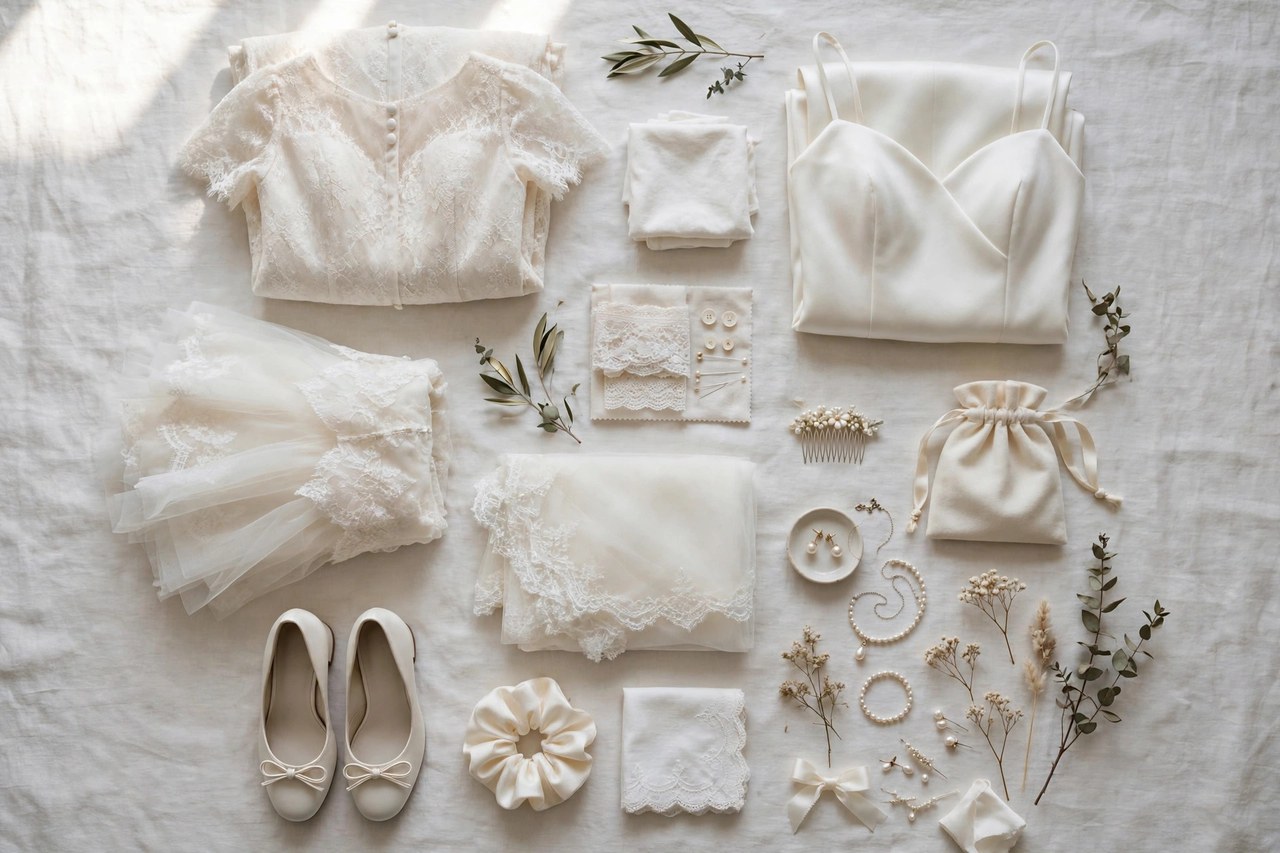
Where the wedding dress category covers every length and level of formality, a wedding gown means the formal version: a full-length, ceremonial dress, usually with a train, made in the richest bridal fabrics. For a petite bride the gown is the highest-stakes version of the petite problem, because floor length, skirt volume and a trailing train all add visual weight that a 5'4"-and-under frame must be able to carry. Petite gown ranges solve it by proportion, not by simply hemming a regular gown.
This guide focuses on what makes gowns different from the broader dress category: managing full length and trains in petite scale, choosing among the formal silhouettes, matching veils and trains to a shorter body, and the fabrics and fittings that formal gowns demand. Read it alongside the wedding dress guide, which covers shorter and less formal bridal styles.
Full Length in Petite Scale: Trains, Hems and Proportion
A petite gown's skirt is drafted shorter from waist to hem, so the flare, lace borders and hem details sit in their designed positions rather than being cut away when a regular gown is hemmed. That last point is decisive: many regular gowns carry their best lace or beading at the hem, and shortening from the bottom destroys it, while shortening from the waist distorts the bodice. A petite pattern preserves the whole design at a smaller scale.
Trains are scaled the same way. A petite chapel or cathedral train is proportioned shorter, giving the ceremony drama without a pool of fabric that dwarfs the bride or trips attendants. Sweep and brush trains suit smaller venues and petite frames particularly well. Whatever the train, it should be bustled for the reception, with bustle points fitted to your height so the lifted skirt clears the floor evenly. Judge a gown walking, turning and sitting — a train that only behaves standing still is the wrong train.
Formal Silhouettes: Ballgown, A-Line and Sheath Gowns
The petite ballgown keeps the fairy-tale outline but reduces skirt circumference, uses lighter tulle layers and places the waist seam exactly at the natural waist; the result reads grand rather than engulfing. The A-line gown is the most reliable formal choice for petites, its continuous flare creating height, and it accepts trains and veils of any length without competition. Both silhouettes benefit from a shortened, structured bodice that holds its shape at petite scale.
The sheath gown takes the opposite route: one narrow, unbroken column of crepe, satin or lace that lengthens by line rather than volume, often with a detachable overskirt or train for ceremony formality. Trumpet and mermaid gowns in petite cuts begin their flare higher, matched to a shorter leg. Avoid, in any silhouette, a wide horizontal detail at the hem or a dropped waist, both of which cut a petite figure at its least flattering point. Vertical seaming, V-necklines and diagonal draping are the gown details that add height.
Veils, Necklines and Gown-Scale Details
Veil length is proportion, too. A cathedral veil on a petite bride should be measured against her height so the veil extends a graceful distance past a scaled train rather than doubling it; fingertip and elbow veils, proportioned shorter in petite bridal, are safe and elegant at any venue. Blusher and birdcage styles sit smaller on a petite head and face. Try veil and gown together, since the veil's edge creates a horizontal line wherever it ends — it should not land at the same point as a waist seam or lace border.
On the gown itself, details are placed for a shorter bodice: beading concentrated near the neckline draws the eye up, appliques stop higher on the skirt, and back buttons run a shorter, correctly spaced line. Necklines follow the petite rules — narrower boat necks, V-necks cut to a proportionate depth, strapless bodices with internal structure sized to a smaller ribcage. Sleeved gowns use petite sleeve lengths, so lace ends at the wrist. These placements are what photographs reveal, and they cannot be fully corrected later on a regular gown.
Fabrics, Fittings and Buying Tips
Formal gown fabrics are the bridal luxuries: silk satin and mikado for sculpted ballgowns and A-lines, layered tulle for volume without weight, Alencon and Chantilly lace over satin for texture, and heavy crepe for sheath gowns that must fall in one clean line. Weight matters for petites in a practical sense as well — a scaled skirt in lighter construction is simply easier to wear, move and dance in for a full day.
Buy the gown in a petite size by your largest measurement, allow the standard bridal timeline of nine to twelve months, and expect two to three fittings with your ceremony shoes and undergarments. Confirm how the train bustles, how the gown is cleaned, and whether your salon can store it until the week of the wedding. Have the gown professionally cleaned and preserved afterward if it will be kept. A petite gown chosen by proportion gives a formal wedding its full ceremony — at a scale that celebrates, rather than hides, the bride.
Related Women's Guides
Looking for Women's Clothing Stores?
This guide helps you choose women's petite wedding gowns. To browse where to buy, visit our women's clothing store directory, where you can find retailers that carry them.