Women's Petite Bridal Fashion Guide
Petite bridal fashion proportions the whole wedding look for brides 5'4" and under — gowns with raised waists and shorter hems, scaled veils, trains and details that photograph in balance.
Shop Women's Petite Bridal Fashion Now
Shop Women's Petite Bridal Fashion on Amazon Shop Women's Petite Bridal Fashion on eBayThe Amazon and eBay links on this page are affiliate links. If you make a purchase through them, Apparel Search may earn a commission.
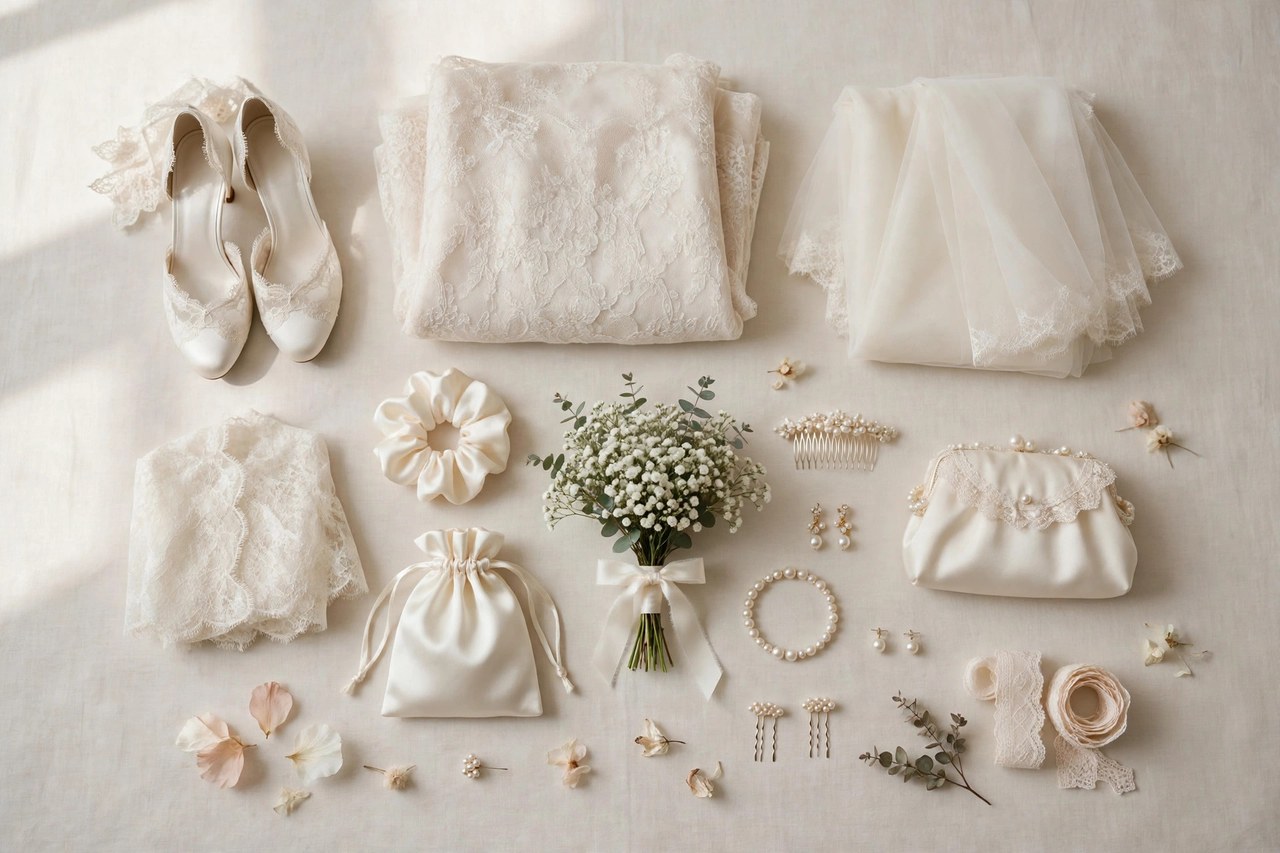
Petite bridal fashion covers everything a bride who is 5'4" and under wears, proportioned as a complete look rather than as a standard gown cut off at the hem. The distinction matters because a wedding gown is built from fixed design points — a waist seam, a neckline, lace placement, a train — and simply shortening a regular gown moves none of them. A petite gown raises the waist to the bride's waist, shortens the skirt from the correct point, scales the bodice, and sizes the veil, train and embellishment to the woman wearing them.
This guide explains petite bridal proportions, the silhouettes that work hardest for shorter brides, how veils and accessories scale, and the ordering and alteration timeline that petite brides should plan around. The aim is not a list of rules to obey but an understanding of proportion, so you can try on any gown — petite-labeled or not — and judge in the mirror exactly what alteration could and could not fix.
Petite Gown Proportions: Waist, Bodice and Hem
The three measurements that define a petite gown are the bodice length, the waist placement and the skirt length from the waist. Petite bridal patterns shorten the bodice by roughly an inch so boning ends at the right point and necklines sit where designed, place the waist seam at the natural waist of a shorter torso, and take length from the skirt proportionally so lace borders, tiers and hem details survive intact instead of being cut away at the bottom.
Necklines and sleeves scale as well. A petite bodice shallows a deep V or illusion neckline slightly, narrows straps and cap sleeves for narrower shoulders, and raises armholes for comfort. Skirt details move up in sympathy: an overskirt slit opens at the right point on a shorter leg, and applied lace motifs are smaller and placed for a shorter skirt field. When you try a regular gown, check these points in order — waist first, neckline second, hem last — because hem length is the cheapest fix and waist placement is the most expensive.
Silhouettes That Flatter a Petite Bride
Sheath and column gowns create one unbroken vertical line and are natural allies for petite brides, especially with a raised waist seam. A-line gowns in petite cuts keep the skirt volume moderate and the flare beginning at the correct hip point, giving the classic bridal shape without excess fabric. Fit-and-flare and trumpet styles must be petite-proportioned so the flare opens below the knee of a shorter leg, not at mid-calf, which is the most common failure of regular versions.
Ball gowns can work beautifully at petite scale when the skirt is lighter, the waist sits high and the bodice is clean — the drama comes from contrast, not yardage. Short and tea-length gowns are cut to end at the most flattering point of a shorter calf. Across all silhouettes, favor continuous vertical details — a line of buttons, a center lace panel, a long veil worn behind — and be cautious with wide horizontal sashes, dropped waists and heavy tiered skirts, which divide a petite silhouette into shorter segments.
Veils, Trains, Shoes and Accessories at Petite Scale
Veil length is named by where it ends, and petite brides should read the inches, not the name: a fingertip veil in a regular range may reach mid-thigh on a shorter bride. Petite or short versions of each veil length exist, and your gown's proportions set the choice — birdcage and blusher veils and shoulder-length styles keep the focus on the face, while a chapel or cathedral veil supplies the drama of a long line without adding visual weight at the waist. Edging and lace applique should scale down with the veil.
Trains follow the same logic: a petite sweep or chapel train gives the full bridal effect with less fabric to bustle, carry and keep clean, and bustle points are placed for a shorter skirt. Shoes are structural, not an afterthought — decide heel height before hem fittings, and remember that a visible shoe under a short or slit gown becomes part of the proportion. Jewelry, belts and headpieces in smaller scales, and a bouquet carried at a moderate size — roughly 8 to 10 inches across — complete a look that photographs as balanced from every distance.
Ordering, Alterations and Buying Tips
Order early: petite bridal ranges are smaller, and special-order petite lengths from mainstream designers commonly need the same six to nine months as regular orders, plus alteration time. Ask the salon directly whether a style is available in a petite or hollow-to-hem measurement, where length is taken from a pattern point rather than the finished hem, preserving hem lace and proportions. Bring your wedding shoes, or their exact heel height, to every fitting, and schedule the final fitting close enough to the day that the fit is current.
Budget alterations honestly. A petite bride in a regular gown may face waist repositioning, bodice shortening and proportional skirt work that together exceed the cost of ordering the petite version, and some changes — raising a lace waist, moving a flare point — are effectively remaking the dress. Prioritize in fittings: waist and bodice fit first, bust and shoulder second, hem and bustle last. Preserve offcuts of lace and fabric from alterations for accessories or keepsakes. Chosen in proportion from the start, petite bridal fashion needs no apology or explanation — it simply looks like the gown was made for the bride, because it was.
Related Women's Guides
Looking for Women's Clothing Stores?
This guide helps you choose women's petite bridal fashion. To browse where to buy, visit our women's clothing store directory, where you can find retailers that carry them.