Women's Shawls Guide
A shawl is a large, open piece of fabric worn over the shoulders — warmth, coverage and finish in a single unconstructed garment.
Shop Women's Shawls Now
Shop Women's Shawls on Amazon Shop Women's Shawls on eBayThe Amazon and eBay links on this page are affiliate links. If you make a purchase through them, Apparel Search may earn a commission.
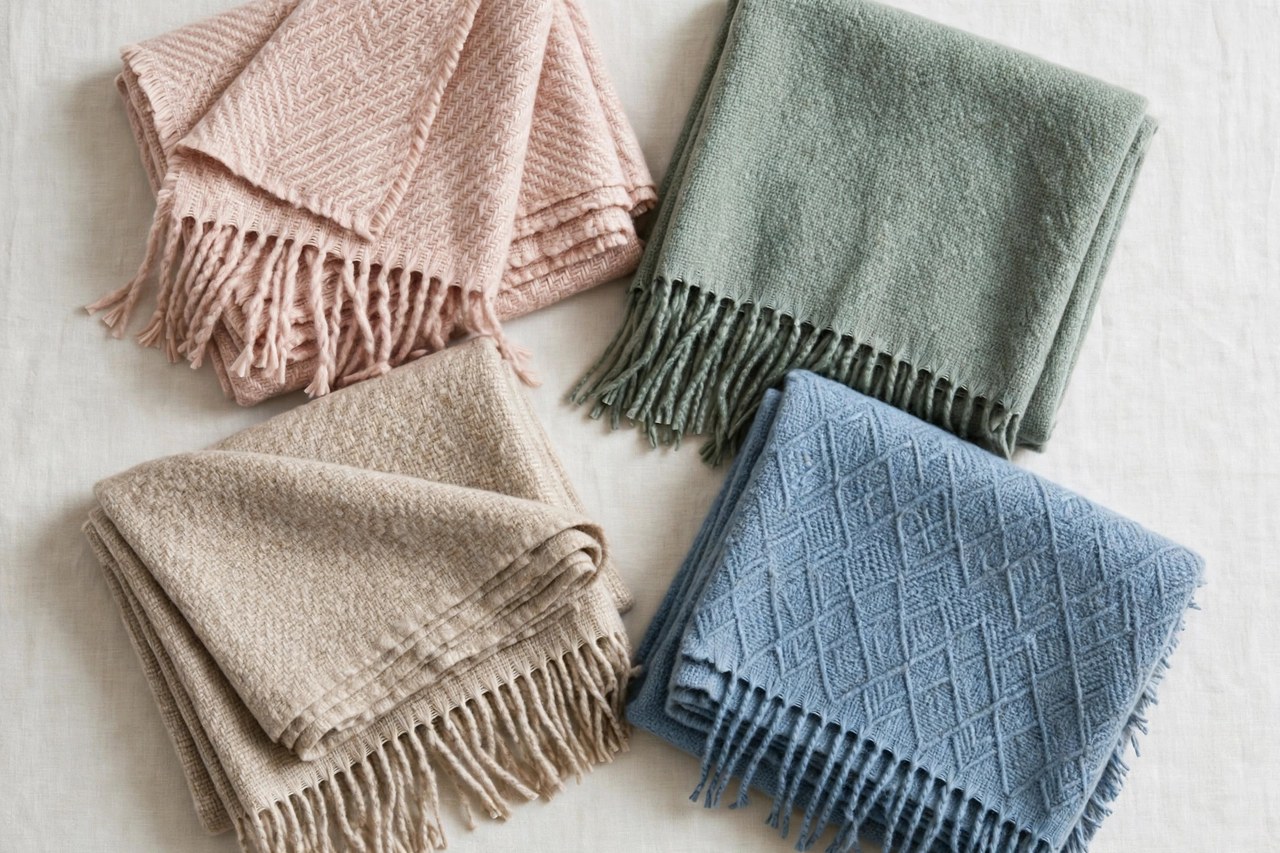
A shawl is the least constructed garment in a wardrobe: a large rectangle or triangle of fabric, worn draped over the shoulders, upper arms or head, with no fastening, no tailoring and no size in the usual sense. This page is the category's overview for women's shawls and wraps, covering dimensions, fabrics and wearing methods.
That simplicity is the shawl's usefulness. It adds warmth without a coat's bulk, coverage over an evening dress without changing the dress, and a layer that can be removed, folded and carried in a way no jacket allows. Choosing one well is a matter of three decisions only: how large, in what fabric, and with what edge finish. Everything else — the dozen ways to drape it — follows from those three, as the sections below set out in order.
Size and Shape: Rectangle, Triangle and Wrap
Rectangular shawls are the standard form, and their dimensions decide their jobs. A generous wrap, roughly the span of your outstretched arms in length and wide enough to cover from shoulder to elbow, functions as genuine warmth and can double as a travel blanket. A narrower, shorter shawl is an accent and a shoulder cover only. Triangular shawls, worn point-down at the back, give full shoulder coverage with less fabric at the front and suit traditional woven and knitted styles.
Test size against your intended outfit, not in the abstract. Over an evening dress, the shawl should cover the shoulders and upper arms without trailing near the floor when one end slips — and one end will slip, because an unfastened garment moves. Over day clothes, length enough to cross at the front and tuck or belt is the practical measure. If you plan to wear a shawl as your only warm layer for travel, buy the largest size you will still carry happily, because an unused large shawl in a hotel room warms no one.
Fabrics: Wool, Fine Blends, Silk and Cotton
Wool and wool-blend shawls provide real insulation and suit winter and air-conditioned travel alike; fine woven wool drapes where chunky knitted wool adds texture and bulk. Pashmina-style shawls, in fine cashmere or cashmere-silk blends and their many imitations, offer the category's best warmth-to-weight ratio; read the fiber label carefully, because the word pashmina describes a style in many listings, not a guaranteed fiber content. Price, softness and warmth follow the actual percentages printed on the label.
Silk shawls serve evenings: light, lustrous, warm enough against a cool room and decorative over plain dresses. Cotton and linen shawls serve summer — sun coverage, a layer for cool evenings, and easy washing. Synthetic shawls lower cost and care demands across all of these roles. Fringe, embroidery, woven borders and reversible weaves are the finishes that distinguish one plain rectangle from another, and a woven pattern will outlast a surface print through years of folding, draping and travel.
Ways to Wear a Shawl
The classic drape rests the shawl over both shoulders with ends hanging evenly in front, secured by nothing but posture; crossing one end over the opposite shoulder adds warmth and security. For evening coverage, drape it behind the shoulders and over the bent arms, which keeps it in place while leaving the dress visible. Belted over a dress or coat, a large shawl becomes a structured layer; knotted loosely at the front, it behaves like a wrap top over a plain base.
Beyond dress, a shawl works as a travel layer on planes and trains, a head and shoulder cover where a visit or a climate calls for one, and an improvised blanket, picnic cloth or baby shade — the multi-use record of a large, washable rectangle is long. Choose your travel shawl in a fabric that survives that variety: a mid-weight wool blend or sturdy cotton, in a color that forgives use, will be reached for constantly, while a delicate silk evening shawl should be kept for the single job it does beautifully.
Care, Storage and Longevity
Care follows fiber, as with scarves: gentle washing or dry cleaning for fine wool, cashmere blends and silk; machine-gentle washing for most cotton and sturdy synthetics; flat drying for anything knitted or heavy, because a wet shawl's own weight will stretch it on a line. Fringe should be combed straight while the shawl is damp and dried flat, or it sets in tangles that no later pressing fully cures. Shake and air shawls after wear before returning them to storage.
Store shawls folded loosely or rolled, in a drawer or breathable box, with wool pieces stored clean to protect them during the off-season. Refold along different lines occasionally so creases do not become permanent weak points, and keep silk away from prolonged sunlight. A shawl has no seams to fail, no closure to break and no fit to outgrow, so its lifespan is set entirely by fabric and handling — one of the few garments that can plausibly be bought once, chosen carefully, and used for decades.
Related Women's Guides
More to Explore on Apparel Search
Women’s Clothes Guide by Letter: Women's Apparel Directory N · Women's Clothes Directory O · Women's Clothing Directory P · Women's Apparel Directory Q · Women's Fashion Directory R · Women's Clothes Directory T
Looking for Women's Clothing Stores?
This guide helps you choose women's shawls. To browse where to buy, visit our women's clothing store directory, where you can find retailers that carry them.