Women's Scarves Guide
Scarves are a category, not a single purchase — silk squares, wool wraps, infinity loops and light cotton layers, each tied and collected differently.
Shop Women's Scarves Now
Shop Women's Scarves on Amazon Shop Women's Scarves on eBayThe Amazon and eBay links on this page are affiliate links. If you make a purchase through them, Apparel Search may earn a commission.
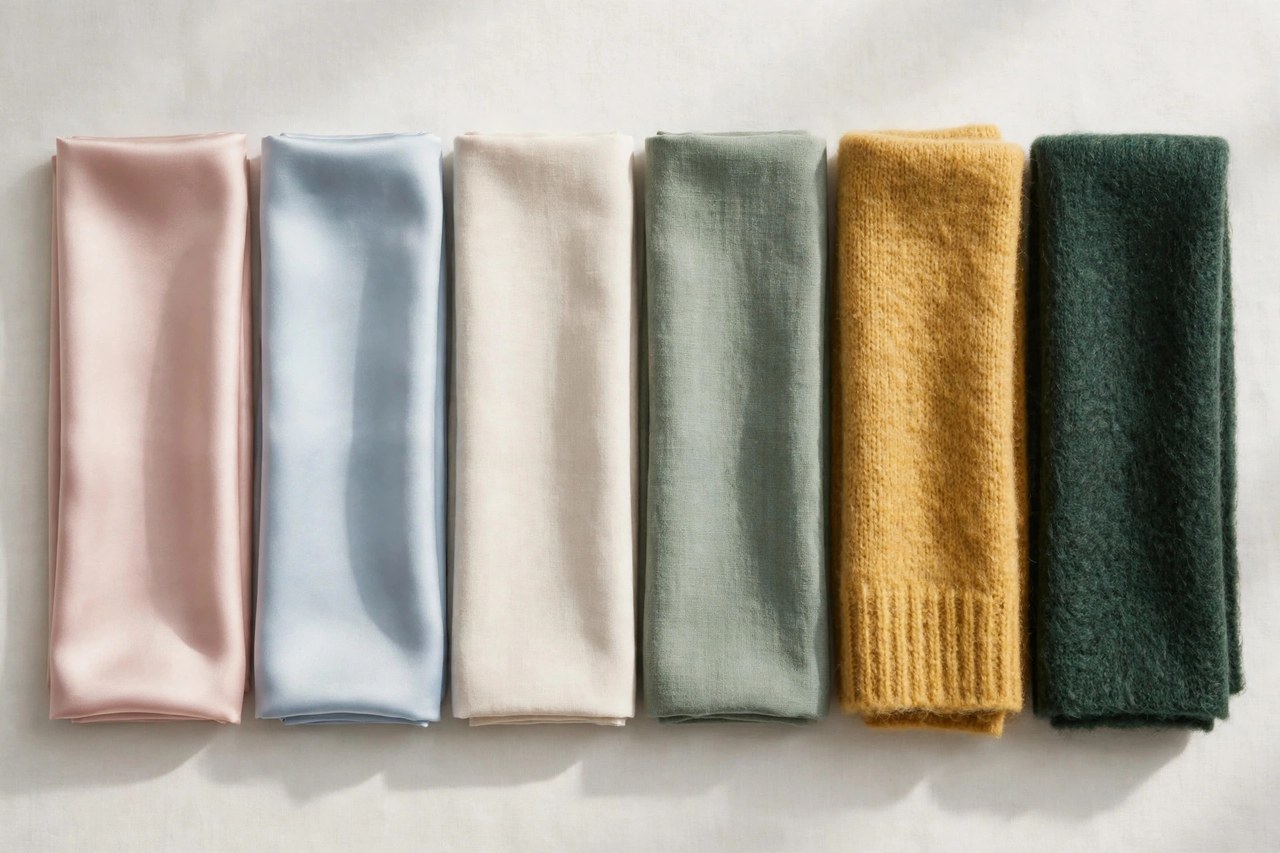
A scarf, plural scarves, is a piece of fabric worn around the neck for warmth, sun protection, cleanliness, fashion or religious reasons, made in materials such as wool, linen and cotton, and it is a common type of neckwear. Where the companion scarf page on this site judges one scarf at a time, this guide takes the plural seriously: the category of scarves, how its families differ, how they are tied, and how a small, deliberate collection covers a year of weather and occasions without becoming a drawer of duplicates.
The scarf became a real fashion accessory by the early 19th century for women, and by the middle of the 20th century scarves had become versatile and essential accessories in most women's wardrobes. That history shows in the modern category's breadth: a silk square, a knitted wool muffler and a gauze headscarf share a name and a rough shape, but almost nothing else — not fiber, not function, not care, not the way they are worn.
The Families: Silk, Wool, Shearling, Cotton and Infinity
Silk scarves are the printed, polished family, worn for color and finish at the neck, in the hair or on a bag. Wool scarves are the cold-weather family, thick and knitted or finely woven, tied with a heavy coat as their partner. Shearling scarves sit at the luxury end of winter warmth. Cotton and linen scarves handle spring, travel and sun, washing easily and packing flat. Each family on this site has its own detailed guide, linked from this page.
Infinity scarves cut across the families as a construction rather than a fiber: a sewn loop in knit, woven or jersey fabric that doubles around the neck with no ends. They trade versatility for certainty — nothing to tie, nothing to trail in a bicycle wheel or a soup bowl. A balanced collection rarely needs more than one of each major family: one silk, one warm wool or cashmere-blend, one light cotton or linen, and, if you use it, one infinity loop for travel days.
Tying and Wearing Across the Category
Tying is where the category becomes a skill. A long scarf takes the European loop — folded in half, ends pulled through the fold — for maximum warmth with minimum bulk at the front, or a single loose loop for transitional weather. A silk square folds to a triangle for a neckerchief knot, to a band for the hair, or to a bias strip for the wrist and bag handle. A wide wrap worn open over the shoulders crosses into shawl territory, which is why the two categories are shelved together in most wardrobes.
For step-by-step methods, from the European Loop to the blanket scarf triangle, see How to Tie a Scarf.
Context decides the wear. In cold climates, a thick knitted scarf, often made of wool, is tied around the neck to keep warm, usually accompanied by a heavy jacket or coat. In drier, dustier warm climates, or where airborne contaminants are common, a thin headscarf, kerchief or bandanna is worn over the hair and face to keep hair clean — a practical custom that has evolved into a fashionable item in many cultures, particularly among women. The same rectangle of cloth, read differently by climate, becomes either insulation or shelter.
Building a Collection Without Duplicates
Collect by function first, then by color. List the jobs: deep-winter warmth, shoulder-season layering, a polished silk accent, a washable travel scarf, sun or dust protection. Buy one strong scarf per job before buying a second for any job, and you will avoid the common collection of five similar mid-weight scarves that all fail on the coldest day. Within each job, one neutral and one face-flattering color is usually enough; scarves sit close to the face, so color honesty matters more here than in any other accessory.
Quality signals repeat across families: even weaving, secure hems or hand-rolled edges, fringe that is knotted rather than glued, and a fiber label that names percentages instead of saying 'silk-feel'. Store the collection rolled in a drawer or on a wide rack, silk away from sunlight, wool clean before summer storage. A collection maintained this way stays small on purpose — a working set of distinct tools, each tied a different way, rather than a pile of interchangeable fabric.
Care by Fiber, Across the Drawer
Because a collection mixes fibers, the most useful care habit is sorting by label, not by color. Silk and fine wool want gentle hand washing or dry cleaning and flat drying; sturdy cotton and linen tolerate a gentle machine cycle; knitted wool must never be wrung or hung wet, or it will grow a size while drying. Steam rather than iron printed silk, and keep perfume and hair spray off scarves by applying them before you dress, not after the knot is tied.
Inspect the whole drawer once a season: mend a pulled thread before it runs, re-knot loosening fringe, and move any scarf you have not worn in a year to the front for a fair trial. Over time, this custom — a category that began as pure practicality — stays what it became by the mid-20th century: an essential, versatile part of a wardrobe, precisely because each piece in it is different from the others and cared for as the distinct fabric it is.
Related Women's Guides
Photos


Looking for Women's Clothing Stores?
This guide helps you choose women's scarves. To browse where to buy, visit our women's clothing store directory, where you can find retailers that carry them. For wearing a scarf as a garment, see our scarf top guide, and for the plush winter version, our faux fur scarf guide.