Women's Petite Turtlenecks Guide
A petite turtleneck shortens the neck, the body and the sleeves together — so the collar folds at the right height, the hem clears the hip and the fine knit layers under petite jackets without bulk.
Shop Women's Petite Turtlenecks Now
Shop Women's Petite Turtlenecks on Amazon Shop Women's Petite Turtlenecks on eBayThe Amazon and eBay links on this page are affiliate links. If you make a purchase through them, Apparel Search may earn a commission.
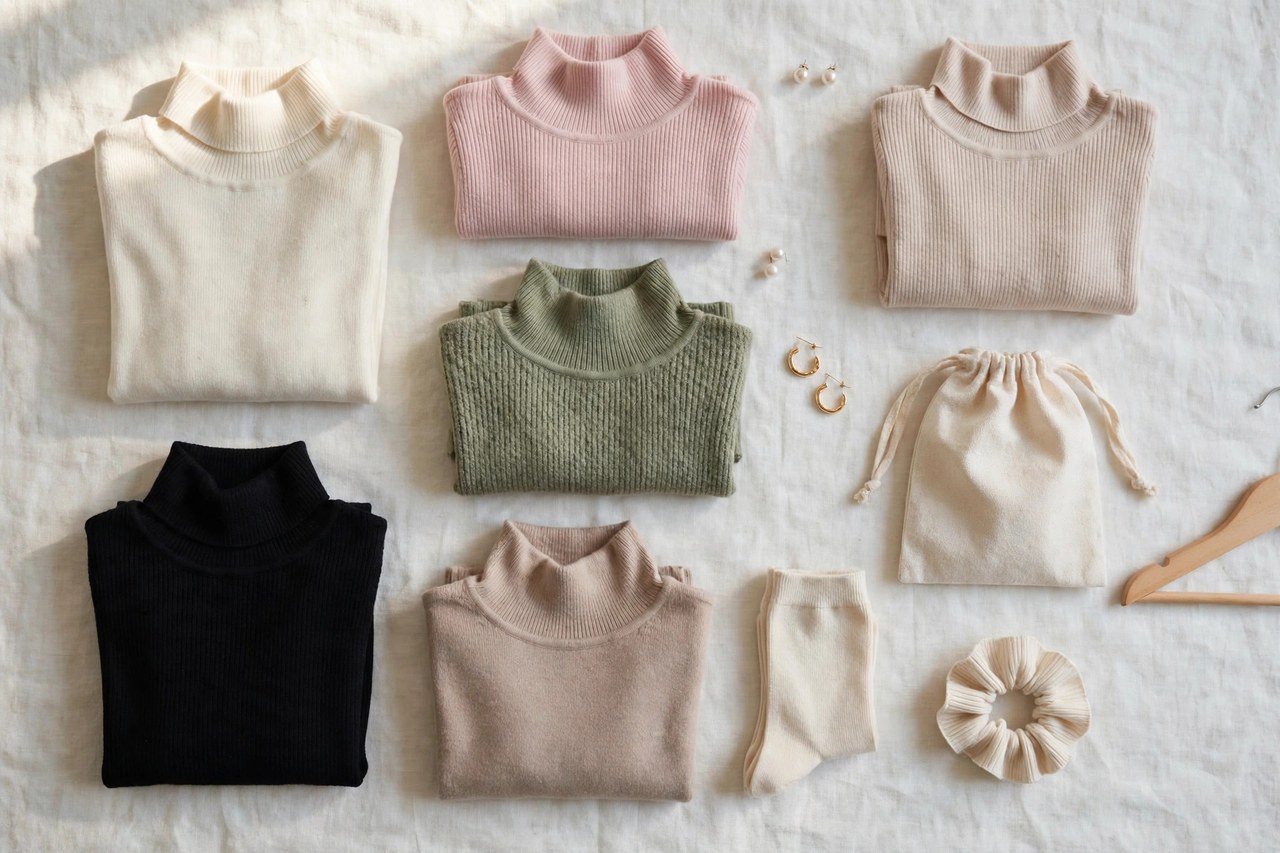
A turtleneck is a close-fitting top or sweater with a high collar that folds down and covers most of the neck. On a petite woman, a regular turtleneck fails at the feature that defines it: the collar is cut for a longer neck, so it bunches, folds twice or creeps toward the chin, while the body and sleeves run their usual regular length below it. Petite turtlenecks, drafted for women 5'4" and under, shorten the collar first, then the body and sleeves, and use finer gauges that suit a smaller frame.
This guide covers the collar styles — true turtleneck, mock neck and cowl — the knit fabrics from cotton jersey to cashmere, how a petite turtleneck should fit at the neck, shoulder and hem, and how to layer and care for the fine knits the style is usually made in.
Collar Styles: True Turtleneck, Mock Neck and Cowl
The true turtleneck has a collar tall enough to fold over once, and in a petite cut that folded height is reduced so one fold sits cleanly from jaw to collarbone. An unfolded or scrunched styling also works when the collar is proportioned correctly. The mock turtleneck uses a short stand collar, usually an inch or so high, that does not fold — the easiest style for petite necks, for warmer rooms and for anyone who dislikes pressure at the throat, and the most common collar in petite layering tops.
The cowl neck drapes a soft, loose roll of fabric instead of a fitted collar; in petite versions the cowl's depth is scaled so the drape ends at the upper chest rather than the waist. Funnel necks stand away from the neck in a wider tube and suit structured knit tops. Whichever collar you choose, it should stay in place without tugging, lie smooth without a second unintended fold, and clear your chin comfortably when you look down.
Fabrics and Gauges: Cotton, Merino, Blends and Cashmere
Petite turtlenecks come in two fabric families. Knit jersey tops in cotton, modal or rayon blends with elastane are thin, smooth layering pieces — the turtleneck as an under-layer. Sweater knits in merino wool, cotton or cashmere blends are the turtleneck as the outfit itself. Gauge matters on a petite frame: fine gauges (thin stitches, smooth surface) add no bulk and tuck into petite trousers and skirts, while chunky ribbed knits widen a small torso and are better kept to relaxed weekend styles.
Merino wool is the practical luxury: warm without weight, naturally breathable and odor-resistant, ideal for a sweater-weight petite turtleneck worn all winter. Cashmere is softer and warmer per ounce but delicate and costly. Cotton and cotton-modal turtlenecks suit milder weather and wool-sensitive skin, and wash most easily. Ribbed knits stretch generously around the neck and body, which forgives fit, while smooth jersey needs to be right in size because it shows every line beneath.
Petite Fit: Neck, Shoulder, Sleeve and Hem
Fit a petite turtleneck in this order. The collar should encircle the neck without squeezing and without gaping when you turn your head. The shoulder seams belong on your shoulders, not down the arm — raglan styles hide this check, so look at where the sleeve fullness begins instead. The body should skim rather than cling if you plan to wear it alone, or fit close and smooth if it is a layering piece, with no horizontal pull lines at the bust.
Sleeve length is graded shorter in petite ranges, ending at the wrist rather than over the hand, and the hem should end at the high to mid hip so it can be tucked into petite pants or left over a slim bottom without covering it entirely. Because the torso is shorter, petite turtlenecks also place any shaping, ribbing change or color blocking higher. If a regular size is substituted, the collar and hem give it away immediately — those two points are the honest test of a petite pattern.
Layering, Care and Buying Tips
The petite turtleneck is the cold-weather layering anchor. A fine-gauge mock or true turtleneck fits under petite blazers, cardigans and sleeveless dresses, where its shortened body prevents the bunching at the waist that a regular layering top causes. Worn alone, a sweater-weight turtleneck pairs with petite wide-leg trousers, midi skirts and jeans; keep the bottom smoother and darker to lengthen the line, and let the collar replace a necklace, or add a long pendant over it.
Care for knit turtlenecks as knitwear: wash cool and gentle with mild detergent, reshape and dry flat, and fold for storage — hangers stretch collars and shoulders, the two places this garment can least afford it. Protect wool and cashmere from moths with clean storage and cedar or sealed boxes. Buy the best fabric your budget allows in black, cream and one deep color first; a well-cut petite turtleneck in merino will be worn weekly for years, which makes cost per wear tiny.
Related Women's Guides
Looking for Women's Clothing Stores?
This guide helps you choose women's petite turtlenecks. To browse where to buy, visit our women's clothing store directory, where you can find retailers that carry them.