Women's Petite Shirts Guide
Petite shirts are re-proportioned for women 5'4" and under — shorter bodies and sleeves, higher waist shaping and narrower shoulders — not simply regular shirts in a smaller size.
Shop Women's Petite Shirts Now
Shop Women's Petite Shirts on Amazon Shop Women's Petite Shirts on eBayThe Amazon and eBay links on this page are affiliate links. If you make a purchase through them, Apparel Search may earn a commission.
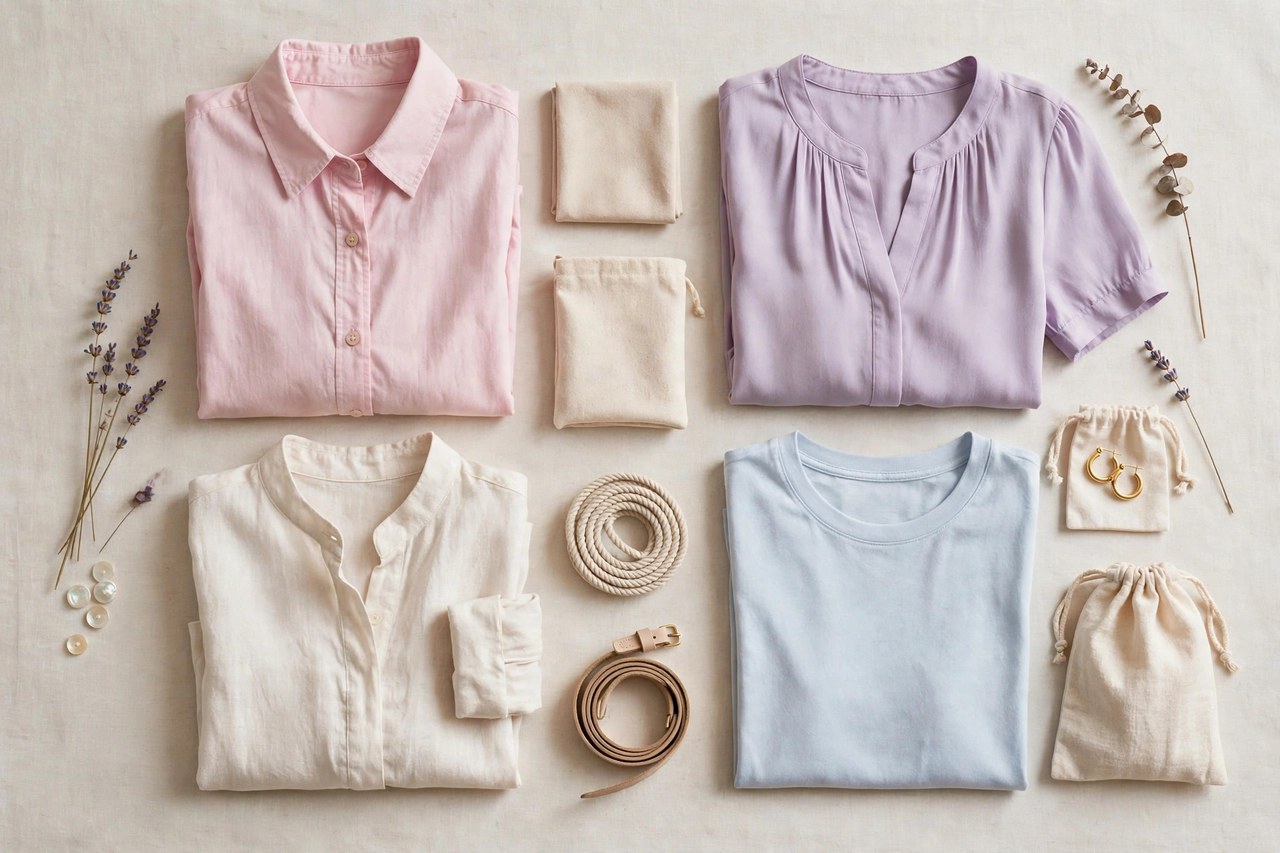
This is the umbrella guide to petite shirts: collared and soft shirts of every sleeve length, cut for a shorter frame. A true petite shirt differs from a regular shirt in a dozen small measurements at once. The body is typically one to two inches shorter, sleeves are shortened so cuffs land at the wrist bone, the shoulder seam sits on the actual shoulder point of a narrower frame, and pockets, plackets and prints are scaled down so nothing looks borrowed.
For a woman who is 5'4" and under, those details decide whether a shirt looks tailored or merely tucked and bloused to hide extra length. Petite sizing also raises design features to the right place: waist shaping hits the natural waist instead of the hip, bust darts sit correctly, and a hem meant to be worn untucked ends at mid-hip rather than mid-thigh. The sections below cover the main shirt styles, fabrics, the fit checks that matter most, and buying and care advice specific to petite cuts.
Petite Shirt Styles: Button-Front, Camp, Tunic and Soft Shirts
The button-front shirt is the core style: a collar, a full placket and set-in sleeves, in petite cuts with a shorter placket and smaller buttons spaced for a shorter torso, so the V of an open top button falls at the right point. Camp or resort shirts have a flat notched collar and short sleeves and suit warm weather; petite versions shorten the boxy body so it can be worn untucked without reading as a tunic.
Soft and blouse-style shirts — sometimes listed with blouses — use drapey fabrics, gathered yokes and no stiff collar; in petite sizes the gathers and yoke are placed higher so fullness sits over the bust, not the waist. Western and work shirts add snaps, yokes and flap pockets; scaled petite pockets matter here, because a standard chest pocket can cover half a petite chest. Whatever the style, compare it with the dedicated short-sleeve guide if you mainly want warm-weather shirts: this page covers the whole shirt family.
Fabrics and Scaled Prints
Cotton poplin and oxford cloth anchor classic shirts: crisp, breathable and easy to iron, with poplin smoother for dressier wear and oxford more casual and textured. Linen and linen blends breathe best in heat and soften with washing, at the cost of easy creasing. Rayon, viscose and silk give soft shirts their drape; petite cuts in these fabrics should be checked for length when sitting, because drapey hems ride differently. Stretch blends with one or two percent elastane help a fitted shirt move without pulling at the buttons.
Print scale is a genuine petite issue, not a matter of taste alone. A bold check or wide stripe designed for a taller torso can overwhelm a short frame and break awkwardly at the placket. Petite ranges redraw the pattern: finer stripes, smaller checks, ditsy florals and narrow awning stripes keep the same fashion idea in proportion. When buying a standard-range print in a small size instead, check that motifs match at the placket and that a dominant motif does not land in an odd place on a shorter body.
Fit: Shoulders, Sleeves, Body Length and Rise of Details
Fit a petite shirt in this order. First the shoulders: the seam should end at your shoulder point; petite shoulders run roughly half an inch to an inch narrower per size than regular ranges, and a dropped seam cannot be fixed by sizing down without tightening the bust. Second, sleeve length: a long sleeve should end at the wrist bone with the arm relaxed, and petite sleeves are cut about an inch shorter to achieve that without cuff-folding.
Then check placement details. Bust darts or princess seams should point to the bust, collar stands should not tower on a shorter neck, and waist shaping — back darts or a shaped side seam — should nip at your natural waist, which sits higher on a petite torso relative to the garment. If you are petite but full-busted, size for the bust and have the waist and hem tailored; shortening a hem and sleeves is inexpensive, while a gaping placket is a sizing problem, not a tailoring one.
Care and Buying Tips
Most cotton petite shirts wash warm or cool and benefit from being removed promptly and hung, which cuts ironing time. Iron collars and plackets from the underside, and button the top button on the hanger to hold collar shape. Linen prefers a cool wash and a soft press while slightly damp. Silk and rayon shirts often need hand washing or dry cleaning — check before buying if your routine is machine-only.
To buy well, know three numbers: your shoulder width, your preferred untucked length measured from shoulder to hem, and your sleeve length from shoulder point to wrist. Compare them with size charts rather than trusting the petite label alone, since brands cut petites differently. Build the shirt wardrobe in layers of usefulness: a white and a blue button-front, a stripe, one soft printed shirt and one seasonal linen or flannel. Correctly proportioned, those five shirts pair with every petite trouser, skirt and jean you own.
Related Women's Guides
Looking for Women's Clothing Stores?
This guide helps you choose women's petite shirts. To browse where to buy, visit our women's clothing store directory, where you can find retailers that carry them.