Women's Petite Tops Guide
This umbrella guide to petite tops covers every upper-body style — blouses, knit tops, shirts, tees and tunics — and the shared petite rules of shorter length, narrower shoulders and scaled details that make them fit.
Shop Women's Petite Tops Now
Shop Women's Petite Tops on Amazon Shop Women's Petite Tops on eBayThe Amazon and eBay links on this page are affiliate links. If you make a purchase through them, Apparel Search may earn a commission.
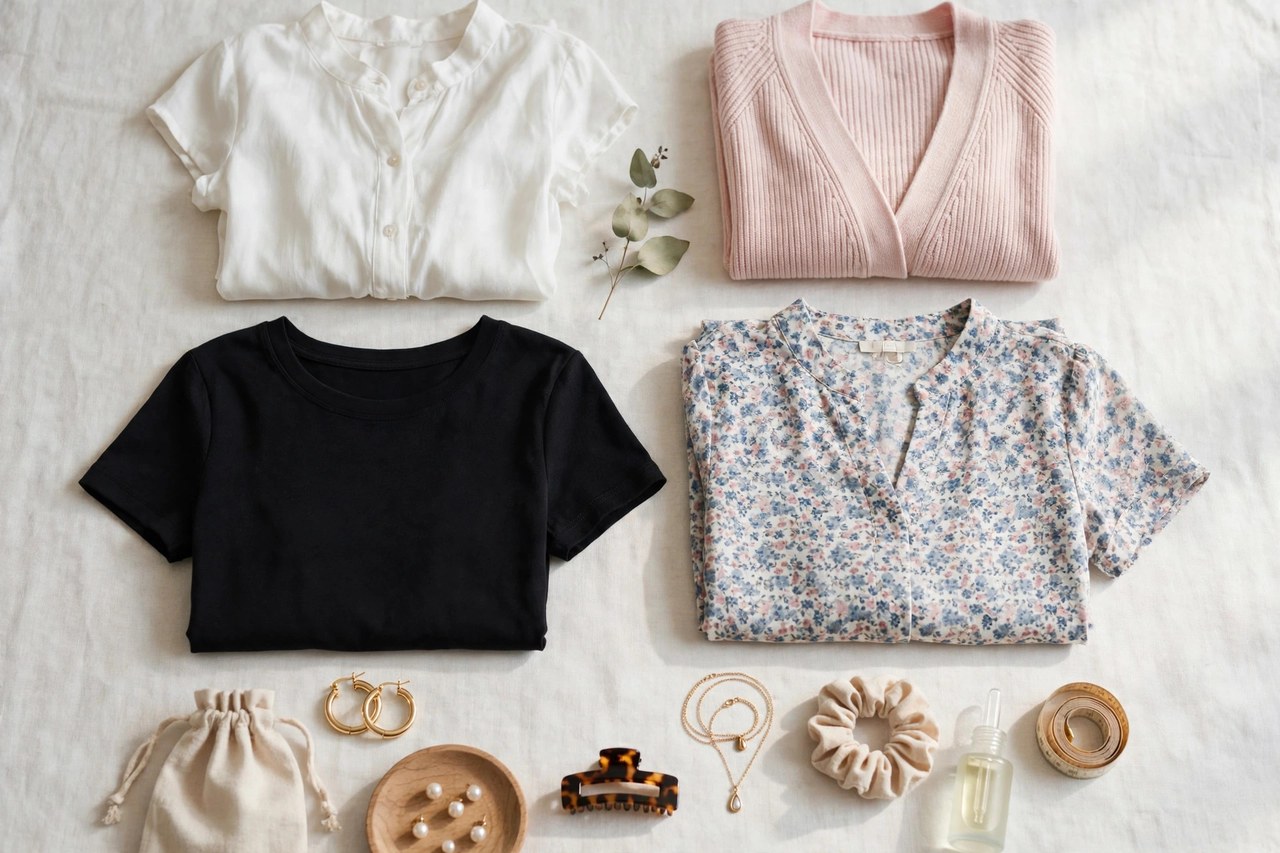
Tops is the umbrella category for everything worn on the upper body that is not a dress or outerwear: blouses, button-front shirts, knit tops, T-shirts, camisoles, tunics and shells. For petite women — 5'4" and under — every one of those styles shares the same fit problems in regular sizing and the same corrections in a petite cut, which is why they belong in one guide. The corrections are shorter body length, a higher and narrower neckline, shoulder seams that sit on the shoulder, sleeves graded to a shorter arm, and details scaled to the frame.
Use this page as the map of the category. It explains the petite proportion rules that apply to all tops, surveys the main top families and where each works hardest, compares woven and knit fabrics, and gives a sizing and shopping method you can apply to any specific top style, from a silk blouse to a weekend sweatshirt.
The Petite Proportion Rules Every Top Follows
A petite pattern is not a regular pattern shrunk evenly — it is re-graded where petite bodies actually differ. Body length shortens by roughly one to two inches so hems end at the intended point on the hip. The waist position rises, so shaping, darts and peplum seams sit at a petite natural waist instead of below it. Armholes are raised and smaller, which removes the excess fabric that bunches under the arm in regular tops and lets you lift your arms without the whole top rising.
Scale is the third rule. Pockets are placed higher and made smaller, buttons are spaced closer, collars and cuffs are narrower, and prints are reduced so a floral that reads as a sprig on a regular top does not become a cabbage on a petite one. When you try any top, check these four points in order — hem position, waist position, armhole, scale — and you will know within seconds whether it is a true petite pattern or a regular top in a small size, which are not the same garment.
The Main Families: Blouses, Shirts, Knits, Tees and Tunics
Blouses are the soft, dressier woven tops — shells, bow-neck and ruffled styles in silk, crepe and chiffon — and in petite cuts their hems clear the hip for tucking into petite trousers. Button-front shirts add collars, cuffs and plackets; petite versions space the buttons closer so the front does not gape at a higher bust point. Knit tops cover jersey pullovers, henleys and fine-gauge knit shells, cut shorter so they layer cleanly.
T-shirts are the casual jersey staple, covered in depth in their own guide. Tunics are the longest tops, and the riskiest for petites: a true petite tunic ends mid-thigh, while a regular tunic can read as a dress and overwhelm the frame, so length labeling matters most here. Camisoles and tanks in petite ranges shorten the straps and body so they work as layering pieces under petite jackets without peeking below the hem. Most wardrobes need depth in knits and tees, and a few woven blouses and shirts for polish.
Fabrics: Woven Versus Knit, Drape and Structure
Tops divide by fabric behavior. Woven fabrics — cotton poplin, silk, crepe, chiffon, linen — hold a tailored shape, take a crisp collar and press well, but have no natural stretch, so petite fit must be right in the pattern. Knit fabrics — jersey, ponte, interlock, rib — stretch and forgive, drape closer to the body, and resist wrinkling, which makes them the travel and everyday default. A small elastane content, one to five percent, improves recovery in both families.
Match fabric to the petite frame deliberately. Stiff, bulky wovens add visual width on a small body, so petite blouses favor fluid crepe, charmeuse and lightweight cotton; very sheer fabrics need a petite camisole beneath. Ponte and medium-weight knits give petite knit tops enough body to skim rather than cling. Prints deserve a scale check against your hand: as a rule, a petite print motif should be smaller than your palm, or the pattern, not you, becomes the subject.
Sizing, Layering and Buying Tips
Shop tops in true petite ranges whenever the style is structured — shirts, blouses and anything with a set waist — because those are the cuts that cannot be faked by sizing down. For relaxed knits and tees, a regular extra-small sometimes works, but check sleeve and body length first. Keep your key measurements current: bust, shoulder width, and back length from neck to waist, the measurement that predicts petite top length better than height alone.
Layering is where petite tops earn their keep. A petite shell under a petite blazer aligns at both hems; a regular top under a petite jacket bunches at the waist and peeks unevenly. Buy layering basics — camisoles, tees, fine knits — in the neutral colors of your bottoms, then add printed and colored blouses as the visible layer. Care follows fabric: knits folded, wovens hung on small hangers that will not stretch the narrower shoulders, and everything washed inside out to protect the scaled prints and trims that make petite tops look intentional.
Related Women's Guides

Looking for Women's Clothing Stores?
This guide helps you choose women's petite tops. To browse where to buy, visit our women's clothing store directory, where you can find retailers that carry them.