Women's Petite Knit Tops Guide
Petite knit tops shorten the body and sleeve, raise the waist shaping and scale the neckline — so a sweater-knit tee or fine-gauge top ends at your hip, not past it.
Shop Women's Petite Knit Tops Now
Shop Women's Petite Knit Tops on Amazon Shop Women's Petite Knit Tops on eBayThe Amazon and eBay links on this page are affiliate links. If you make a purchase through them, Apparel Search may earn a commission.
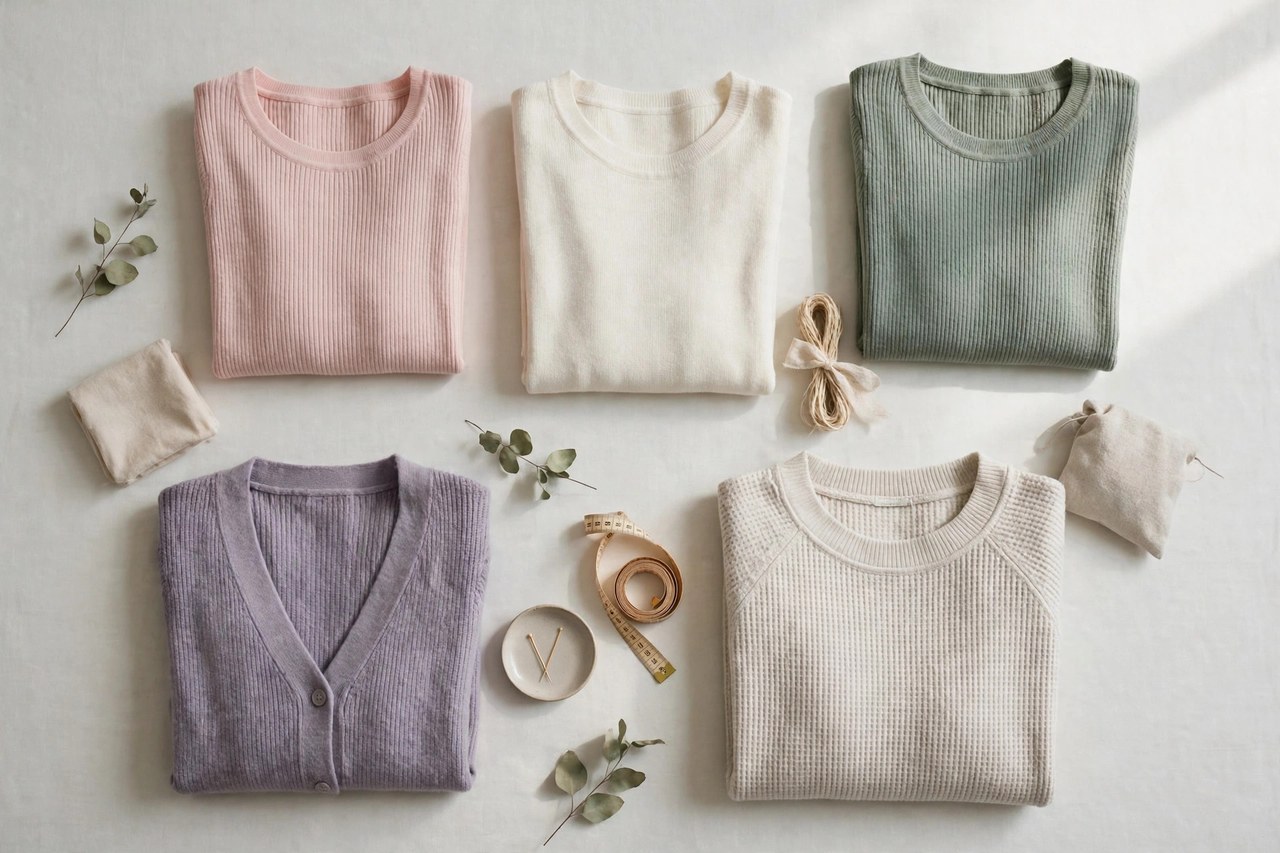
Knit tops are the soft backbone of a wardrobe — jersey tees, fine-gauge pullovers, sweater-knit shells and cardigan-style tops — and because knits stretch, their fit problems hide longer than woven problems do. A regular knit top on a petite woman stretches obligingly over everything while quietly ending two inches too long, pooling at the hip, dropping its waist shaping to the wrong place and swallowing the wrists. A petite knit top is knitted and cut to a shorter body from the start.
This guide covers knit tops in petite sizing for women 5'4" and under: what changes in the grading, the main styles and gauges, how pattern scale applies to stripes and prints in knits, and how to layer and care for pieces that, in a well-built petite wardrobe, get worn more than almost anything else.
What Petite Grading Changes in a Knit
The headline change is body length: petite knit tops typically finish one to two inches shorter, ending at the hip bone or just below as the style intends, instead of at mid-thigh. A standard top can be worn tucked to hide length, but a petite top is designed to work untucked — which is how most knit tops are actually worn. Sleeve length shortens in step, about an inch on long sleeves, so cuffs meet the wrist rather than the knuckles, and three-quarter sleeves land at the forearm point that gives them their name.
The subtler changes matter as much. Waist shaping rises to the natural waist, so a fitted knit skims the torso instead of nipping in at the hips. Necklines are scaled: a scoop or V is slightly shallower and narrower, in proportion to narrower shoulders, so straps and shoulders stay covered as designed. Armholes are cut higher and smaller, which removes the excess fabric that otherwise bunches under a petite arm and under any jacket layered over the top — a daily, practical difference.
Styles and Gauges: Tees, Shells and Sweater Knits
Knit tops divide by gauge — the fineness of the knitting. Jersey tees and tops are the lightest: T-shirt knits in crew, V and scoop necks, long and short sleeved, the true everyday layer. In petite versions, check that prints and chest details sit at chest height, not mid-torso. Fine-gauge knit tops — smooth, close knits in cotton, silk blends or merino — dress up furthest, tuck cleanly into petite trousers, and substitute for blouses in most offices.
Sweater-knit tops are chunkier: short-sleeve sweaters, knit shells worn under jackets, and polo-collar knits. Their extra texture adds visual weight, which a petite frame carries best when the body length is right and the knit is not oversized; petite sweater-knits also scale their cables and textures down. Cardigan-style knit tops and twinsets follow the jacket rule: button placement at the true waist, pockets, if any, raised. Across all styles, henleys, mock necks and turtleneck-style knit tops benefit from petite neck and body grading, since neck fabric has nowhere to hide a surplus.
Fabrics, Stripes and Pattern Scale
Cotton jersey is breathable and easy, with elastane added in better tops for recovery — pure cotton knits grow at the hem and elbows through the day. Cotton-modal and bamboo blends drape more fluidly and suit dressier knit tops. Merino and fine wool knits regulate temperature and resist odor, earning their price in travel and layering. Synthetic knits — polyester and nylon blends — hold color and shape at budget prices and dominate active-adjacent styles. In every fiber, a slightly firmer knit holds a petite silhouette better than a sloppy one; drape should be chosen style by style.
Pattern obeys the petite scale rule with special force in knits, because the pattern is the garment's surface. Stripes are the classic petite knit: narrower stripes in proportion to the frame, with horizontal stripes perfectly wearable when the top fits closely and the stripe interval is fine. Large checks, oversized florals and big graphic prints overwhelm a short torso — and on a regular-length top cut down, the motif placement lands wrong anyway. Petite ranges place border details, embroidery and color-blocking at petite points, which is why their patterned tops look intentional rather than adapted.
Layering, Fit Checks and Care
Knit tops are layering pieces, and petite layering has one rule: keep each layer's length intentional. A petite knit top under a petite jacket shows the designed sliver of hem or none; under cardigans, match lengths so hems do not stack at three different levels on a short torso. For warmth, a fine-gauge petite knit under a sweater adds heat with almost no bulk — bulk being the enemy of petite proportions in winter. Tuck tests help: a knit top that tucks smoothly into a petite rise without billowing is the right body length, even if you mostly wear it out.
Fit checks are fast: shoulder seams at the shoulder bone, armholes close without cutting, hem at the intended point when your arms hang naturally, and no horizontal stress lines across the bust or waist. Care decides longevity: wash knits cool, inside out, reshape and dry flat for sweater knits, fold rather than hang to prevent shoulder stretching, and keep elastane knits out of high dryer heat. Buy the workhorse colors in proven petite fits — the knit top is a repeat-purchase garment, and once the length is right, restocking it should be the easiest buy in your wardrobe.
Related Women's Guides
Looking for Women's Clothing Stores?
This guide helps you choose women's petite knit tops. To browse where to buy, visit our women's clothing store directory, where you can find retailers that carry them.