Women's Petite T-Shirts Guide
A petite T-shirt is more than a smaller tee: the body is shorter, the sleeves end where they should, the neckline sits higher and narrower, and prints are scaled so the shirt wears you — not the other way round.
Shop Women's Petite T-Shirts Now
Shop Women's Petite T-Shirts on Amazon Shop Women's Petite T-Shirts on eBayThe Amazon and eBay links on this page are affiliate links. If you make a purchase through them, Apparel Search may earn a commission.
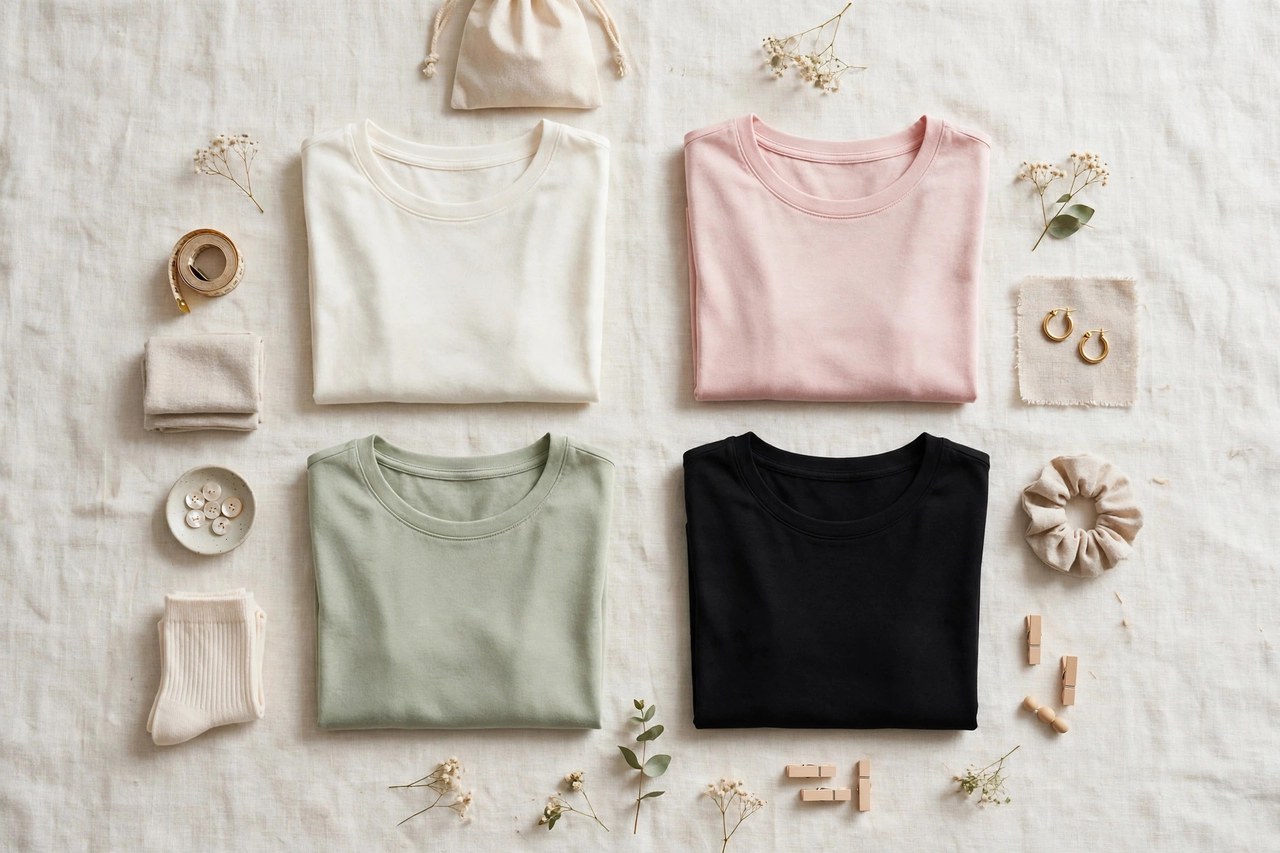
The T-shirt is the most worn top in most wardrobes, and in a regular size it is quietly wrong on a petite frame in four places at once: the body runs long and covers the hip, the short sleeves end past the elbow crease, the shoulder seams slide outward, and the neckline sits wide and low. Petite T-shirts, drafted for women 5'4" and under, correct all four — shorter body and sleeve lengths, narrower shoulders, a neckline placed for a shorter neck and torso, and hems that end at the high hip where a tee is supposed to end.
This guide covers petite tee necklines and sleeve styles, the jersey fabrics that decide drape and durability, how to size a tee for a shorter torso, and the washing habits that keep white tees white and black tees black. A handful of correctly cut tees in good fabric does more daily work than a drawer of almost-right regular sizes.
Necklines and Sleeve Styles in Petite Cuts
Crew necks in petite ranges have a smaller, higher collar band that sits at the base of the neck instead of drifting toward the collarbone. V-necks are cut with a shorter plunge, giving the lengthening effect of the V without exposing more than intended on a shorter torso. Scoop and boat necks are narrowed so they show collarbone without sliding off petite shoulders, and square necks are scaled in width for the same reason.
Sleeve length is the most visible petite correction. A petite short sleeve ends mid-upper-arm, where it flatters, instead of at the elbow where a regular sleeve makes arms look shorter. Cap sleeves are cut smaller and higher, three-quarter sleeves actually end below the elbow rather than at the wrist, and petite long sleeves finish at the wrist bone. Raglan and dolman sleeves appear too, but check the body length carefully, since relaxed styles exaggerate extra fabric on a small frame.
Fabrics: Cotton Jersey, Blends and Weights
Cotton jersey is the classic tee fabric: breathable, matte and easy to wash, in weights from feather-light tissue jersey to substantial heavyweight cotton that holds its shape and hides underlayers. Cotton-modal and cotton-elastane blends drape closer, resist bagging at the hem and keep color longer. Linen-blend jersey breathes best in heat but wrinkles and relaxes through the day, while slub jersey has a deliberately uneven texture that disguises thin fabric and adds surface interest to plain colors.
Fabric weight decides the job. Light jerseys layer under petite blazers and cardigans without bulk at the shorter waist; mid-weight tees wear alone as the outfit; heavyweight tees read almost like knit tops and pair with tailored trousers. Whichever weight you choose, hold it to the light: a petite tee should not be transparent unless it is sold as a layering piece, and the knit should spring back when stretched gently across the body.
Sizing and Fit for a Shorter Torso
Measure for a petite tee by shoulder width and body length, not bust alone. The shoulder seam should sit at the edge of your shoulder, the body should end around the high hip so it can be worn untucked over petite pants or half-tucked without a wad of extra fabric, and the sleeve should clear the elbow. Petite size charts typically run 00P to 18P with lengths one to two inches shorter than the same regular size through the body.
Fit style is a choice, not a size error. Classic fit skims the body with room to move, fitted tees follow the waist and work best tucked or layered, and relaxed and boxy petite tees are cropped or shortened on purpose so the volume stays above the hip. Prints and graphics are scaled down in true petite ranges — a chest logo or stripe placement is positioned for a shorter torso, which is why petite striped tees line up at the bust instead of below it.
Care and Buying Tips
Wash tees inside out in cool water to protect color and prints, and dry low or flat: high heat shrinks length, which sounds harmless in a petite tee but also twists side seams and shortens sleeves unevenly. White cotton tees stay brightest washed separately with an oxygen booster rather than chlorine bleach, which yellows elastane blends. Fold tees rather than hanging them, since jersey grows on hangers at the shoulders.
Build the petite tee wardrobe in layers: white, black and one stripe in a mid-weight jersey first, then seasonal colors and a heavyweight style for wearing alone. Check stitching at the collar and hem, look for side-seamed construction (it holds shape better than tubular knits), and replace tees when the collar band ripples or the body twists after washing. In a correct petite cut, none of these basics needs tailoring — which is exactly the point of buying the petite range.
Related Women's Guides
Looking for Women's Clothing Stores?
This guide helps you choose women's petite t-shirts. To browse where to buy, visit our women's clothing store directory, where you can find retailers that carry them.