Women's Petite Sleep Shirts Guide
A petite sleep shirt is shortened through the body and sleeve so it ends at mid-thigh rather than the knee, giving one-piece sleep comfort that does not twist or swamp a shorter frame.
Shop Women's Petite Sleep Shirts Now
Shop Women's Petite Sleep Shirts on Amazon Shop Women's Petite Sleep Shirts on eBayThe Amazon and eBay links on this page are affiliate links. If you make a purchase through them, Apparel Search may earn a commission.
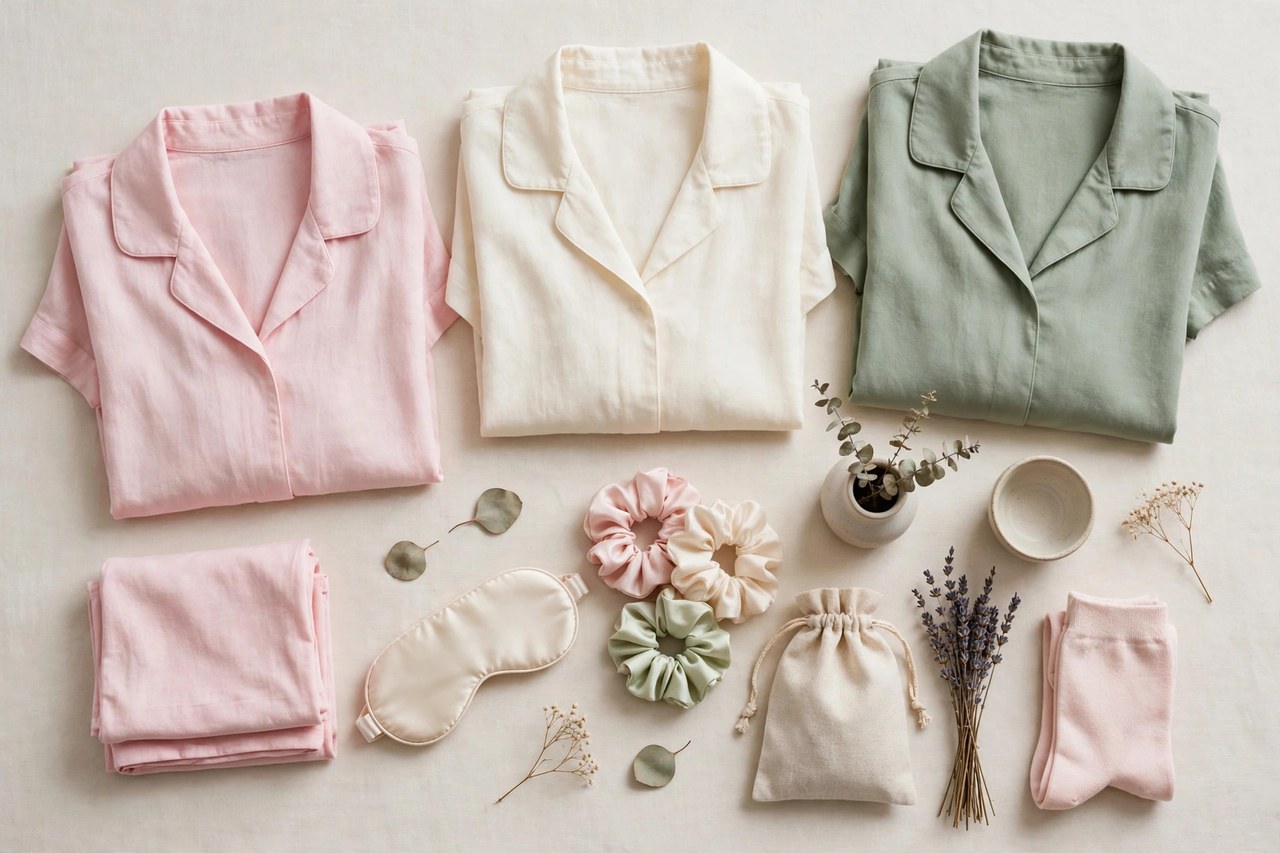
A sleep shirt — often called a nightshirt — is a loose, shirt-shaped one-piece garment for sleeping: essentially a long shirt with a collar or soft neckline, buttons or a plain placket, and a hem that provides coverage without any waistband at all. For petite women the standard nightshirt's problem is length. Cut for a taller torso, it falls to the knee or below, the sleeves pass the wrist, and the extra fabric twists around the body during the night. A petite sleep shirt shortens body and sleeve together.
In petite ranges the hem typically lands at mid-thigh to just above the knee on a woman 5'4" and under, the shoulder is narrower so the shirt does not slide off in sleep, and chest pockets and plackets are scaled and placed higher. This neutral, product-focused guide covers petite sleep shirt styles from classic button-fronts to knit pullovers, the fabrics that suit each season, the length and fit checks that matter, and care that keeps a nightly garment soft through hundreds of washes.
Styles: Button-Front, Pullover, Henley and Long-Sleeve Versions
The classic button-front sleep shirt borrows the pajama shirt's notched collar, piping and chest pocket and extends it to dress length. Buttons make it the practical choice for nursing, for recovery after shoulder or chest procedures, and for anyone who dislikes pulling garments over the head; in petite cuts the button spacing is closer, so the placket lies flat on a shorter torso with no long gap at the hem. A curved shirttail hem, slightly longer at the back, gives coverage when bending while keeping the front hem at the intended petite length.
Pullover and henley sleep shirts in knit fabrics trade the collar for a round, V or partial-placket neckline and feel closer to an oversized tee, cut for sleep rather than the gym. Long-sleeve versions in petite sizes end at the wrist rather than the knuckles — a detail that matters when washing hands or making tea. Short-sleeve and sleeveless sleep shirts suit summer. Across all styles, check the pocket: a scaled petite pocket sits on the chest, while a regular pocket on a shortened shirt can end up at the waist and pull the fabric sideways.
Fabrics: Jersey, Flannel, Woven Cotton and Knits
Cotton jersey is the most popular sleep shirt fabric: knitted, stretchy, breathable and easy to wash, with enough body to keep a shirt shape. Flannel sleep shirts are the winter standard, brushed cotton that traps warmth, usually in plaid — petite versions scale the plaid down, which looks right and reduces the shirt's weight. Woven cotton poplin and lawn make crisper, cooler button-front sleep shirts for summer, with a smooth surface that slides easily when turning in bed.
Modal and bamboo-derived knits feel silky and cool and drape in a narrower column, which suits petite frames well because there is less fabric to bunch. Satin and silk sleep shirts are the smooth, dressy end of the category; they glide against sheets but slide around the body more, so a petite cut with a narrower shoulder is especially valuable to keep the neckline in place.
Petite Length, Shoulders and Night-Time Fit
Choose length by where the hem lands standing in bare feet. For most petite women, mid-thigh to just above the knee gives coverage for sleeping, stairs and answering the door without the hem catching behind the knees when sitting or curling up. If a sleep shirt reaches mid-calf, it is a regular length regardless of its label.
Shoulders and sleeves decide whether the shirt stays put. The shoulder seam should sit near your shoulder point; dropped shoulders on a petite frame let the whole shirt rotate in sleep. Three-quarter sleeves are a useful petite compromise, ending below the elbow with no cuff to soak when washing. Check neckline depth on a shorter torso: a V or open collar that is modest on a taller woman can sit lower on a petite chest, so compare neckline drop measurements when listed.
Care and Buying Tips
Wash sleep shirts after two or three wears. Cotton jersey and woven cotton tolerate warm washing and low tumble drying; flannel softens with washing but pills less if turned inside out and kept away from high heat and from towels whose lint it attracts. Satin and silk sleep shirts need cool water, mild detergent and air drying. Mend a button the moment it loosens — on a button-front sleep shirt a missing middle button strains its neighbors and gapes at night. Replace a sleep shirt when jersey thins at the shoulders or elastic-free necklines stretch out of shape.
When buying, check the stated total length from shoulder to hem and compare it with a nightdress or long tee that ends where you like; that single number predicts fit better than the size letter. Petite sleep shirts are less common than regular ones, so when a fabric and length work, buying two in rotation is sensible and extends the life of both. Pair the guide with the petite sleep pants and sleepwear pages if you mix separates: a petite sleep shirt over petite capri sleep pants is a practical warm-weather combination in correct proportions.
Related Women's Guides
Looking for Women's Clothing Stores?
This guide helps you choose women's petite sleep shirts. To browse where to buy, visit our women's clothing store directory, where you can find retailers that carry them.