Women's Petite Pajamas Guide
Petite pajamas shorten everything sleepwear gets wrong on a small frame — pant legs that clear the floor, tops that end at the hip, and sleeves that stop at the wrist instead of the knuckles.
Shop Women's Petite Pajamas Now
Shop Women's Petite Pajamas on Amazon Shop Women's Petite Pajamas on eBayThe Amazon and eBay links on this page are affiliate links. If you make a purchase through them, Apparel Search may earn a commission.
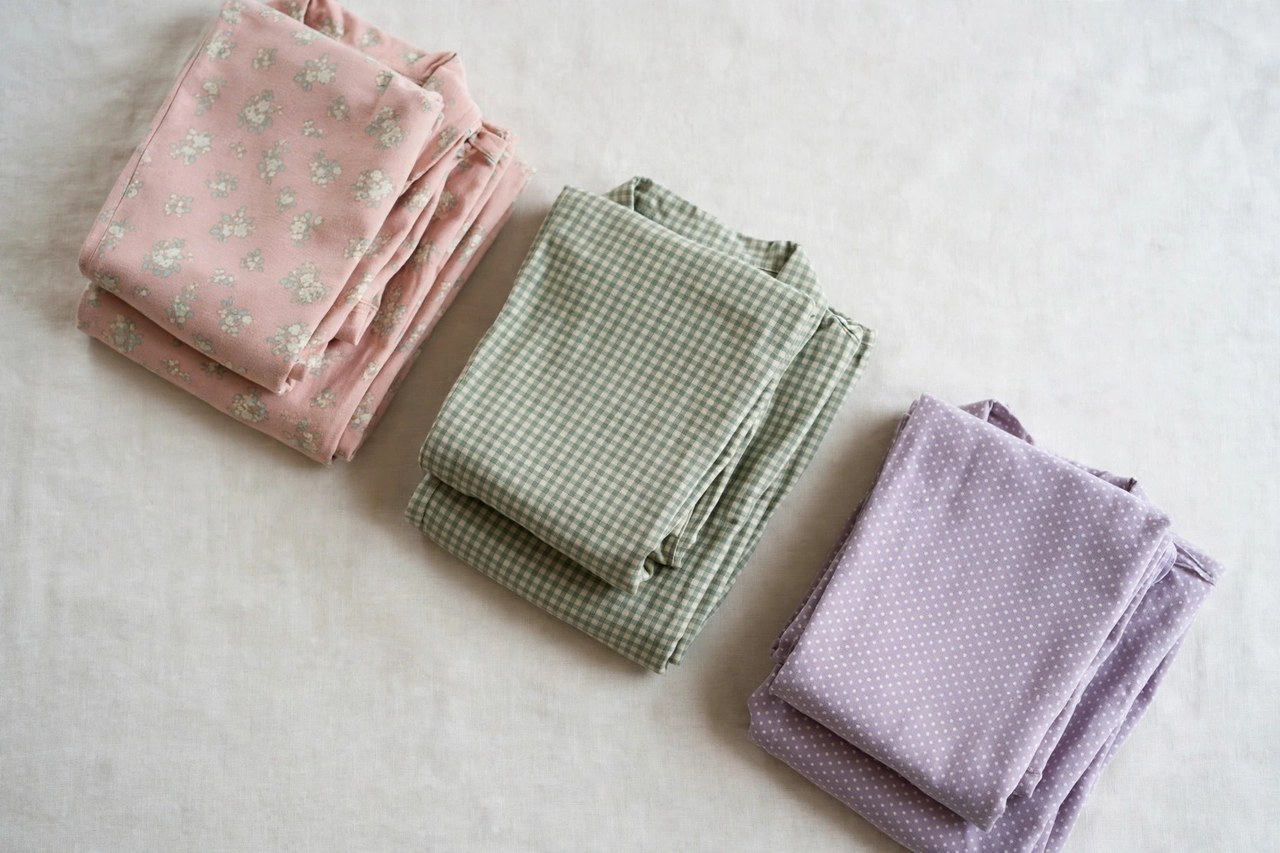
Pajamas are the classic two-piece sleep garment — a top and matching bottom — and petite pajamas are that set re-cut for women 5'4" and under. Regular pajama pants are the usual offender: with inseams around 30 inches they pool on the floor, twist in the night and become a genuine trip hazard on dark stairs. Petite pajama pants run roughly 26 to 28 inches, the rise is shortened, and the top is cut to end at the hip rather than the thigh.
Every other pajama detail scales with the pattern: the button placket shortens, the chest pocket sits on the chest, cuffs and piping are placed at the real wrist and ankle, and prints shrink so a plaid reads as a plaid rather than a blanket check. This guide covers the main set styles in petite cuts, the fabrics that govern sleep temperature, the sizing checks specific to a shorter frame, and care that keeps soft sets soft through hundreds of washes.
Set Styles in Petite Cuts
The classic button-front set — notched collar, piping, drawstring or elastic-waist pants — is the most covered and the most versatile, doubling as morning wear around the house. In petite versions its proportions finally agree: the collar sits at the neck, and the top's hem clears the hip. Knit pullover sets swap the woven shirt for a soft tee-style top with jogger or straight-leg bottoms; petite jogger cuffs grip a shorter ankle instead of sliding over the heel.
Short sets pair a tee, camisole or short-sleeve top with shorts for summer and warm sleepers, with petite shorts cut so the inseam covers without excess. Capri sets split the difference for transitional seasons, the cropped leg ending mid-calf as intended rather than at the ankle. Nightshirts take the button-front top and lengthen it into a one-piece; petite nightshirts end above the knee instead of below it. Choose first by coverage and temperature, then by how you sleep.
Fabrics and Sleep Temperature
Cotton jersey is the everyday standard: knitted, breathable, lightly stretchy and unfussy in the wash. Flannel, brushed woven cotton, traps warmth for winter and cold bedrooms, and its plaids are classically scaled down in petite lines. Modal and bamboo-derived knits feel cooler and smoother than cotton and drape closer, suiting warm sleepers and anyone who dislikes fabric bunching. Satin and silk sets glide against sheets, reducing the twisting that wakes light sleepers, at the price of gentler care.
Match the fabric to your bedroom honestly. A hot sleeper in flannel will wake at 3 a.m. regardless of fit, while a cold sleeper in a silk short set will layer blankets all night. Petite sizing does not change fabric physics, but it does change coverage: a petite short set covers less leg by design, so cold sleepers in petite sizes often do better with capri or full-length sets in lighter fabrics than with shorts in heavier ones.
Sizing and Fit for a Shorter Frame
Pajamas are sized for movement: you should be able to raise both arms, curl on your side and sit up in bed without the top pulling or the waistband rolling. In petite sets, verify the two measurements brands most often fudge — inseam and top length. If a listing says petite but gives a 30-inch inseam, it is a regular set in a smaller size. The drawstring-plus-elastic waist standard on petite pants adjusts through the night, and the shortened rise keeps that waistband at the waist instead of creeping upward.
If you are between sizes, size up; sleepwear is the category where extra room is a feature, and petite cuts already remove the excess length that makes sizing up sloppy in regular sets. Check flat or covered seams, tagless labels and smooth button edges, the small details that decide comfort at hour six of sleep. For recovery or nursing, petite button-front tops keep their buttons reachable and their length modest, one more case where the scaled pattern quietly does the right thing.
Care and Buying Tips
Wash pajamas after two or three wears. Cotton and flannel sets tolerate warm water and tumble drying, though cool washes preserve color and elastic; modal and satin want cool water and low heat or air drying, and silk needs mild detergent and no wringing. Turn printed sets inside out to protect both the print and its scaled pattern, and avoid heavy softeners on knits if you sleep warm, since coatings reduce breathability.
Start with two petite sets in the fabric that matches your sleep temperature, add one seasonal set — flannel for winter, a short set for summer — and replace when elastic fails or cuffs fray. Quality shows in flat piping, finished buttonholes and prints that match at the pocket. Because petite pajamas are stocked in smaller runs, buy a favorite set in duplicate when you find it: the right inseam in sleepwear is a small thing at midnight and a large thing at the top of the stairs.
Related Women's Guides
Looking for Women's Clothing Stores?
This guide helps you choose women's petite pajamas. To browse where to buy, visit our women's clothing store directory, where you can find retailers that carry them.