Women's Petite Sleep Pants Guide
Petite sleep pants shorten the inseam and rise so the hem clears the floor and the waistband sits comfortably, ending the nightly routine of rolling cuffs that unroll as you sleep.
Shop Women's Petite Sleep Pants Now
Shop Women's Petite Sleep Pants on Amazon Shop Women's Petite Sleep Pants on eBayThe Amazon and eBay links on this page are affiliate links. If you make a purchase through them, Apparel Search may earn a commission.
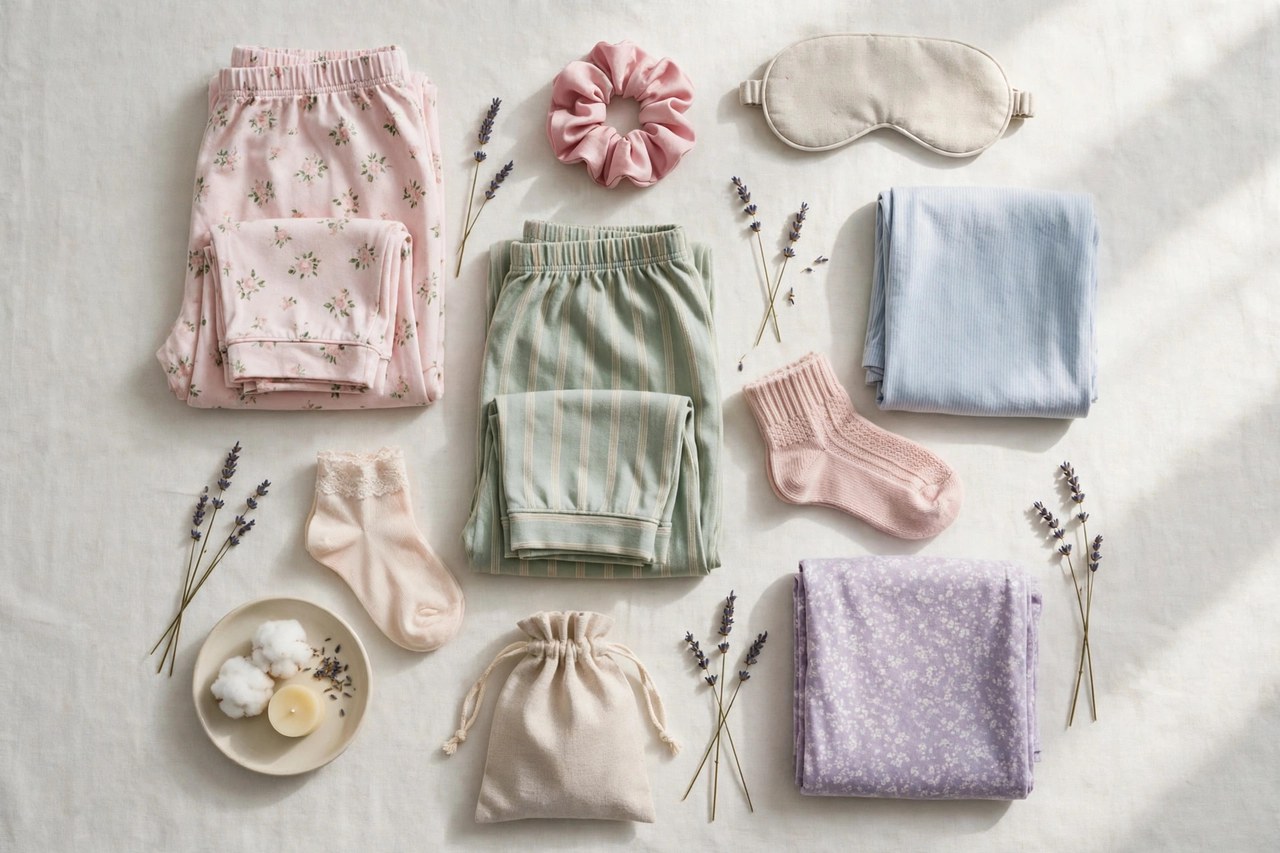
Sleep pants are the loose trousers worn for sleeping and lounging, sold on their own or as the bottom half of a pajama set. For petite women, regular sleep pants fail in a specific and slightly hazardous way: the inseam is several inches too long, so the hems pool around the feet, catch underfoot on stairs in the dark and twist around the ankles during the night. Rolling the cuffs helps at bedtime and unravels by morning. Petite sleep pants are cut with a shorter inseam and rise to end that cycle.
Petite sleep pants typically carry inseams around 26 to 28 inches for full length, against the 30 to 32 inches of regular ranges, with the rise shortened so the drawstring or elastic waist sits at the natural waist rather than needing to be folded over. Capri and cropped sleep lengths are scaled, too. This product-focused guide covers the main petite sleep pant styles, the fabrics that suit different sleep temperatures, the fit details that decide comfort at night, and simple care that keeps elastic and softness alive.
Styles: Full-Length, Jogger, Capri and Short Sleep Bottoms
The classic pajama pant is straight-legged, full-length and usually woven, with an elastic or drawstring waist; in petite length it should just clear the floor in bare feet, skimming the top of the foot rather than covering it. The jogger sleep pant in knit fabric has a cuffed ankle, which is naturally forgiving for petites — the cuff holds the length in place — but a true petite jogger also shortens the rise so the cuff sits at the ankle instead of bunching above it with excess fabric through the leg.
Capri sleep pants end at mid-calf and suit warm sleepers and summer; petite capris end higher on the calf than regular capris, which can drift toward an awkward low-calf length. Sleep shorts are the shortest option, covered here only to note the difference: they share the petite waist and rise but no inseam problem. Wider lounge-style sleep pants in fluid fabrics feel dressier for evenings at home; in petite cuts the leg width is slightly reduced so the volume does not tangle around shorter legs in bed.
Fabrics for Sleep Temperature
Cotton jersey knit is the year-round default: stretchy, breathable, absorbent and forgiving of frequent washing, and it does not slide around in bed the way satin can. Woven cotton and cotton flannel suit classic pajama pants; flannel's brushed surface traps warmth for winter and cold sleepers, while plain woven cotton and lawn-weight fabrics suit summer. Modal and bamboo-derived knits feel cooler and smoother than cotton and are a good choice for warm sleepers who still want a full-length leg for air-conditioned rooms.
Fleece and brushed knits are the deep-winter option, warm but bulky, so petite cuts in fleece are worth seeking to avoid a swamped feel. Whatever the fabric, avoid heavy embellishment, large buttons or thick external drawstring knots at the front if you sleep on your stomach. Flat or internal drawstrings, smooth covered elastic and tagless waistbands are the comfort details to look for.
Petite Fit: Inseam, Rise and Waistband Comfort
Fit sleep pants looser than day pants: you should be able to sit cross-legged, curl on your side and bend without the waistband rolling or the rise pulling. The petite advantage is in the rise: a shortened front and back rise means the crotch sits in the right place, so the legs do not twist and the waistband does not need folding, which also keeps a drawstring at the right height to actually work.
Waistbands decide long-term comfort. A combined elastic and drawstring waist adjusts best across the month and after evening meals. Elastic should be wide and soft rather than narrow and tight, and it should recover fully when stretched — tired elastic is the usual reason sleep pants get retired. Pockets, when present, should be shallow and on-seam so they do not bunch under a hip in bed. If you are between petite sizes, size up for sleep: extra ease costs nothing here, while a tight waistband costs sleep.
Care and Buying Tips
Sleep pants absorb perspiration and skin oils nightly, so wash them after two or three wears in cool or warm water. Cotton and jersey tolerate tumble drying on low, though elastic lasts longer if pants are dried on medium or low heat and removed promptly. Wash flannel inside out to preserve its brushed softness, and avoid fabric softener on moisture-absorbing knits if you sleep warm, because coatings reduce breathability. Replace sleep pants when the waist elastic fails, the inner thigh fabric thins, or the hem length has shrunk unevenly.
When buying, look for the petite inseam printed on the listing, not just a petite label, and measure a comfortable pair you own from crotch seam to hem for comparison. Buy sleep pants with the top in mind if you mix and match: a petite sleep pant pairs best with a petite sleep shirt or pajama top, whose shorter length keeps the whole set in proportion.
Related Women's Guides
Looking for Women's Clothing Stores?
This guide helps you choose women's petite sleep pants. To browse where to buy, visit our women's clothing store directory, where you can find retailers that carry them.