Women's Petite Sleepwear Guide
Petite sleepwear shortens every piece of the night-time wardrobe — pajama inseams, gown lengths, robe sleeves and torso proportions — for women 5'4" and under.
Shop Women's Petite Sleepwear Now
Shop Women's Petite Sleepwear on Amazon Shop Women's Petite Sleepwear on eBayThe Amazon and eBay links on this page are affiliate links. If you make a purchase through them, Apparel Search may earn a commission.
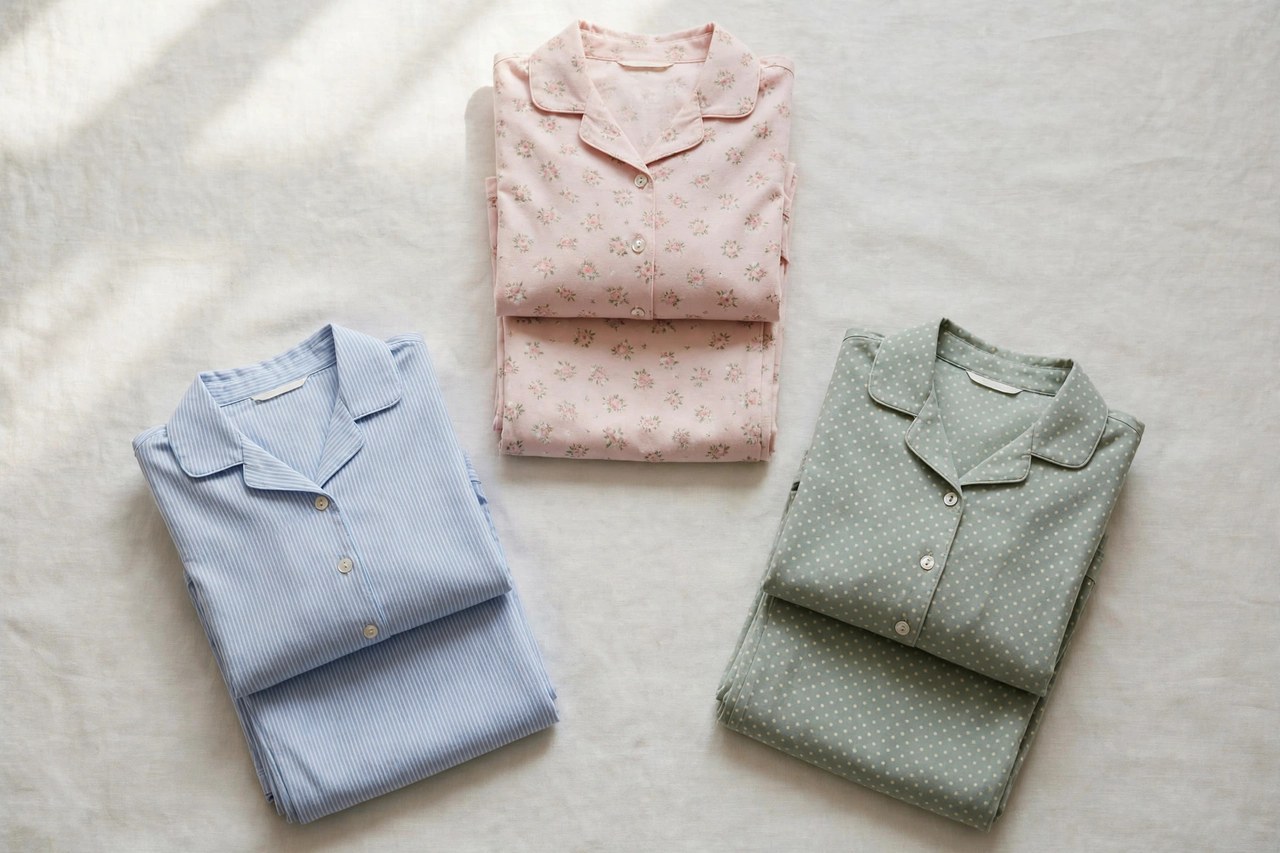
Sleepwear is the umbrella term for everything designed to be slept in: pajama sets, nightgowns, sleep shirts, night shorts, robes worn over them and the separates sold to mix among them. This guide is the overview for petite sleepwear; the dedicated pages on petite sleep pants and petite sleep shirts go deeper on those two pieces. The petite problem runs through the whole category in the same form: lengths designed for a taller body, arriving several inches too long on a woman who is 5'4" and under.
In practice that means pajama hems pooling on the floor, nightgowns reaching the calf when they were designed for the knee, robe sleeves covering the hands and robe belts tying at the hip instead of the waist. Petite sleepwear corrects each garment's key length — inseam, hem, sleeve and belt placement — while keeping the generous ease sleepwear needs. The sections below map the category, explain fabrics by sleep temperature, and give the length checks that let you buy any petite sleep piece with confidence.
The Petite Sleepwear Wardrobe: Sets, Gowns, Shirts and Robes
Pajama sets pair a button-front or pullover top with full-length, capri or short bottoms; in petite sets both pieces are shortened, so the top ends at the hip rather than the thigh and the pants clear the floor. Nightgowns are one-piece and waistband-free; petite gowns place any empire or waist shaping higher and end the hem at the intended point — knee gowns at the knee, midi gowns at mid-calf — rather than drifting a full category longer. Chemise-style gowns also scale strap length and bodice depth for a shorter torso.
Sleep shirts, covered in their own guide, are the shirt-shaped one-piece option. Robes belong in a sleepwear wardrobe even though they are not slept in: petite robes shorten the sleeve to the wrist, raise the belt loops to the natural waist and cut the length so a knee robe does not become a calf robe. Separates — sleep pants, capris, shorts, camisoles and tees sold individually — let petite sleepers build sets across seasons; buying both pieces in petite sizing keeps the proportions matched, which mixed regular-and-petite sets rarely achieve.
Fabrics by Temperature: Cotton, Modal, Flannel and Satin
Choose petite sleepwear fabric by bedroom temperature first and looks second. Cotton jersey and woven cotton cover the widest range: breathable, absorbent and easy to launder, suitable most of the year. Flannel adds brushed warmth for winter, in pajamas, gowns and sleep shirts; petite flannel also scales plaid patterns down. Modal and bamboo-derived knits feel cooler and smoother than cotton and suit warm sleepers, air-conditioned summers and anyone who finds cotton clingy; they drape close, so petite cuts in modal look especially neat.
Satin, in polyester or silk, slides against bedding and feels cool at first contact; it is the fabric of dressier gowns and pajama sets, though it shows water spots and needs gentler care. Silk regulates temperature best of all and is covered for sleepwear specifically in the petite silk sleepwear guide. Fleece is for genuinely cold rooms. Layering beats any single heavy garment: a light petite pajama set plus a petite robe, whose belt actually sits at your waist, adjusts through the evening and the seasons better than one thick set.
Petite Lengths and Fit Checks for Every Piece
Keep four length checks for petite sleepwear. Pants: full-length inseams around 26 to 28 inches should clear the floor in bare feet. Gowns and sleep shirts: the hem should land at the labeled point — mid-thigh, knee or mid-calf — on your legs, not a category lower. Sleeves: long sleeves end at the wrist bone; three-quarter sleeves, common in petite gowns, end below the elbow and stay out of water and breakfast. Robes: belt loops at the natural waist, sleeves at the wrist, and a hem that does not trail on stairs.
Fit for sleep is ease with placement. Tops should allow a full breath and raised arms; gown bodices should not slide from narrower petite shoulders, so look for scaled strap lengths and higher backs; waistbands should be soft elastic, ideally with a flat drawstring, and should sit at the petite waist without folding. Prints and lace are scaled in true petite ranges — a large motif or deep lace band designed for a long gown can cover most of a petite bodice.
Care and Buying Tips
Sleepwear is washed more than almost any other clothing, so care habits decide its lifespan. Wash sets together in cool or warm water to keep colors matched, turn knits inside out, and keep dryer heat low to protect elastic waistbands and the shorter petite hems from uneven shrinkage. Satin and silk pieces need cool water and air drying, ideally in a mesh bag in the machine or by hand.
Buy petite sleepwear as a small system rather than single pieces: one midweight pajama set, one lighter short or capri set, one gown or sleep shirt, and a robe, all in petite lengths, cover the year and mix across seasons. Check stated garment lengths — total gown length and pant inseam — against your own measurements before ordering, because petite labeling is inconsistent between brands.
Related Women's Guides
More to Explore on Apparel Search
Looking for Women's Clothing Stores?
This guide helps you choose women's petite sleepwear. To browse where to buy, visit our women's clothing store directory, where you can find retailers that carry them.