Women's Petite Robes Guide
A petite robe solves the bathrobe problem of a shorter frame — a wrap that ends mid-calf instead of at the floor, sleeves at the wrist, and a belt that ties at the waist rather than the hips.
Shop Women's Petite Robes Now
Shop Women's Petite Robes on Amazon Shop Women's Petite Robes on eBayThe Amazon and eBay links on this page are affiliate links. If you make a purchase through them, Apparel Search may earn a commission.
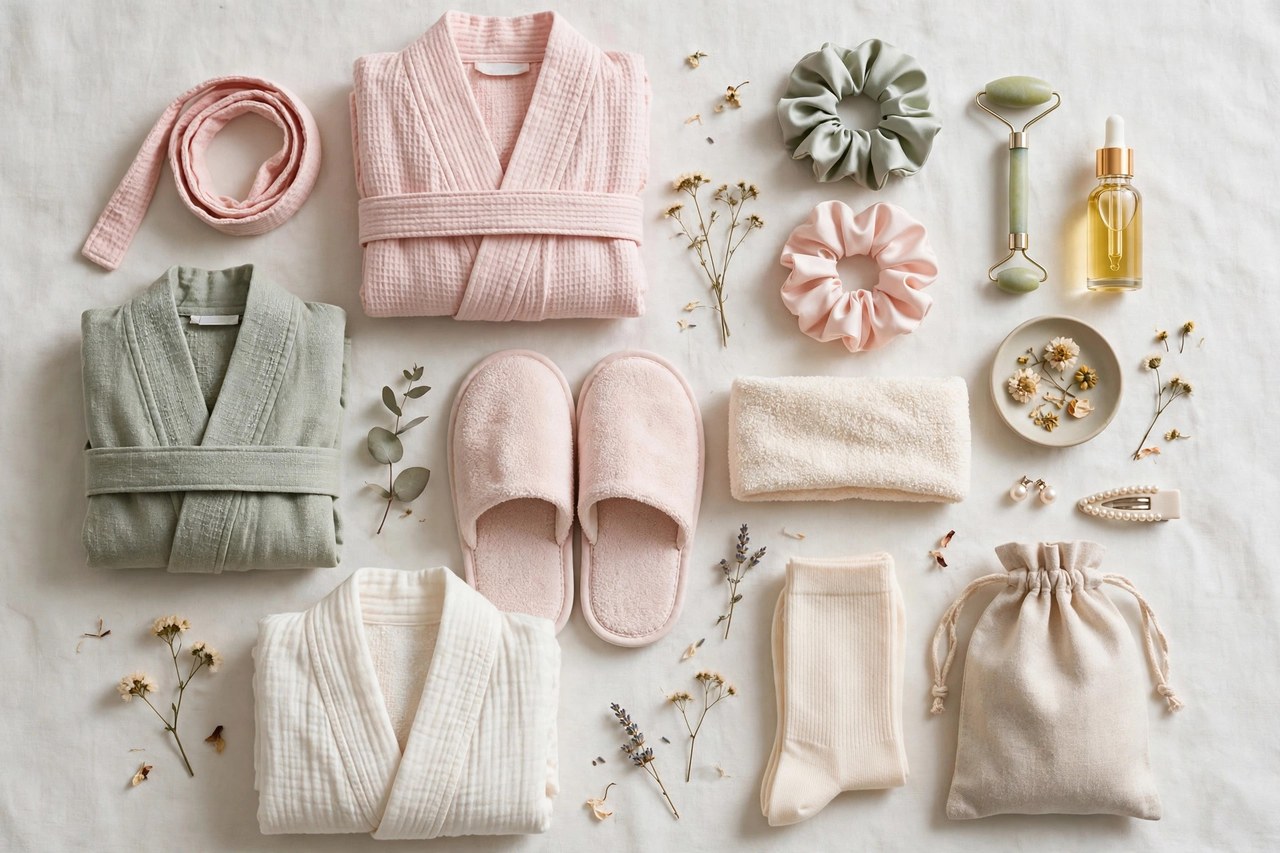
A robe is a loose wrap garment worn over pajamas or nightwear, for warmth and coverage between bed, bath and breakfast. It is distinct from both pajamas, which are the sleep garment itself, and loungewear, which is structured for daytime at home: the robe is the layer over the layer. For women 5'4" and under, regular robes are a daily annoyance — hems that sweep the floor, sleeves that must be pushed up to wash hands, and belts that tie at the hip because the waist loops sit too low.
Petite robes re-cut the garment to the frame: lengths that end at mid-calf or the knee as designed, sleeves ending at the wrist, belt loops and pockets placed at a shorter waist and hip, and wrap overlap calibrated so the robe actually closes securely. This guide covers the main robe styles in petite terms, the fabrics from bath terry to satin, the fit checks that matter in a wrap garment, and care for a piece that works hard every single morning.
Robe Styles: Wrap, Shawl Collar, Kimono and Zip-Front
The wrap robe with a shawl collar is the classic bathrobe: a soft collar that folds back, a belted waist, and patch pockets, in lengths from knee to full. In petite grading the shawl collar is scaled so it warms the neck without burying the chin, and the belt loops sit at the natural waist so the wrap closes where it should. The kimono robe has a flatter collar band and wider sleeves, a lighter, more elegant form usually in satin, cotton or lace-trimmed fabrics, with petite versions shortening those wide sleeves to a manageable three-quarter or wrist length.
The zip-front robe trades the belt for a full zipper, which many women prefer for security and for morning routines with children, pets and coffee; petite zip robes place the pockets within reach and end the zip at the right point on a shorter torso. Hooded robes add post-shower warmth, and the petite hood is scaled to cover hair without falling over the face. Shorter knee-length and short robes suit warm climates and small spaces, and in petite sizes their hems land at the knee rather than mid-thigh.
Fabrics: Terry, Fleece, Waffle and Satin
Cotton terry cloth is the true bathrobe fabric: looped pile that absorbs water straight from the shower and warms as it dries you. It is heavy, and petite cuts meaningfully reduce that weight for a smaller frame. Waffle weave cotton gives a lighter, spa-style robe that dries fast and packs small. Fleece and plush microfiber are the warmth specialists — soft, light for their insulation, and quick to wash — while cotton velour splits the difference, plush outside and absorbent inside.
At the dressier end, satin and silk robes function as dressing robes over nightgowns rather than as after-bath absorbency, and cotton lawn and seersucker make cool summer robes. Match the fabric to the job in your routine: if the robe's main work is the shower-to-dressed interval, terry or waffle earns its place; if it is evening and morning wear over pajamas, fleece, velour or satin serves better. Petite shoppers should also check fabric bulk at the belt: very thick terry in a scaled cut still ties cleanly, while a regular robe's bulk bunches at a short waist.
Petite Fit: Length, Belt Placement and Overlap
Measure robe length the way you live in it. A petite full-length robe should end at mid-calf, safely clear of stairs and heels; a regular robe's ankle or floor length on a petite wearer is a trip hazard in the garment designed for the least-alert hour of the day. Knee-length petite robes end at the knee. Sleeve length should reach the wrist with arms down and stay clear of water and stove tops when you reach — the push-up-the-sleeves habit is the signature of a regular robe on a petite arm.
The wrap itself must be tested: cross the fronts, tie the belt at the loops, sit, bend and reach. A petite robe provides enough overlap that the wrap stays closed through movement, with the inner tie, where fitted, reachable and correctly placed. Pockets should sit at the hip where your hands fall, not at mid-thigh. If a regular robe tempts you on price, know that hemming fixes only the hem; the belt height, pocket placement, sleeve and overlap remain wrong, which is why the petite version of this simple garment is worth seeking out.
Care and Buying Tips
Robes absorb water, skin oils and lotion daily, so wash them regularly: terry and fleece tolerate warm washing, and terry should be washed without fabric softener, which coats the loops and destroys the absorbency that is its whole purpose. A cup of white vinegar in an occasional wash strips residue and restores terry. Satin and silk robes wash cool and gentle, or by hand, and air dry. Check belt loops and inner ties when laundering, since they take the garment's strain and are the usual first repairs.
Buy the robe for your dominant routine and climate: one excellent petite terry or fleece robe in the right length outperforms a closet of compromises. Prioritize belt loops at your waist, sleeves you do not have to push up, and pockets that hold a phone. Because petite robes come in smaller production runs, replace a beloved one proactively when the fabric thins at the belt line. The robe is the first garment of the day; in the correct proportions it starts the morning feeling made for you, because it was.
Related Women's Guides
Looking for Women's Clothing Stores?
This guide helps you choose women's petite robes. To browse where to buy, visit our women's clothing store directory, where you can find retailers that carry them.