Women's Robes Guide
A robe is a loose, belted garment for home wear — this product guide covers fabrics, weights, lengths and closures for choosing one that suits its job.
Shop Women's Robes Now
Shop Women's Robes on Amazon Shop Women's Robes on eBayThe Amazon and eBay links on this page are affiliate links. If you make a purchase through them, Apparel Search may earn a commission.
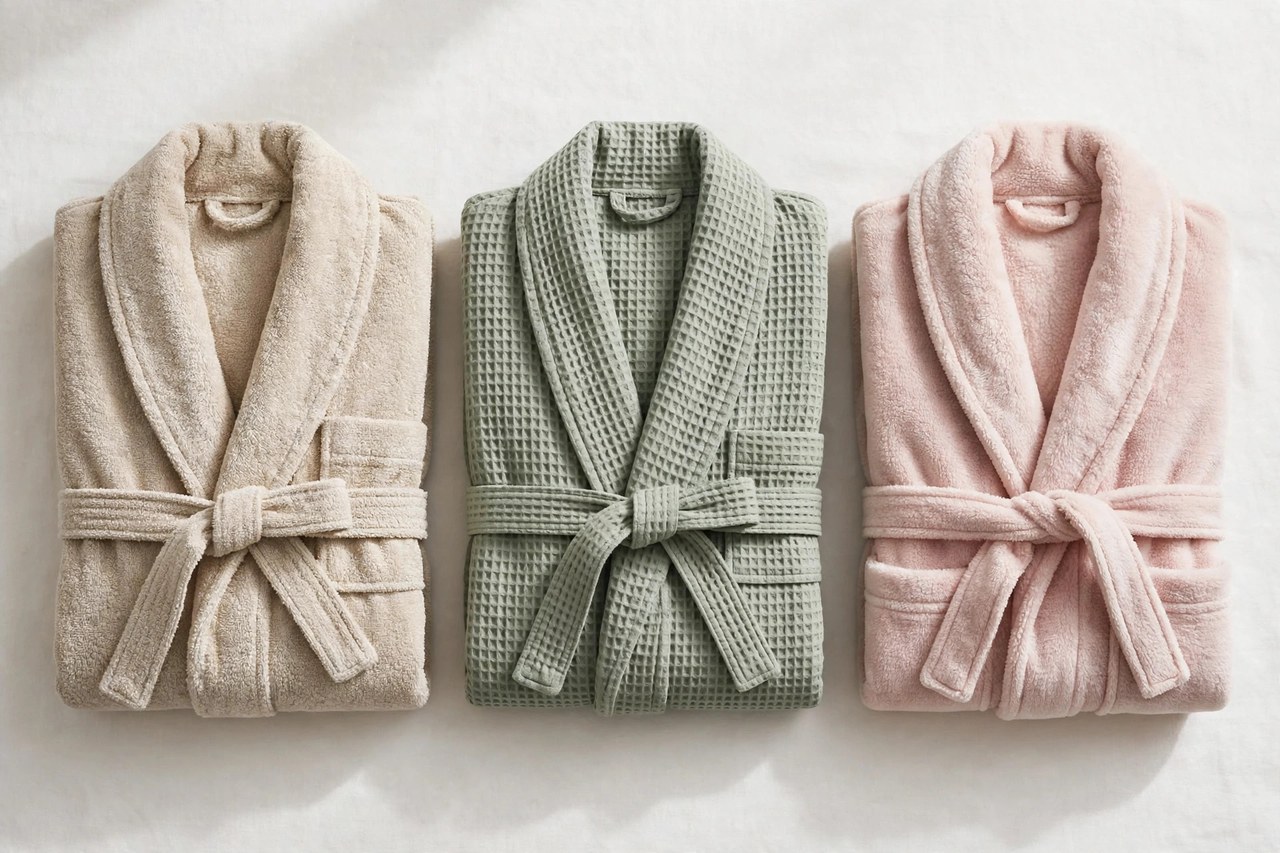
A robe is a loose outer garment worn at home, typically belted at the waist, put on after bathing, over sleepwear, or for warmth and coverage around the house. This is a strictly product-focused guide to choosing one: the fabrics robes are made from and the job each fabric does, the lengths and weights on offer, how belts, pockets and closures differ, and how to size and launder a garment that, bought well, is used daily for years. The product is the subject throughout.
Robes divide first by purpose. A bath robe is a towel you can wear, meant to absorb water and warm you after a shower or swim. A lounge or dressing robe is a layer over sleepwear, meant for comfort and coverage rather than absorbency. Many products try to serve both purposes and manage adequately, but knowing which job matters more to you is the decision that makes every later choice — fabric, weight, length — fall into place quickly.
Fabrics: Terry, Waffle, Fleece and More
Cotton terry cloth is the classic bath robe fabric: looped pile on one or both sides absorbs water like the towel it resembles, in weights from light summer terry to heavy hotel grades. Waffle weave cotton gives a lighter, quicker-drying robe with a textured surface, popular for spa-style products and warm climates. Velour cuts the terry loops on the outer face for a soft, matte finish while keeping absorbency inside, and pure cotton robes in any weave soften with washing and outlast most synthetics.
Synthetic and blended options serve the lounge side. Microfiber fleece and plush robes are the warmest and lightest for their bulk, ideal as winter layers, but they absorb little water and belong after you are already dry. Satin and silky woven robes are lightweight cover layers that pack flat and wash easily, chosen for travel and warm weather. Jersey knit robes in cotton or modal blends feel like an oversized t-shirt, flexible and comfortable year-round. Match the fabric to the purpose you named first, and the category becomes simple.
Lengths, Weights and Design Details
Robes come in short (above the knee), mid-length (knee to calf) and full or ankle lengths, and in weights that matter more than the labels suggest. A heavy full-length terry robe is a winter garment and a commitment in a small bathroom; a short waffle robe is a summer and travel product. Shawl collars add warmth and absorbency around the neck, hooded robes extend the drying job to hair, and kimono-style collars lie flatter and pack smaller. Turn-back cuffs adjust sleeve length, which matters when sleeves meet water at a sink.
Details separate a daily-use product from a drawer occupant. Look for a belt that is sewn at the back or threaded through attached loops so it cannot be lost in the wash, two generous patch pockets positioned where hands actually fall, and inside ties that keep the robe closed securely when the belt loosens. Hanging loops inside the collar preserve shape on a hook. Flat, well-finished seams inside matter because a robe is worn against skin and sleepwear for long stretches, and a scratchy seam will be noticed every time.
Sizing and Buying Sensibly
Robe sizing is intentionally generous, often sold in one size or in combined sizes like S/M and L/XL, because the garment is meant to wrap and overlap. Use your usual size as the anchor, then check two measurements where they are listed: overall length, if you have a strong preference, and sleeve length, which varies more than shoppers expect. If you are between combined sizes and want a bath robe to wrap fully after a shower, size up; for a light lounge layer worn open over sleepwear, your usual size is generally right.
Buy for the laundry you will actually do. Terry and waffle cotton robes tolerate frequent hot washing; fleece robes wash easily but should avoid fabric softener, which reduces their softness over time and any absorbency they have; satin-style robes prefer gentle cycles. A robe in a mid-tone color hides the gradual fading that white hotel-style robes show and that very dark robes show as lint. Judged on fabric honesty and washability, the right robe is easy to spot.
Laundering and Storage
Wash a new robe before first use to remove finishing treatments and loose lint — terry especially sheds in its first several washes, so launder it separately or with towels initially. Wash robes with similar items, avoiding zippers and hooks that snag loops; pulled terry loops can be snipped flush rather than pulled, which prevents runs. Tumble drying keeps terry and fleece lofty, while woven satin-style and waffle robes keep their finish better dried on a line or low heat, per the label.
Store robes hanging on a wide hook or hanger rather than folded in a drawer if they are in daily use, so they air fully between wearings; a robe put away even slightly damp will smell of it by the next use. Replace a robe when its absorbency is gone, its belt loops tear, or its pile has worn thin at the collar and cuffs — the high-contact points that age first.
Related Women's Guides
Photos

More to Explore on Apparel Search
Looking for Women's Clothing Stores?
This guide helps you choose women's robes. To browse where to buy, visit our women's clothing store directory, where you can find retailers that carry them.