Women's Cotton Robes Guide
The umbrella guide to cotton robes — absorbent terry, crisp waffle weave, light lawn and kimono styles, and choosing by season and use.
Shop Women's Cotton Robes Now
Shop Women's Cotton Robes on Amazon Shop Women's Cotton Robes on eBayThe Amazon and eBay links on this page are affiliate links. If you make a purchase through them, Apparel Search may earn a commission.
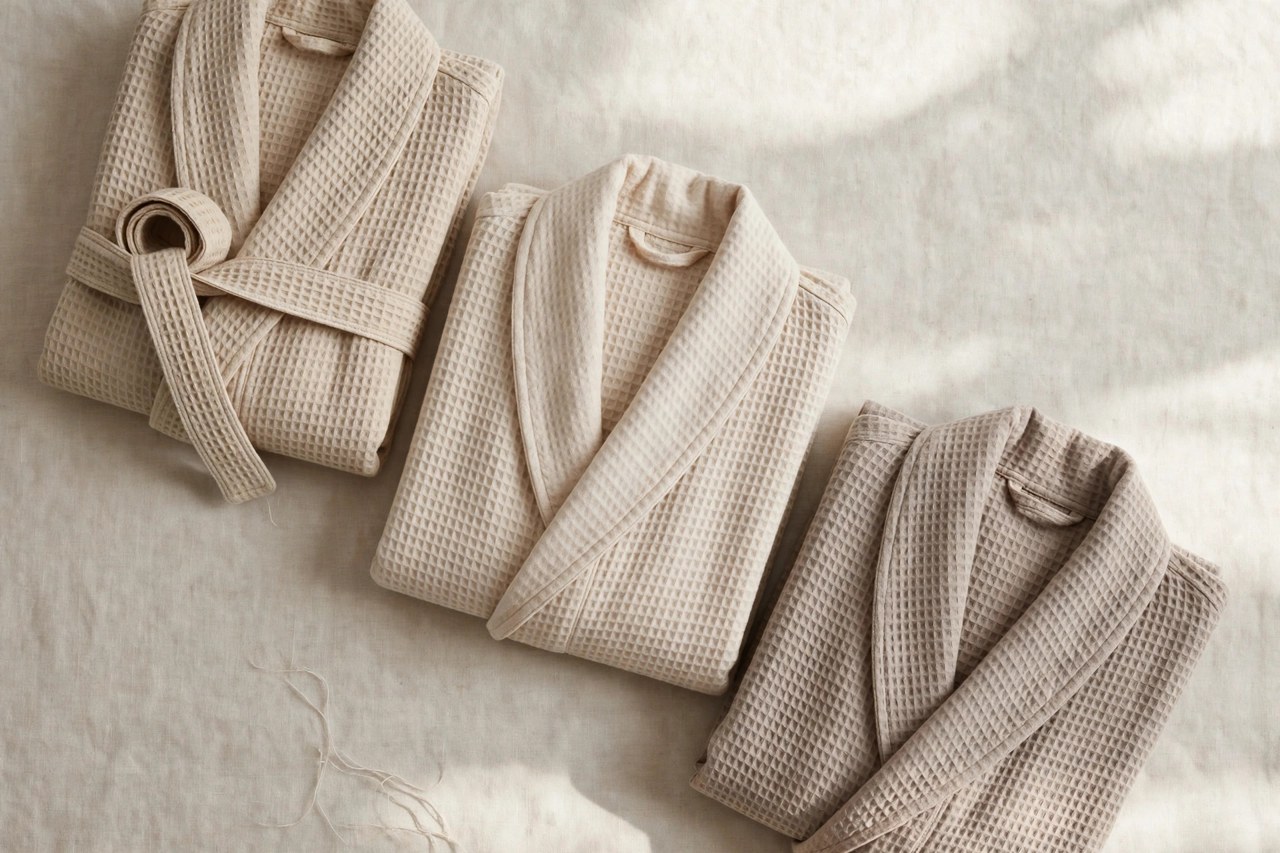
A cotton robe is the most versatile layer in the home wardrobe: thrown on after a bath, over pajamas on a cold morning, or over a nightdress while the coffee brews. This umbrella guide compares the robe fabrics and styles side by side — looped terry for absorbency, waffle weave for light structure, fine lawn and seersucker for summer, and jersey for softness — because the right choice depends entirely on the job. A bath robe must drink water from skin and survive hot washing; a lounge robe must add warmth or modesty without weight; a summer robe must do both jobs in miniature. The deep dive on looped terry lives in the Terry Robes guide. Here the work is comparison: weights, closures, lengths, and care, so the robe you buy matches the mornings you actually have.
The Robe Fabrics at a Glance
Terry cloth, woven with uncut loops on one or both faces, is the absorbent specialist and the classic bath robe fabric; it is covered fully in its own guide. Waffle weave, with its recessed square pattern, is lighter than terry, dries faster, packs smaller, and gives a spa-style robe that still absorbs respectably while feeling structured rather than plush. Cotton jersey robes are knitted, soft, and fluid, behaving like a long cardigan for the bedroom. Lawn, voile, and seersucker robes are the summer woven specialists: lawn for a fine, cool cover over nightwear, seersucker for texture that holds cloth off warm skin. Flannel robes serve deep winter in cold houses. Most households need one warm, absorbent robe and one light one; the fabrics above are how you choose both deliberately.
Kimono, Shawl Collar, and Wrap Styles
Robe styles divide by how they close and collar. Kimono-style robes have straight, wide sleeves, a flat front that wraps and ties, and no collar; they pack flat, suit warm weather, and are the usual cut for lawn and seersucker summer robes. Shawl-collar robes fold a continuous collar down the front, adding neck warmth and the classic bath robe silhouette, most often in terry and waffle. Hooded robes extend the bath idea to wet hair and cold bathrooms. Wrap robes with an attached belt are the secure standard; a belt that is sewn at the back center cannot slide off its loops and get lost in the wash, a small feature worth real money. Inner ties, often overlooked, keep a wrap robe closed discreetly and are a mark of thoughtful making at any price.
Weights and Lengths by Season
Manufacturers describe robe weight in the same GSM terms as toweling, and the scale is a useful guide. Light summer robes in lawn or fine waffle sit at the bottom of the range and feel like a shirt layer. Midweight waffle and single-face terry cover most heated homes year-round and the majority of bath use. Heavy double-faced terry, sometimes sold as spa or hotel weight, is a winter and cold-bathroom luxury that also takes longest to wash and dry. Length follows warmth: knee-length robes feel light and are safest on stairs, mid-calf is the versatile standard, and ankle-length robes maximize warmth and coverage at the cost of fabric trailing near the floor. Sleeve length matters practically too: three-quarter sleeves stay out of washing-up water and breakfast preparation, which is why many everyday robes choose them.
Fit: Shoulders, Belts, and Sizing Sense
A robe is sized by the shoulder and the wrap, not the waist. It should close with a generous overlap at the front without the belt being cinched, because that overlap is your coverage when you sit, bend, and reach. Shoulder seams that sit near the natural shoulder keep the robe balanced; dropped shoulders are fine in soft jersey but make terry feel heavier than it is. Check the belt height: it should sit near the natural waist, since a belt riding high or sagging low changes how the whole robe hangs. Most cotton robes are sold in dual sizes, and the forgiving cut makes them reliably giftable. If you plan to wear the robe over flannel pajamas in winter, allow the extra bulk when choosing; over a summer nightdress, the same robe will simply wrap a little further, which does it no harm at all.
Care: Washing Robes and Toweling Together
Cotton robes wash with the towel logic of their fabric. Terry and waffle robes tolerate warm washing and benefit from it after bath use; skip fabric softener, which coats loops and waffle cells and steadily reduces absorbency, and use vinegar in the rinse occasionally if build-up has already happened. Lawn and seersucker robes wash cool and gentle and line dry in minutes. Jersey robes prefer low heat to protect their shape at the shoulder. All cotton robes dry more slowly than their size suggests when they are terry, so give heavy robes a full drying cycle or line time; a robe put away damp will smell musty within a day. Wash a new robe before first use to clear lint and loose dye, and expect terry to shed fluff for the first few washes. A sound cotton robe, so kept, lasts for many years.
Looking for Women's Clothing Stores?
This guide helps you choose women's cotton robes by fabric, style and season. To browse where to buy, visit our women's clothing store directory, where you can find retailers that carry them.