Women's Cotton Sleepwear Guide
One fiber, four very different cloths — comparing the cotton fabrics used across sleepwear, season by season and weight by weight.
Shop Women's Cotton Sleepwear Now
Shop Women's Cotton Sleepwear on Amazon Shop Women's Cotton Sleepwear on eBayThe Amazon and eBay links on this page are affiliate links. If you make a purchase through them, Apparel Search may earn a commission.

Cotton dominates sleepwear for a straightforward reason: it handles the conditions of sleep well. Skin warms, cools, and perspires lightly through the night, and cotton absorbs that moisture, feels familiar against skin, and washes without ceremony week after week. But cotton sleepwear is not one fabric. The category spans brushed flannel pajama sets, soft jersey nightdresses, fine lawn gowns, and puckered seersucker summer sets, and those cloths differ as much from each other as any of them differs from silk. This umbrella guide compares the main cotton sleepwear fabrics on warmth, breathability, weight, and durability, and explains how sets, separates, and one-piece styles use them, so the rest of the sleepwear guides in this section — pants, pajamas, gowns, and robes — can be read with the cloth already understood.
The Four Core Sleepwear Cottons
Flannel is the warm woven option, brushed to raise an insulating nap, and it anchors winter sleepwear from pajama sets to long nightgowns. Jersey is the knit option, soft and gently stretchy, used for t-shirt-style tops, nightdresses, and relaxed sets that move freely with the sleeper. Lawn is the fine woven option, a light, smooth plain weave with a cool hand, traditional for summer nightdresses and gowns where minimal weight matters most. Seersucker is the engineered-for-heat option, its woven pucker holding cloth off the skin so air circulates and moisture evaporates. Between them sits poplin, the smooth shirting weave used in classic pajama sets for warm sleepers. Most wardrobes need only two families — one warm, one cool.
Seasonal Weights and Bedroom Temperature
Sleepwear warmth is governed more by fabric weight and construction than by fiber name alone. A heavy double-brushed flannel set can be several times warmer in wear than a lawn nightdress, even though both labels read one hundred percent cotton. As a working rule, choose lawn, voile, and seersucker for warm rooms and summer, midweight jersey and poplin for heated homes and the shoulder seasons, and flannel for cold bedrooms, winter, and anyone who reliably feels chilly at night. Layering extends each fabric's range: a jersey set under a cotton robe handles a wider temperature swing than any single garment, and separates let warm sleepers pair a light top with lighter or heavier bottoms as needed. Buy for the room you actually sleep in, with heating and bedding counted, rather than for an idealized season.
Sets, Separates, Nightdresses, and Gowns
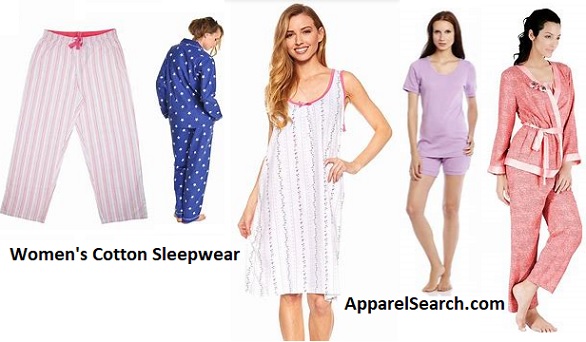
Classic pajama sets pair a button-front top with matching pants or shorts in a single fabric, most traditionally poplin or flannel, and give the most coordinated, giftable form of cotton sleepwear. Tee-and-pant sets in jersey trade that tailored look for knit softness and are the easiest style to wash, pack, and live in daily. Separates — sleep pants, sleep shirts, and tops bought individually — suit anyone whose top and bottom sizes differ or who mixes weights across seasons. Nightdresses and nightgowns remove the waistband entirely, which some sleepers find more comfortable, and they showcase lawn and jersey at their best, falling from shoulder or yoke in one uninterrupted length. Across all four forms, construction quality shows in the same places: flat, smooth seams, securely finished hems, buttons that stay attached through weekly washing, and waistbands that remain elastic after a year of dryer cycles.
Breathability, Moisture, and Skin Comfort
Cotton's breathability in sleepwear comes from two properties working together: the fiber absorbs moisture vapor readily, and woven or knitted cotton structures let air pass in a way most smooth synthetics do not. That combination keeps the microclimate next to the skin steadier through the night, which is a large part of why cotton sleepwear feels comfortable even though the fiber holds moisture longer than technical fabrics once fully wet. For light nighttime perspiration, absorption is an advantage; the cloth takes up moisture and releases it gradually rather than leaving it on the skin. Smooth weaves such as lawn and poplin feel coolest on contact, brushed flannel feels warmest because its nap holds a layer of still air, and jersey sits between, its knit loops giving both softness and modest insulation. Cotton is also a familiar, low-static natural fiber that rinses clean without special detergents.
Washing, Durability, and Building a Rotation
Cotton sleepwear is washed more often than almost any other clothing, so durability under laundering is a core quality, not a footnote. Sound cotton flannel, jersey, and poplin all tolerate weekly machine washing for years; the usual failure points are elastic waistbands degraded by hot drying, flannel nap flattened by fabric softener and high heat, and jersey hems twisting when a knit is cut off-grain. Wash in cool or warm water, dry on low or line dry, keep softener away from flannel, and fold rather than hang knit pieces so shoulders and hems keep their shape. Shrinkage in sleepwear is mostly a length issue and is best handled by choosing pre-shrunk or garment-washed pieces, or allowing a little extra length at purchase. A rotation of two or three sets, split between a warm fabric and a cool one, covers the year, spreads wash wear across garments, and means a clean set is always ready — a modest system that works better than a drawer of near-duplicates in a single cloth.
More to Explore on Apparel Search
Photos
Looking for Women's Clothing Stores?
This guide helps you choose women's cotton sleepwear by fabric, season and style. To browse where to buy, visit our women's clothing store directory, where you can find retailers that carry them.