Women's Sleepwear Guide
Sleepwear is the umbrella category for clothing designed to be worn while sleeping — pajama sets, nightgowns, sleep shirts, sleep pants, chemises and robes.
Shop Women's Sleepwear Now
Shop Women's Sleepwear on Amazon Shop Women's Sleepwear on eBayThe Amazon and eBay links on this page are affiliate links. If you make a purchase through them, Apparel Search may earn a commission.
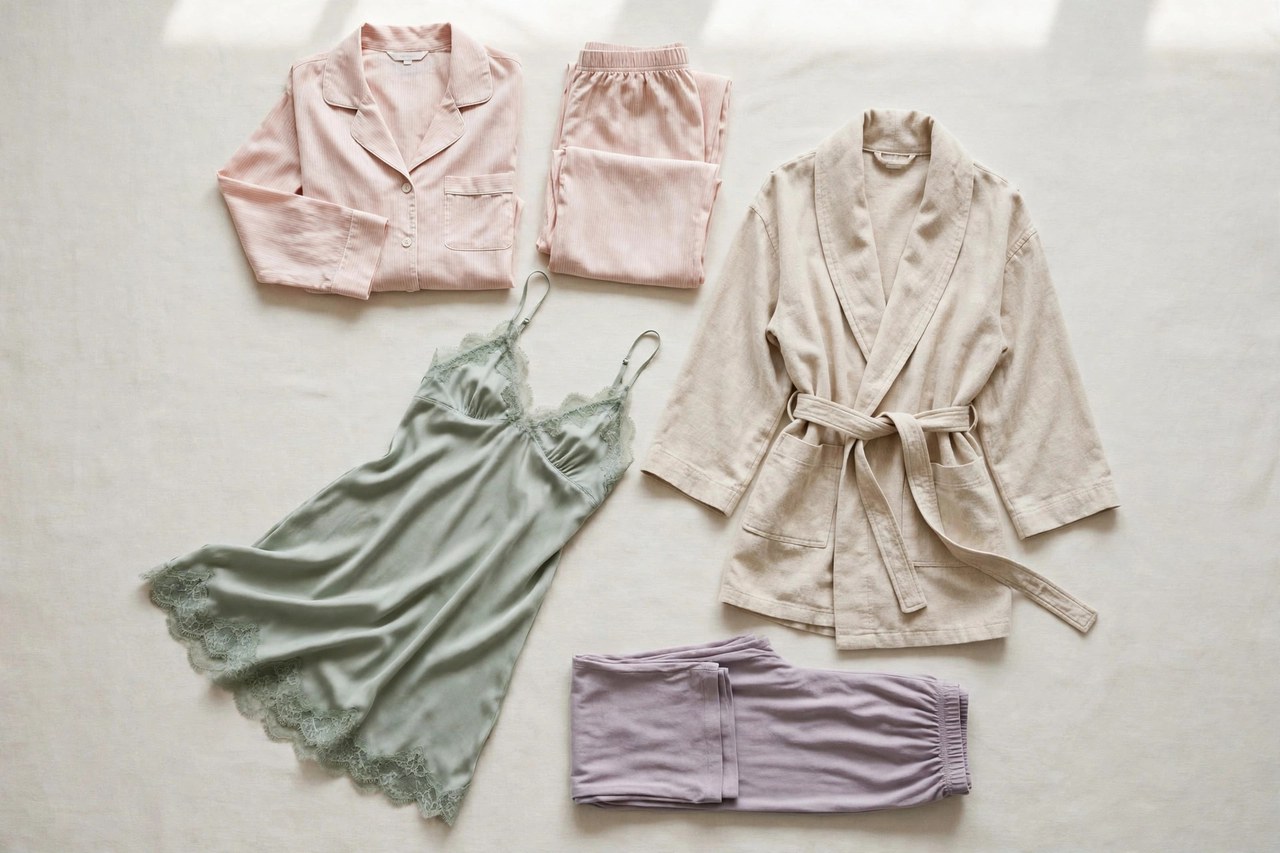
Sleepwear — also referenced as nightwear, nightclothes or nightdress — is clothing designed to be worn while sleeping. The category is an umbrella: it includes pajama tops and sets, lounge pants, nightgowns, babydolls, sleep shirts, robes and more. The style worn varies with the seasons, with warmer styles worn in colder conditions and lighter ones in warm weather, and the market offers the category in a wide variety of styles, fabrics, colors and sizes, from whimsical prints to solids, stripes and plaids.
This page is the map of that whole territory: how the category divides into its garment families, how fabrics sort by warmth, and how to assemble a small sleep wardrobe that covers the year. Two of its members are common enough to have their own guides — sleep pants and sleep shirts — and this page's job is to show where they sit among pajama sets, nightgowns and robes, so you can shop the category rather than stumble through it.
The Garment Families
Pajama sets are the matched form: a top and bottom sold together, in button-front woven styles, knit tee-and-pant styles, and tee-and-short styles for summer. Nightgowns are the one-piece form, from long flannel gowns to short chemise-style nightdresses, needing nothing with them. Sleep shirts and nightshirts are the long-top form, covered on their own page. Sleep pants and sleep shorts are the separate bottoms, bought to pair with tops you own. Robes are the layer over all of it — not slept in, strictly, but part of the category in every store's layout, for the hours at either end of the night.
Around those anchors sit the babydoll, a short, loose nightdress usually with a matching bottom; the chemise, a sleeveless slip-shaped nightdress in silk, satin or cotton; thermal sleepwear, knit like long underwear for cold houses; and loungewear, the category's waking-hours neighbor, built from the same soft fabrics for home wear. Organic cotton sleepwear exists as its own subcategory for shoppers who prioritize fiber sourcing in the garment worn longest each day.
Fabrics Across the Warmth Scale
Sleepwear fabrics arrange themselves on a single warmth scale, and choosing well on it matters more than style. At the warm end: cotton flannel and fleece, brushed and insulating for cold rooms. In the middle: cotton poplin and jersey, and modal blends — breathable, soft, washable, the year-round default for most sleepers. At the cool end: silk, linen and lightweight cotton lawn, smooth and airy for warm rooms, with silk also thermoregulating surprisingly well in cool ones. The poles are clear: soft cotton options keep you cozy, and silk is the category's luxury fabric.
Construction follows fabric. Woven sleepwear — flannel and poplin pajamas, cotton nightgowns — is cut generously because the cloth does not stretch. Knit sleepwear — jersey sets, modal nightshirts — can sit closer and moves with the sleeper. In both, sleep-specific finishing is the quality signal: flat or soft seams, no zippers or rivets on bottoms, smooth buttons, and drawstrings or elastic that adjust without hard ends. Prints are the category's pleasure — whimsical patterns, stripes and plaids — and the better ones are woven in or softly printed so the hand of the fabric survives the design.
Sizing, Seasons and Special Ranges
Sleepwear sizing runs relaxed by design, and the working rule across the category is to choose comfort over the number: a waistband that never announces itself, shoulders that allow a raised arm, lengths that do not tangle. Sets force one size on two halves, which is the standing argument for the separates this site details on their own pages. Most ranges also carry the category's standard special sizings — plus size and petite sleepwear and silk sleepwear are their own categories — and maternity and post-surgery sleepwear add front openings and soft waistbands where standard sets fail.
Season planning is simple arithmetic: one warm set or gown for the coldest weeks, one or two midweight cotton or modal sets for the long middle, one light set or chemise for heat, and a robe that bridges them all. That four-part wardrobe covers the year for most households. Sleepers who run hot should bias every choice one step lighter than the label suggests; sleepers in unheated rooms, one step warmer.
Care for the Softest Clothes You Own
Sleepwear is worn longer per wearing and washed more than almost anything else you own, so care decides its lifespan. Wash sets together so pieces age and fade as a pair; use moderate temperatures and gentle detergent; go easy on fabric softener with modal and silk; and dry flannel and jersey on low, since softness is a surface that heat and abrasion consume. Even the best sleepwear eventually thins at its stress points — that is the signal to replace it.
Stored clean, folded rather than hung for knits, a sleep wardrobe asks very little. That is the category's quiet bargain: these are the clothes of the third of life spent asleep, chosen on comfort as the deciding factor, in fabrics matched to the room and the season. Get the category right — family, fabric weight, relaxed size — and every garment under it does its one job without being thought about again.
Related Women's Guides
Photos

Looking for Women's Clothing Stores?
This guide helps you choose women's sleepwear. To browse where to buy, visit our women's clothing store directory, where you can find retailers that carry them.