Women's Nightgowns Guide
The nightgown — nightie, nightdress — is the light, loose garment women have slept in for centuries: one flowing piece, in everything from lawn cotton to silk.
Shop Women's Nightgowns Now
Shop Women's Nightgowns on Amazon Shop Women's Nightgowns on eBayThe Amazon and eBay links on this page are affiliate links. If you make a purchase through them, Apparel Search may earn a commission.
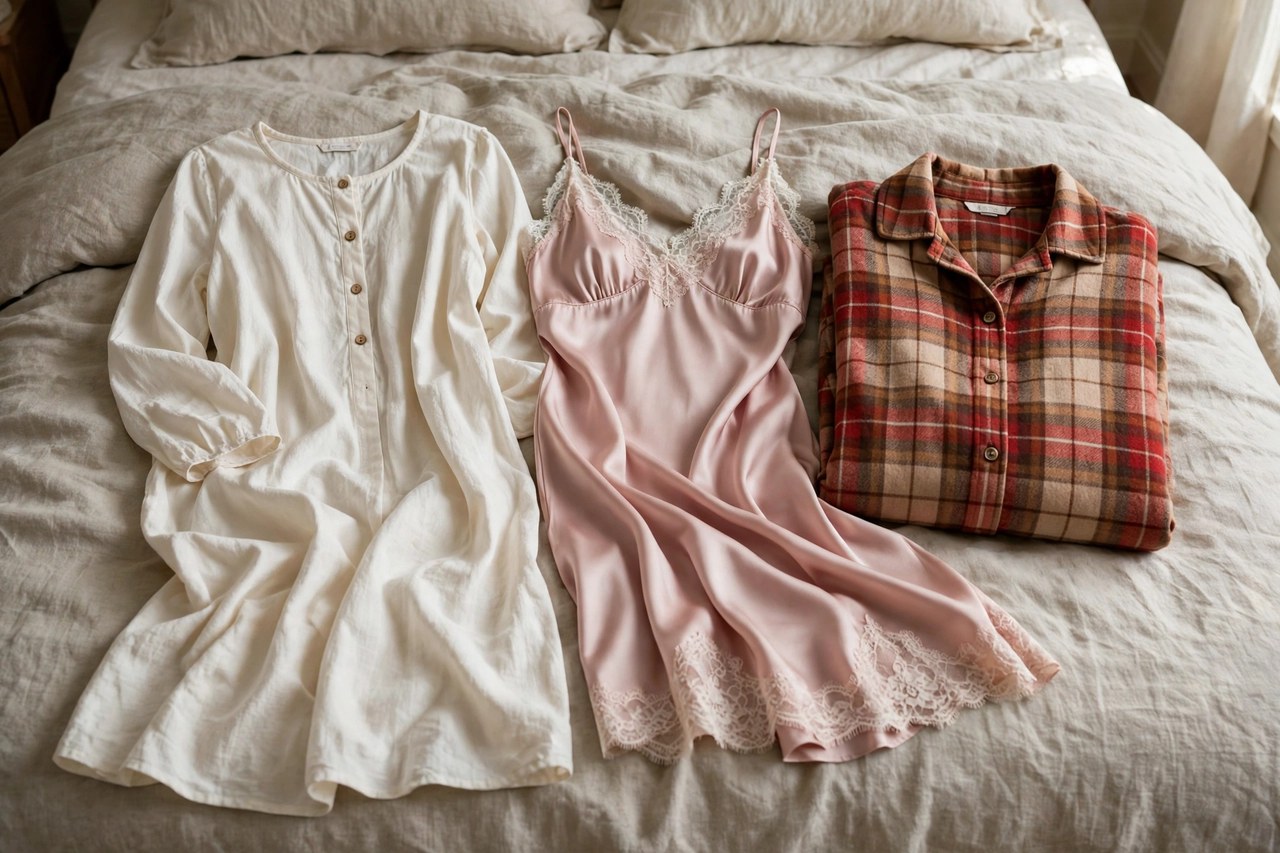
A women's nightgown is a light, loose garment worn to bed. The garment is often referenced as a nightgown, nightie or nightdress, and it is a loosely hanging item of nightwear — one piece, suspended from the shoulders, with nothing at the waist to bind or twist. It is the dress form of sleepwear, and the oldest: before pajamas existed for women, the nightgown was simply what everyone slept in.
The definition is generous because the family is. A nightgown may have any neckline, sleeves of any type or none at all, and a variety of shoulder straps and back styles — which is why the category runs from a plain cotton shift to a silk gown with lace at the bust that would not look out of place at a 1930s film premiere.
Nightgown Fabrics
A nightgown can be made of cotton, silk, satin, or nylon, and may be decorated with lace appliqués or embroidery at the bust, hem, and elsewhere. Each fiber is a different night's sleep. Cotton — lawn, voile, jersey or seersucker — is breathable and easy-care, the everyday standard. Silk and satin are the smooth, cool, luxurious branch, gliding rather than gripping as you turn. Nylon and tricot knits made the mid-century nightgown famous: weightless, washable, and quick to dry.
Fabric also splits by season in our directory: the cotton nightgown and the silk nightgown have their own guides, and so does the flannel nightgown — brushed cotton, usually long-sleeved and long in the hem, that turns the nightgown into winter equipment (all linked below).
Lengths and Silhouettes
Nightgown lengths form a ladder. Short nightgowns and nighties end above the knee and are the coolest to sleep in. Knee-length is the versatile middle. The waltz length — mid-calf, named in the 1950s when the gowns were full enough to dance in — balances coverage and freedom. Full-length gowns to the ankle or floor are the warmest and the most formal, and are where the elaborate lace and embroidery of the definition lives.
Silhouette follows the same logic as day dresses: an A-line gown skims from a fitted or gathered yoke; an empire gown gathers under the bust; a straight shift hangs from the shoulders. For sleeping, the test is movement — a gown should give at the hips and never need adjusting when you roll over.
Choosing and Caring for a Nightgown
Choose by temperature first, sentiment second: hot sleepers in cotton lawn or silk, cold sleepers in flannel, everyone else in the wide cotton middle. Check that lace sits flat and soft against the skin, that straps adjust, and that the armholes are cut deep enough not to bind. Nightgowns make unusually good gifts precisely because the fit is forgiving — small, medium and large honestly cover most of the population.
Care follows the fiber. Cotton and nylon tricot machine wash happily; flannel improves with washing but pills less if turned inside out. Silk and satin want a gentle cycle in a mesh bag or a hand wash, and air drying away from heat. Treated kindly, a good nightgown is a decade-long garment — few things in the wardrobe are worn as many hours, or earn their place as quietly.
Nightgowns are also one of the classic gifts of women's clothing: sizing is forgiving, a generous cut reads as luxury rather than error, and a beautiful gown is something many women admire but hesitate to buy for themselves. When in doubt, give the mid-calf cotton or modal gown — it suits the most sleepers, the most climates, and the most laundry routines.
Related Women's Guides
Photos

Looking for Women's Clothing Stores?
This guide helps you choose women's nightgowns. To browse where to buy, visit our women's clothing store directory, where you can find retailers that carry them.