Women's Cotton Nightgowns Guide
The traditional long gown — Victorian-influenced cotton lawn for summer, brushed flannel for winter, and a heritage of unhurried, generous design.
Shop Women's Cotton Nightgowns Now
Shop Women's Cotton Nightgowns on Amazon Shop Women's Cotton Nightgowns on eBayThe Amazon and eBay links on this page are affiliate links. If you make a purchase through them, Apparel Search may earn a commission.
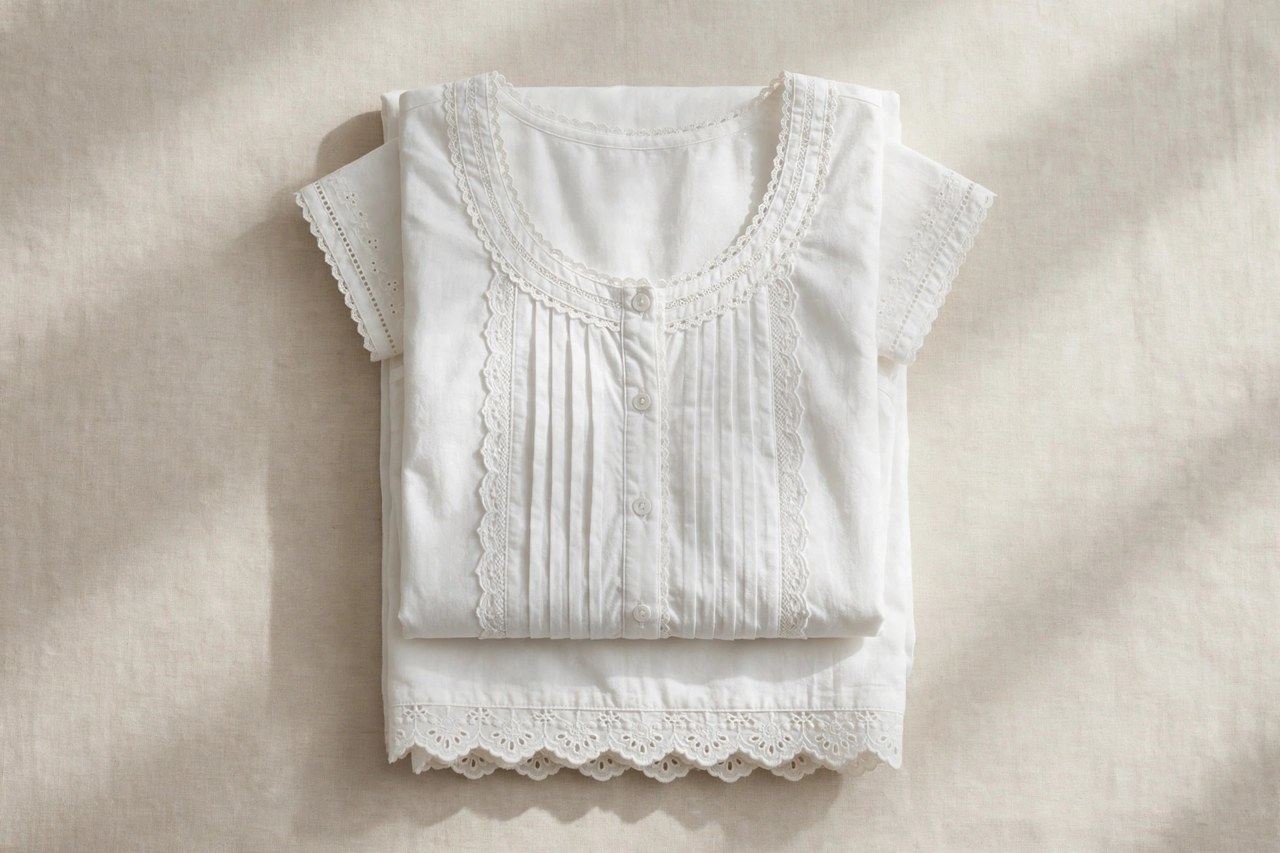
The nightgown is the traditional, heritage form of women's cotton nightwear: a long, generous gown, usually ankle length, with roots in the chemise of earlier centuries and a character fixed in the Victorian era, when white cotton lawn gowns with pin-tucked yokes, lace edging, and buttoned fronts became the standard of respectable, comfortable night dress. This guide is deliberately the traditional counterpart to the modern Nightdress page. It covers the long gown's history and hallmarks, the two great seasonal fabrics — fine lawn for summer and brushed flannel for winter — and how to choose, fit, and care for a garment made to be worn for years and often kept for decades. Nothing about the design is accidental; almost every detail on a traditional gown survives because it earned its place.
The Victorian Pattern and Its Hallmarks
A traditional nightgown declares itself at a glance: length to the ankle or beyond, fullness gathered from a shaped yoke, long or three-quarter sleeves with soft cuffs, and a buttoned placket that may run the full front on the most classic examples. White and ivory dominate the traditional palette, with pale pastels as the accepted variation, and decoration is structural rather than applied — pin tucks, broderie anglaise edging, fine lace insertion, and embroidered yokes rather than prints. The silhouette is modest and architectural at once, designed to be entirely comfortable while looking composed. Modern makers of heritage gowns keep these proportions faithfully, adjusting mainly in sizing inclusivity and in small mercies such as pockets and slightly raised hems for practicality on stairs.
Summer Lawn Gowns
For warm months the traditional gown is cut from cotton lawn, the fine, light plain weave that has dressed sleepers since the nineteenth century. Lawn's smooth, cool hand and slight translucency made it the prestige summer night fabric, and a lawn gown in white, worn loose to the ankle, remains one of the coolest ways to sleep without air conditioning: the long skirt of cloth moves air as the sleeper turns and covers without warming. Better lawn gowns use a slightly denser weave or a double yoke for modesty, and reinforce the fine fabric at strap, cuff, and placket stress points. Voile and cambric appear in the same tradition, voile sheerer and cambric a touch firmer. A lawn gown asks gentle washing and rewards it by softening, over years, into something close to a family heirloom texture.
Winter Flannel Gowns
The winter counterpart exchanges lawn for brushed cotton flannel, keeping the long traditional cut and gaining a raised nap that traps warm air along the whole body. A long flannel gown is functionally a wearable blanket with sleeves: it warms immediately on contact, covers to the ankle, and suits cold bedrooms, older houses, and anyone who feels the cold at night more than the average sleeper. Traditional flannel gowns come in white and soft plaids, with the same yoked construction and button fronts as their summer sisters. Weight matters within the category — a midweight flannel serves a heated home, while the heaviest double-brushed cloth is for genuinely cold rooms. Flannel's nap flattens slowly over years of washing, so a treasured gown should be washed gently, kept away from fabric softener, which mats the fibers, and dried without high heat.
Fit: Generosity by Design
A nightgown is fitted only at the shoulder and yoke; everything else is intended fullness, and buying one means embracing that intention. Choose by bust and shoulder measurement in your usual size, and expect the gown to fall in soft folds from the yoke rather than follow the body. Length is the one measurement to deliberate: ankle length is traditional and warm, but the hem should clear the floor by enough to climb stairs safely, and shorter mid-calf versions of the traditional pattern exist for exactly that reason. Sleeves should reach the wrist without pulling when arms extend, and a buttoned cuff should fasten loosely. Because the cut is so forgiving, nightgowns gift and hand down unusually well across sizes, one reason the style persists in family wardrobes long after trend-led sleepwear is forgotten.
Care and Keeping a Gown for Years
Heritage gowns repay gentle, consistent care. Wash lawn gowns in cool water on a gentle cycle, ideally in a mesh bag to protect lace edging and pin tucks, and wash flannel gowns inside out in cool or warm water to preserve the nap. Avoid chlorine bleach on both fabrics — it yellows lawn and weakens flannel — and choose line drying, which suits long garments, prevents heat shrinkage in length, and gives lawn its traditional crisp softness with a light press if wanted. Store gowns folded with tissue at the folds if they are kept long-term, and mend a loosening button or yoke seam early, when the repair is invisible. Kept this way, a well-made cotton nightgown is among the longest-lived garments in the wardrobe, which is precisely what its makers, across a century and a half, intended.
More to Explore on Apparel Search
Photos

Looking for Women's Clothing Stores?
This guide helps you choose women's cotton nightgowns by tradition, fabric and season. To browse where to buy, visit our women's clothing store directory, where you can find retailers that carry them.