Women's Cotton Pajamas Guide
The category guide to cotton pajamas — button-up sets, tee-and-pant sets, and the weaves and knits that decide how warmly you will sleep.
Shop Women's Cotton Pajamas Now
Shop Women's Cotton Pajamas on Amazon Shop Women's Cotton Pajamas on eBayThe Amazon and eBay links on this page are affiliate links. If you make a purchase through them, Apparel Search may earn a commission.
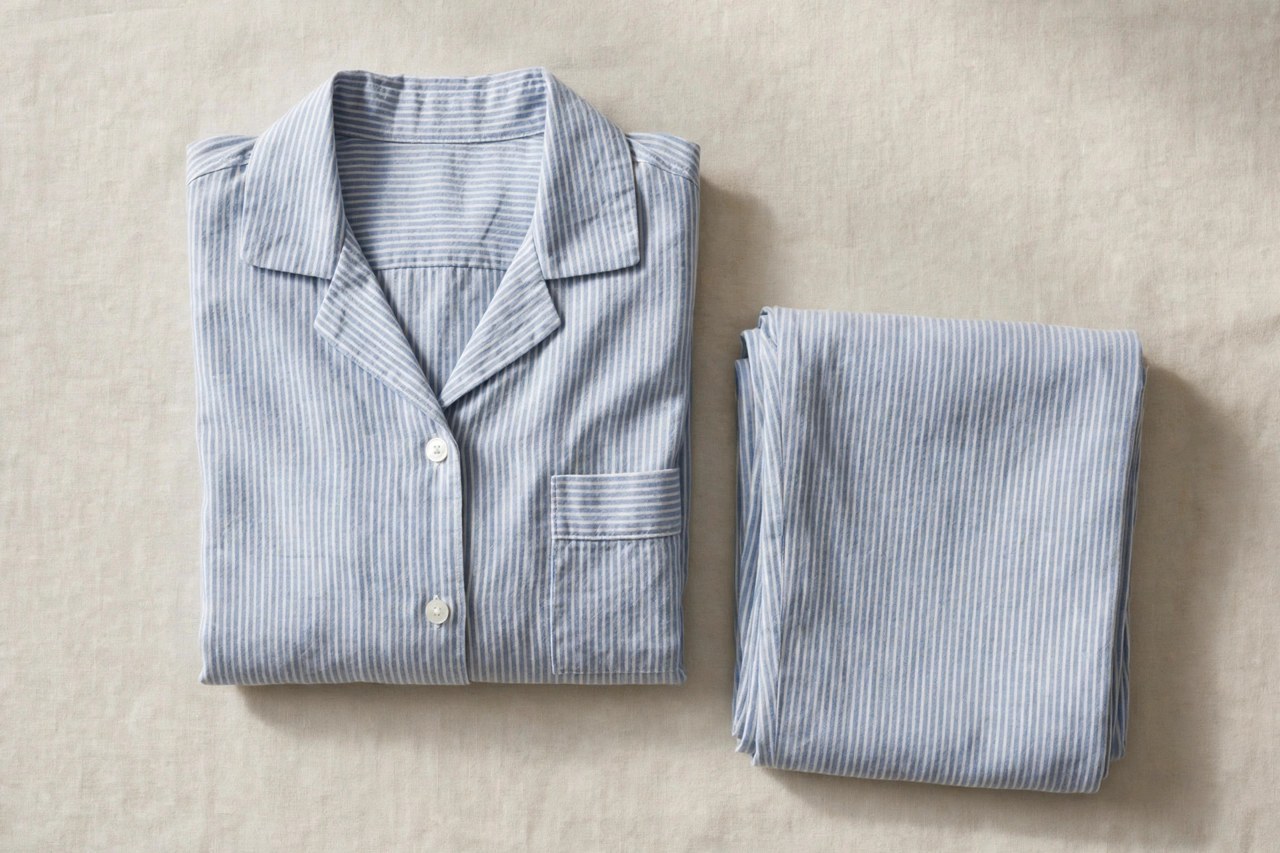
Pajamas are the flagship garment of cotton sleepwear: a matched set, top and bottom in one fabric, made to be slept in nightly and washed weekly for years. This page is the category guide. It maps the main set styles — the classic button-up, the relaxed tee-and-pant set, short and capri summer sets — and the cotton fabrics behind them, from brushed flannel through smooth poplin and fine lawn to soft jersey knit and featherweight madras. Specialized guides in this section then go deeper on single fabrics, such as flannel, madras, and organic pajamas. Here the aim is the decision itself: which style and cloth suit your bedroom temperature, your washing routine, and the way you like a pajama to feel at the end of a long day.
Set Styles: Button-Up, Tee-and-Pant, Short and Capri
The button-up pajama is the traditional form: a collared or notched top with a full button placket, piping at the edges, and a matching full-length pant on an elastic-and-drawstring waist. It looks composed, opens easily, and in woven cotton has changed little in a century because it works. Tee-and-pant sets pair a jersey t-shirt style top with knit pants or shorts; they are softer and more casual, stretch with the sleeper, and dominate everyday sales for good reason. Short sets trade the pant for boxer-style shorts for summer, while capri sets end the leg mid-calf as a cooler compromise that still feels like a full pajama. Sleeve lengths cross-cut all of these: short sleeves or sleeveless tops for heat, long sleeves for cold rooms and winter fabrics.
The Pajama Cottons: Flannel to Madras
Fabric sets a pajama's season more surely than its style. Flannel, brushed to raise a warm nap, is the winter cloth, insulating without weight and traditionally patterned in plaids. Poplin is the crisp all-rounder, a smooth plain weave that feels cool on contact and suits warm sleepers and heated homes most of the year. Jersey knit is the soft option, draping rather than folding, with gentle stretch that many sleepers prefer for turning in bed. Lawn and voile are the fine summer wovens, almost weightless and always slightly sheer, while madras brings woven checks at the lightest weight of all. Weight in grams per square metre refines the choice within each fabric: a light flannel and a heavy jersey can meet in the middle, so read descriptions as well as fabric names when buying for a specific room.
Fit: Ease, Waistbands, and Tops That Stay Put
A pajama fits correctly when you can forget it. Tops should button without strain across the chest and allow a full reach overhead; in woven fabrics there is no stretch to borrow, so ease is built into the cut and should be visible as gentle fullness, not sag. Pants need a stride and a comfortable deep sit, with a waistband — ideally elastic plus drawstring — that holds without pressure through the night. Lengths matter practically: a full pant that pools at the ankle will twist in bedding and wear at the hem, so hem after the first wash or choose pre-shrunk sets. Shrinkage of two to five percent in early washes is normal for cotton pajamas that are not garment-washed, and it concentrates in length. Between sizes in a woven set, the larger size almost always sleeps better.
Buying by Season and Bedroom
Start from the room, not the calendar. A cool bedroom with light bedding wants flannel in winter and poplin or jersey in summer; a warm, well-heated room may never need flannel at all, and its owner will live in poplin, lawn, and madras with a robe for cold mornings. Hot sleepers should weight the decision toward open weaves and short or capri sets, and consider separates so a light top can pair with the lightest bottom. Two sets form the sensible minimum rotation — one being washed, one being worn — and a third, in the opposite season's fabric, covers the year's extremes. For gifts, the button-up set in a midweight poplin or light flannel is the safest classic: broadly liked, easily exchanged for size, and presentable in a way a tee set rarely matches.
Washing and Making Sets Last
Pajamas are laundered constantly, and cotton rewards simple, consistent care. Wash sets together in cool or warm water, buttons fastened to protect plackets, and avoid fabric softener on flannel, which mats its insulating nap, and on jersey, where build-up dulls softness over time. Tumble on low or line dry: high heat is the main driver of extra shrinkage, faded colors, and tired waistband elastic, which is usually the first component to fail in an otherwise sound set. Mend a loose button or a small seam opening promptly; sleepwear stresses the same points nightly, and small faults grow. Fold knit sets rather than hanging them, and store wovens folded or on soft hangers. A good cotton pajama set, treated this way, should deliver several years of nightly service — the standard the garment has met for generations.
More to Explore on Apparel Search
Photos From Our Original Guide

Looking for Women's Clothing Stores?
This guide helps you choose women's cotton pajamas by style, fabric and season. To browse where to buy, visit our women's clothing store directory, where you can find retailers that carry them.