Women's Pajamas Guide
Pajamas are the loose two-piece uniform of sleep and slow mornings — a soft top and matching bottom borrowed centuries ago from South Asian dress and now made in everything from brushed flannel to silk.
Shop Women's Pajamas Now
Shop Women's Pajamas on Amazon Shop Women's Pajamas on eBayThe Amazon and eBay links on this page are affiliate links. If you make a purchase through them, Apparel Search may earn a commission.
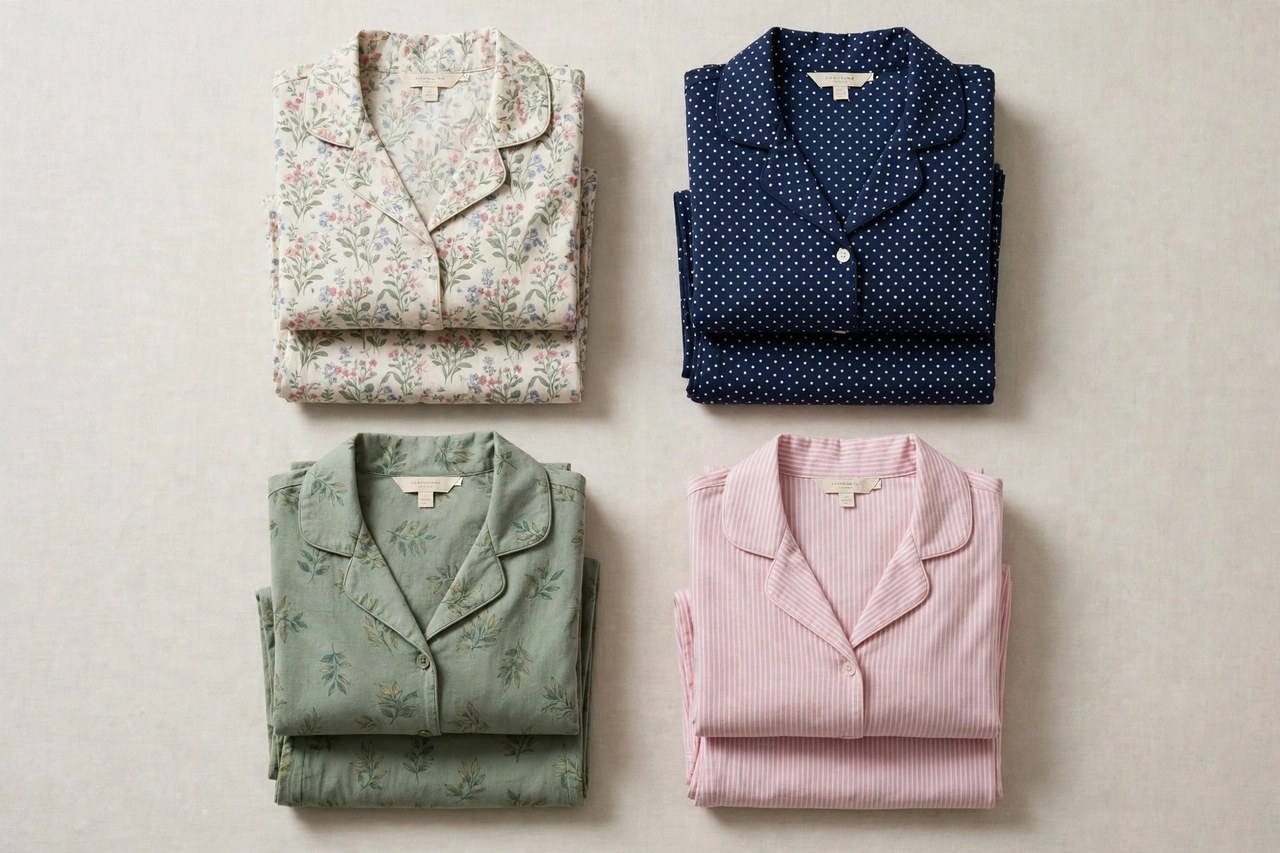
Pajamas are loose-fitting two-piece garments designed for sleeping and lounging, typically a button-front or pullover top worn with matching trousers or shorts. The word and the cut come from South Asia — from the loose drawstring trousers worn in India and Persia, adopted by British colonials as nightwear and brought home to become, by the early twentieth century, the standard sleep garment in the West, replacing the long nightgown for many women.
That origin explains the design. Pajamas were never tailored to the body the way day clothes are. They are cut generously, with room through the shoulder, waist and leg, soft seams, and closures that do not dig in when you turn in your sleep. This guide covers the main set styles, the four fabrics that dominate the category, how to size pajamas for actual rest rather than for the mirror, and how to wash them so they stay soft for years.
Set Styles: From Classic Button-Front to Short Sets
The classic button-front set is the original form: a notched-collar shirt with buttons, piping and a chest pocket, paired with full-length drawstring or elastic-waist pants. It is the warmest, most covered style and the easiest to wear around the house beyond the bedroom. Knit pullover sets swap the woven shirt for a soft T-shirt style top, usually with leggings-cut or jogger-style bottoms, and feel closer to loungewear. Short sets pair a camisole, tee or short-sleeve shirt with shorts for summer and warm sleepers.
Beyond the two-piece standards sit the close relations: nightshirts, which take the pajama top and lengthen it into a one-piece; capri sets for transitional weather; and coordinated family and holiday pajamas, sold in matching prints across sizes. When choosing among them, think first about coverage and temperature, then about how you actually sleep — side sleepers often prefer smooth fabrics and flat buttons, while back sleepers tolerate almost any cut.
Fabrics: Cotton Jersey, Satin, Flannel and Silk
Cotton jersey is the everyday workhorse: a knitted fabric with natural stretch, breathable, absorbent and easy to wash, ideal for year-round wear and sensitive skin. Flannel is woven cotton brushed on one or both sides to raise a soft nap that traps warmth — the winter pajama fabric, especially in plaid. Satin pajamas are defined by their weave rather than their fiber: polyester satin is affordable, glossy and slippery, sliding easily against sheets, while silk satin is the luxury version.
Silk deserves its own note. Real silk pajamas regulate temperature surprisingly well, feel cool on contact and warm within minutes, and glide rather than bunch. They also cost the most and need the gentlest care. In between sit modal and bamboo-derived knits, prized for an especially smooth, cool hand. Match fabric to your sleep temperature honestly: hot sleepers should start with cotton jersey, modal or short silk sets, cold sleepers with flannel or long cotton sets layered under blankets.
Choosing, Sizing and Fit for Sleep
Pajamas should be sized for movement, not appearance. You should be able to raise both arms, bend, and curl on your side without the top pulling across the back or the waistband rolling. If you are between sizes, size up — sleepwear is the one category where extra room is a feature. Check the details that decide comfort at 3 a.m.: a drawstring plus elastic waist adjusts after dinner and through the night, flat or covered seams prevent chafing, and tagless labels remove a common irritation.
Length matters too. Full-length pants should clear the floor so they do not trip you on stairs in the dark; tall and petite sleepers should look for inseam options rather than simply rolling cuffs. For maternity and recovery wear, button-front tops earn their keep for nursing and for dressing around sore shoulders or incisions. Finally, buy for the wash cycle you will actually do: if everything goes in a warm dryer, pre-shrunk cotton jersey will outlast delicate silk in your real life, however lovely silk looks in the drawer.
Care and Buying Tips
Wash pajamas after two or three wears — they absorb perspiration and skin oils all night. Cotton and flannel tolerate warm water and tumble drying, though cool washes keep colors and elastic alive longer. Satin and silk want cool water, mild detergent and air drying away from heat; silk benefits from a mesh bag and should never be wrung. Avoid fabric softener on moisture-absorbing knits if you sleep warm, since coatings can reduce breathability.
To buy well, start with two sets in rotation in the fabric that matches your bedroom temperature, add one seasonal set — flannel for deep winter or a short set for summer — and replace pieces when elastic fails or fabric thins at stress points. Quality shows in even stitching, finished buttonholes, piping that lies flat, and prints that match at the pocket and placket. Good pajamas are not an indulgence category: you spend a third of your life in them, and comfortable sleep is worth dressing for deliberately.
Related Women's Guides
Photos

More to Explore on Apparel Search
Looking for Women's Clothing Stores?
This guide helps you choose women's pajamas. To browse where to buy, visit our women's clothing store directory, where you can find retailers that carry them.